Connect with us

News

Train attack: Terrorists release 11 kidnapped victims after two months in captivity

Published

on


The terrorists that attacked the Abuja-Kaduna bound AK9 train on March, 28, have released 11 out of the remaining 61 abducted train passengers, after almost three months in captivity.

Recall that during the attack, scores of passengers were killed and more than 70 others were abducted.

Alhaji Tukur Mamu, the negotiator and media consultant to controversial cleric, Sheikh Ahmad Gumi, said the 11 victims were released on Saturday.

But one of the relatives of the abducted train victims, Dr. Abdulfatai Jimoh, disclosed that they had yet to receive an official communication on the release of the 11 victims.

The bandits had threatened to commence the killing of the abducted passengers should the government fail to meet their demands.

Parts of the demands were the unconditional release of their detained children held in an orphanage home in Adamawa State under strict supervision of the Nigerian Army as well as the release of their detained comrade at arms.

See also  PHOTOS: Troops kill ‘wanted terrorist kingpin’ in Borno

But the terrorists rescinded in their threat.

In the latest edition of Kaduna-based newspaper, the negotiator confirmed that contrary to “earlier commitment to release all the women in their custody, a total number of 11 victims were released on Saturday 11th June, 2022. They include six females and five males.”

The victims released by the bandits include Jessy John, Amina Ba’aba Mohammed (Gamba), Rashida Yusuf Busari, Hannah Ajewole and Amina Jibril, Najib Mohammed Daiharu, Gaius Gambo, Hassan Aliyu, Peace A. Boy and Danjuma Sa’idu.

Those released have been flown to Abuja on the order of President Muhammadu Buhari for medical evaluation and treatment before the decision to reunite them with their families.

The paper quoted an insider who noted that the male victims were released on health grounds as part of the request made by the negotiating team while “the women who are among the vulnerable are part of the agreement reached with the abductors.”

See also  Abuja-Kaduna train attack: Terrorists release picture of baby born in captivity

Mamu, who is the publisher of the paper said, “We have succeeded in building confidence now. We will do everything to sustain it in the interest of the innocent victims that are still in captivity.

“It’s a painful and frustrating process but it must be done if we are to secure the precious lives of the remaining victims.

“The good news is our collective efforts have succeeded in securing the release of 11 of the victims so far. With the continued support of the FG all the remaining victims will be released soon Insha Allah.

“President Buhari must be commended for understanding the gravity of the crisis and for giving directives to the security agencies. The CDS, Gen. Irabo has done excellently well under the circumstances. The Army and the DSS have played a crucial role. There is no military solution to this predicament.

“But behind the scene, Sheikh Gumi by Allah’s will made it possible. He was involved from the day I started. In fact, I accepted that role because of his directives to that effect. Even the final arrangement of how and the safest place to get the victims was arranged and coordinated by him.”

See also  Six Boko Haram terrorists killed, six AK-47 recovered in battle of Kumshe

When asked if the children of the bandits had been released, Mamu, who holds the traditional title of Dan-Iyan Fika, declined to speak further, saying, “it is the government that is supposed to respond to that question.”

According to him, the urgent priority now for the government and us is how to safely secure the release of the remaining victims.

News

Tinubu deserves credit for bringing Nigeria back from the brink, says Emir Sanusi 

Published

on

By

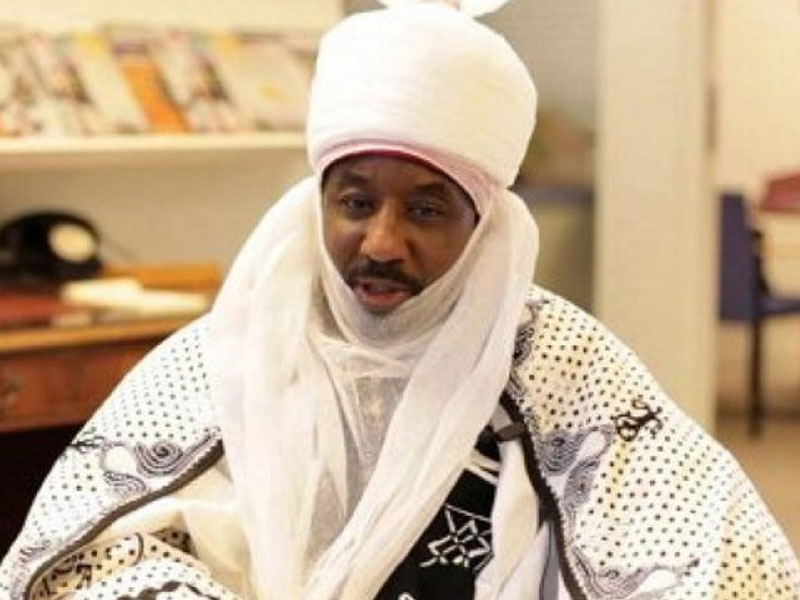
The Emir of Kano, Muhammadu Sanusi II, has said that President Bola Tinubu deserves credit for bringing Nigeria’s economy back from the brink, citing improvements in economic growth, inflation, foreign reserves, and export diversification.

Emir Sanusi, who gave the commendation while speaking on Tuesday at the Oxford Global Think Tank conference convened by Arunma Oteh, said the country is beginning to lay the foundations for economic stability, although significant challenges remain.

“I’m not a fan of politicians, but we need to give credit to President Tinubu’s administration for bringing us back from the brink,” he said.

Sanusi, a former Central Bank of Nigeria (CBN) governor, said the economy grew by 4.48 percent in the second quarter (Q2) of 2026, describing the performance as progress compared with the average growth recorded during the administration of former President Muhammadu Buhari.

“GDP in Q2 2026 was at 4.48 percent. It’s not as high as it was under the Yar’Adua/Jonathan government, but during the Buhari years, the economy grew by 0.9 percent. Today it’s at 4.5 percent. That’s progress,” he said.

See also  Kaduna train attack: Tukur Mamu 'put money issue' into negotiation, says FG panel member

Sanusi also noted the decline in inflation from about 30 percent to 14.6 percent, adding that it was projected to fall to 12.5 percent by the end of the year.

He said Nigeria’s gross domestic product (GDP) per capita, measured in dollar terms, had increased by 47 percent since 2023.

According to the emir, “If we continue at this rate, by the end of next year, GDP per capita will be back to where it was in 2005”.

He also cited the country’s foreign reserves, which he put at $55 billion, but cautioned that a significant portion of the inflows was driven by foreign portfolio investments (FPI), which are volatile.

He attributed the continued inflows partly to high oil prices amid the war in the Strait of Hormuz and the attractive returns available to investors in Nigeria.

“Our reserves are at $55 billion, and yes, a lot of it is driven by portfolio flows, which are volatile,” he said.

See also  Kaduna train Attack: Gunmen release five more hostages

He said high oil prices and returns on Nigerian investments have encouraged foreign investors to maintain their exposure to the country.

On diversification, Sanusi said “20 percent of Nigeria’s exports were coming from the Dangote refinery”, describing the development as evidence of progress beyond the country’s traditional export sources.

“There are clearly foundations being laid for stability. It’s not the end, but the first step towards stability,” he said.

The emir, however, criticised the Tinubu administration’s communication of its economic policies, saying the government appeared to interpret criticism and suggestions as attacks.

“This government doesn’t express itself properly. It sees every suggestion and contribution it does not like as an attack, and it doesn’t have good spokespersons,” he said.

Despite his reservations about the government’s communication, Sanusi said the administration deserved recognition for the economic gains recorded so far.

Continue Reading

News

EFCC uncovers illegal oil refinery in Ogun

Published

on

By

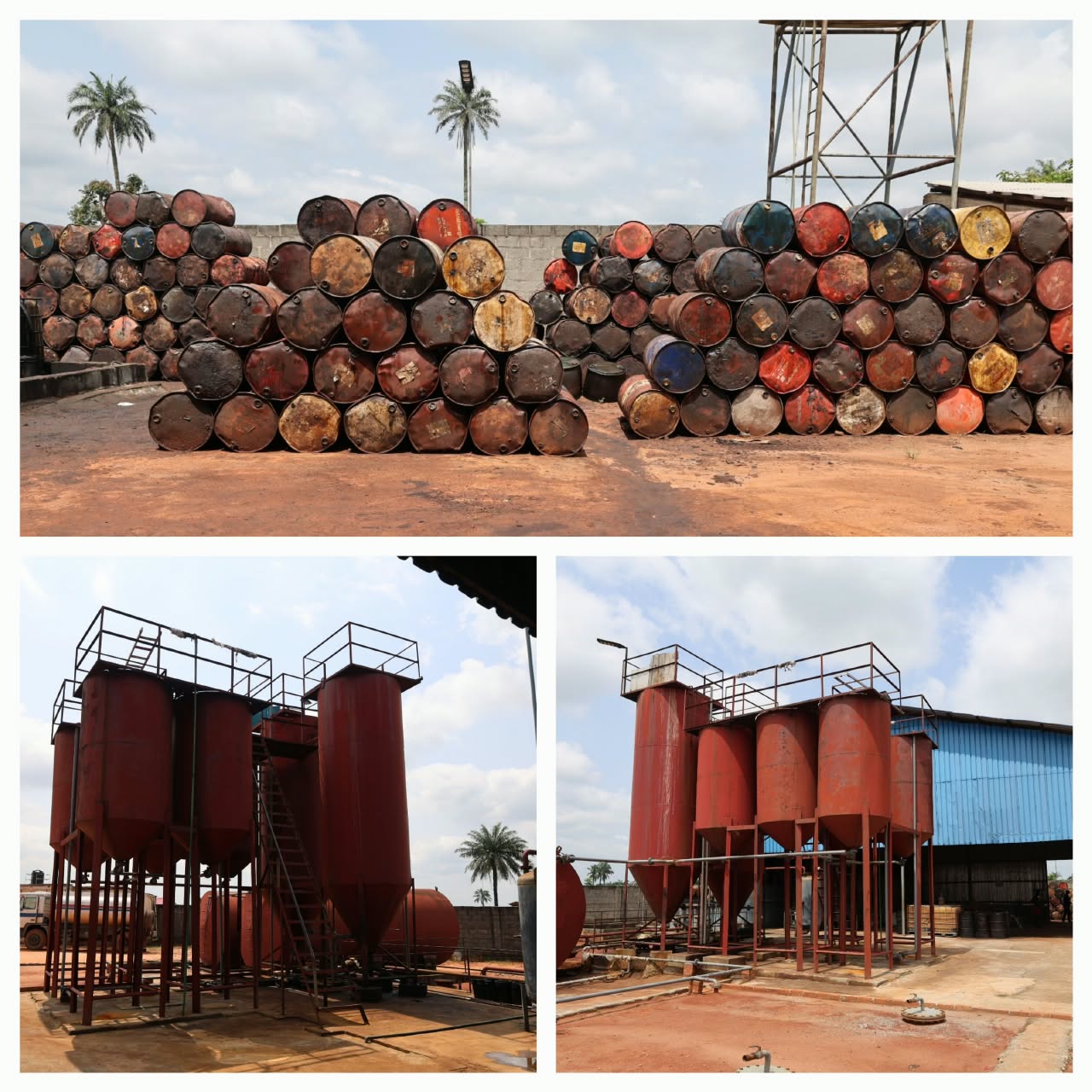
The Economic and Financial Crimes Commission (EFCC) says its operatives have uncovered an illegal oil refinery operated by Chinese nationals in the Ogere area of Ogun State.

According to a statement issued on Tuesday by the EFCC’s spokesperson, Dele Oyewale, the facility was discovered on Saturday, October 31, 2026, by operatives of its Lagos Zonal Directorate 2 following intelligence gathering and surveillance of the activities of illegal sludge oil refiners.

Oyewale said the facility was deserted when operatives stormed the premises, following an earlier crackdown on four illegal lithium processing plants in the area.

The operatives discovered waste products from the refining process and underground tanks suspected to have been used for heating and processing sludge oil.

According to the statement, “The Economic and Financial Crimes Commission uncovered an illegal oil refinery operated by Chinese in the Ogere area of Ogun State.

“The operation, conducted on Saturday, October 31, 2026, by operatives of the Lagos Zonal Directorate 2 of the EFCC, followed credible intelligence and surveillance by the Commission on the activities of the illegal sludge oil refiners.

See also  UPDATED: Police arrest masterminds of Greenfield University, Kaduna-Abuja train attacks, recover 48 AK-47s

“The refinery was found deserted when EFCC operatives stormed the premises, following the Commission’s earlier clampdown on four illegal lithium processing plants in the area. However, waste products from the refining process were discovered at the location.”

Oyewale said operatives also discovered underground tanks believed to have been used for heating and processing sludge oil.

“Two of the underground tanks inspected contained substances suspected to be Automotive Gas Oil (AGO), otherwise known as diesel.

“Preliminary investigations revealed that the operators sourced sludge oil, also known as black sludge, from Warri, Delta State, and Port Harcourt, Rivers State, and transported it to the illegal facility in Ogere for processing,” Oyewale added.

He said the operators subjected the sludge oil to intense heat, allowing lighter petroleum components to pass through chambers and filters in a process believed to produce diesel for sale in the Nigerian market.

“Personnel at the facility told EFCC operatives that the Chinese operators never disclosed their identities nor the name of the company behind the facility.

See also  Good morning! Here Are Some Major News Headlines In Nigerian Newspapers Today: ‘Enough is enough,’ Tinubu demands permanent solution to Plateau killings

“Consequently, operatives of the Lagos Zonal Directorate 2 of the EFCC have since taken over the premises as investigations continue to establish the identities of the operators, the ownership of the facility and the full extent of the suspected illegal activities and economic sabotage,” he added.

Continue Reading

News

Police bust high-tech indoor Cannabis farm in Lagos, arrest two suspects

Published

on

By

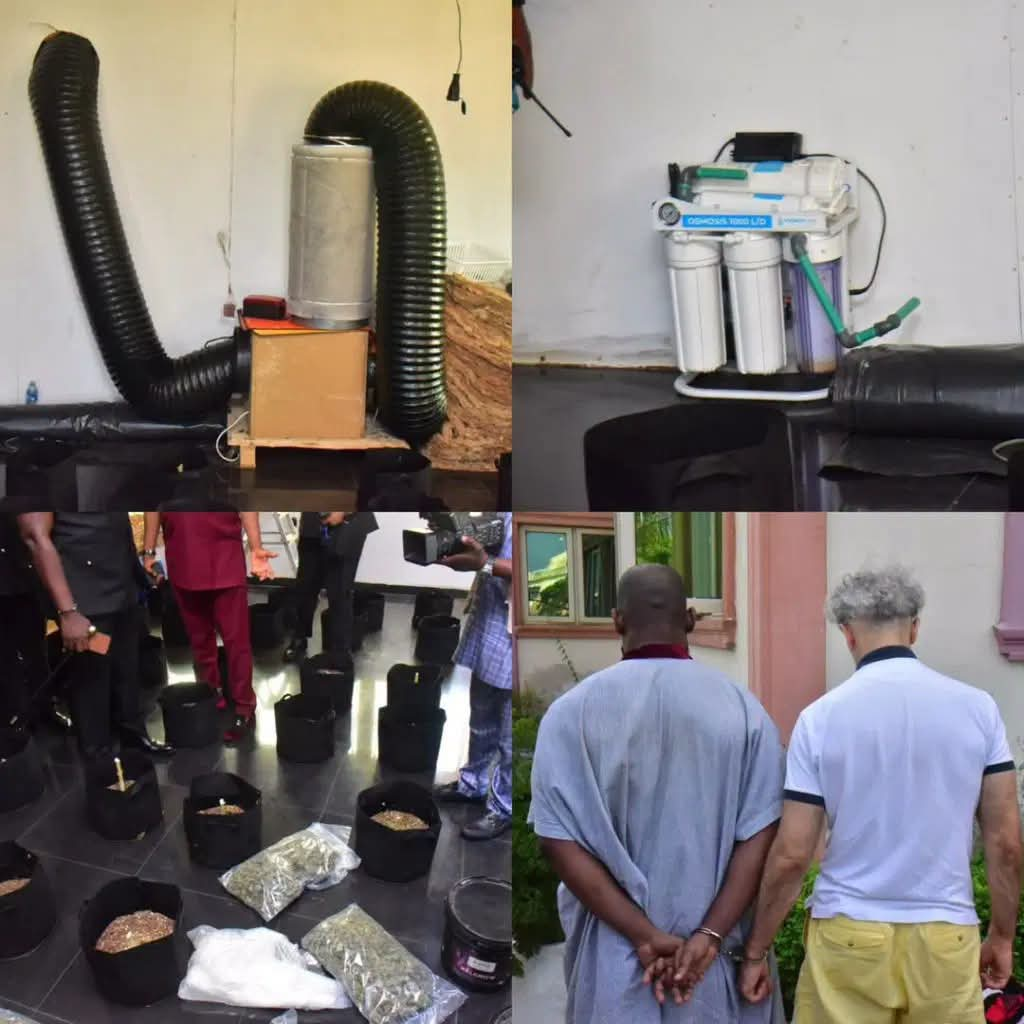
The Lagos State Police Command says its operatives have uncovered a suspected high-tech indoor cannabis farm at a residential property in the  Apapa,l area of the state.

The suspects are a 49-year-old Polish national and a 36-year-old Nigerian.

According to the police, the suspects are Thomas Razvickas and James Chisome, both of whom reportedly reside at the property where the facility was discovered.

The operation was carried out on November 2 at about 8:15 a.m., following credible intelligence received by police operatives, according to a statement issued on Tuesday by the Command’s Police Public Relations Officer, SP Abimbola Adebisi.

A search of the premises led to the discovery of a sophisticated indoor farming facility reportedly equipped for the cultivation, harvesting and processing of substances suspected to be cannabis.

The police said the two suspects had been taken into custody, adding that they had made confessional statements and were providing useful information to assist ongoing investigations.

See also  JUST IN: Boko Haram attacks Giedam, home town of IGP

The Commissioner of Police in Lagos State, CP Tijani Fatai, visited the scene to inspect the facility, assess the scale of the operation and receive a briefing on the investigation.

Fatai commended the operatives for their vigilance and intelligence-led policing, while reaffirming the Command’s commitment to tackling drug-related offences and dismantling criminal networks in the state.

He also appreciated members of the public for providing credible information and urged residents to sustain their cooperation with the police.

Continue Reading

Trending News