Connect with us

News

Clearing agents reject Customs’ 15% levy on imported vehicles

Published

on


Clearing agents have rejected the imposition of 15 per cent levy placed on imported vehicles by the Nigeria Customs Service.

The NCS had, last weekend, introduced a 15 per cent National Automobile Commission levy on used imported vehicles, a decision which didn’t go down well with the clearing agents.

The agents have argued that the NAC levy is mostly on new vehicles and are questioning the rationale behind its imposition on used vehicles.

In a quick response, the service in a statement released by the National Public Relations Officer, Timi Bomodi, said that the move was in compliance with the Economic Community of West Africa Common External Tariff.

The statement read, “On Friday the 1st of April 2022, the Nigeria Customs Service migrated from the old version of the ECOWAS Common External Tariff (2017- 2021) to the new version (2022- 2026). This is in-line with World Customs Organization five years review of the nomenclature. The contracting parties are expected to adopt the review based on regional considerations and national economic policy.

“The nation has adopted all tariff lines with few adjustments in the extant CET. As allowed for in Annex II of the 2022-2026 CET edition, and in line with the Finance Act and the National Automotive policy, NCS has retained a duty rate of 20 per cent for used vehicles as was transmitted by ECOWAS with a NAC levy of 15 per cent. New vehicles will also pay a duty of 20 per cent with a NAC levy of 20 per cent as directed in Federal Ministry of Finance letter ref. no. HMF BNP/NCS/CET/4/2022 of 7th April 2022.

See also  Troops foil ISWAP attack on military base in Yobe, kill over 50 terrorists

“It is instructive to note that domestic fiscal policy on the importation of motor vehicles and other items is targeted at growing the local economy in these sectors. The focus of NCS is on implementation of these policies in the hope that it achieves its desired objectives in line with National Automotive Policy and other fiscal policies of government.”

However, the President of the African Association of Professional Freight Forwarders and Logistics, Mr Frank Ogunojemite, said that the service had no reason for that increment.

“They don’t have any reason for the increment, they only said that they have reduced the duty to 20 per cent. The Customs does not have the legal right to increase that. This new levy will increase inflation, it will make the products out of reach of the common man.”

Also speaking, the President of the National Association of Government Approved Freight Forwarders, Mr Toochukwu Ezisi, said the service had no right to impose a levy on imported used vehicles.

“Before, it was NAC, but now they have changed it to levy. We have not agreed to that as we are still going back. The levy has no name because they can’t achieve NAC. They pushed it to levy and you can’t achieve levy on used items. We will be meeting for the second time when they call us.”

“For now, we will go by it because you can’t get everything at once to avoid demurrage.”

See also  Anthony Joshua: FRSC blames excessive speed, wrongful overtaking for crash

Also speaking, a member of the Association of Nigerian Licensed Customs Agents, Ojo Akintoye, said while other countries were planning to reduce taxes, Customs in Nigeria was adding more.

“The painful part of it is that when the whole world is planning on how to reduce taxes on goods because of the global challenge with the economy, the reverse is the case in Nigeria. They are adding to the pains of the common people. We are taking a step ahead to see the Ministry of Finance to know the reason for the 15 per cent. The negative effect is that the cost of a smaller vehicle will go up and people can’t get cars.”

He said, “What we want to do first is to engage the ministries. The ECOWAS has agreed that every used vehicle will go on 20 per cent. But the Customs has brought it down to 20 per cent and is adding extra 15 per cent. If you don’t want to obey ECOWAS, go straight and tell them because you can’t rob Peter to pay Paul. So, we want to engage the Ministry of Finance to tell us why,” he said.

Also speaking a clearing agent, George Okafor, said, “The duty is almost the same thing, there is no difference. Before it was 35 per cent, but they reduced it to 20 per cent. But now, they have added 15 per cent, which makes it the same as the old situation.

Samuel Oluwole Obey, a freight forwarder, said, “We were with Customs in Abuja and they said it was not NAC. They called it import levy and they said it was a directive from Federal Government. What they did was that they reduced the duty to 20 per cent from 35 per cent, but they came up with this 15 per cent levy, which means they didn’t reduce anything. So, for me, I do not really think it will have any implications because before now, what we used to pay was 35 per cent, which is what they have returned to.”

See also  Police parade lawyer for alleged maltreatment of 10-year-old maid

A car dealer, Nonso Chukwu, said that sales had been going on as usual, though the prices had been slightly high.

“Business has been going on normal, even though there are increases in the prices. For instance, a car that was N2m before is now N500, 000 higher, but we are still making sales.”

Speaking on the outcome of the meeting, the NCS spokesperson, Bomodi said, “Our meeting was not for NAC, our meeting was for VIN valuation and what we did was to show them what we have done so far in terms of implementing the VIN valuation.

“It was part of the promise we made to them, that before we finally implement, we will call them back to review the data that we have. It ended up very well. The meeting we had has nothing to do with that. Any complain should be directed to the Ministry of Finance. Out meeting had nothing to do with that.”

Continue Reading
Click to comment

Leave a Reply

Your email address will not be published. Required fields are marked *

News

EFCC uncovers illegal oil refinery in Ogun

Published

on

By

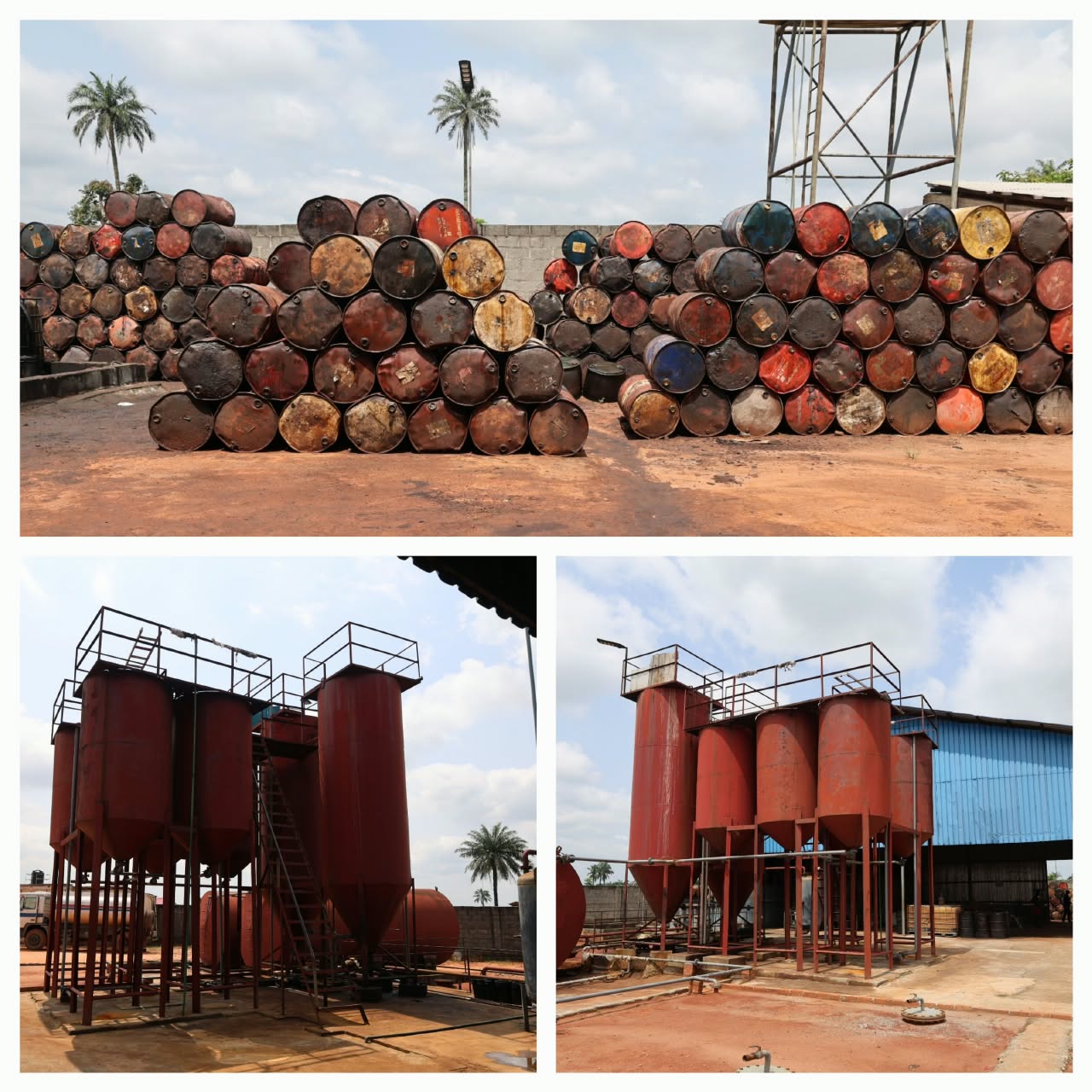
The Economic and Financial Crimes Commission (EFCC) says its operatives have uncovered an illegal oil refinery operated by Chinese nationals in the Ogere area of Ogun State.

According to a statement issued on Tuesday by the EFCC’s spokesperson, Dele Oyewale, the facility was discovered on Saturday, October 31, 2026, by operatives of its Lagos Zonal Directorate 2 following intelligence gathering and surveillance of the activities of illegal sludge oil refiners.

Oyewale said the facility was deserted when operatives stormed the premises, following an earlier crackdown on four illegal lithium processing plants in the area.

The operatives discovered waste products from the refining process and underground tanks suspected to have been used for heating and processing sludge oil.

According to the statement, “The Economic and Financial Crimes Commission uncovered an illegal oil refinery operated by Chinese in the Ogere area of Ogun State.

“The operation, conducted on Saturday, October 31, 2026, by operatives of the Lagos Zonal Directorate 2 of the EFCC, followed credible intelligence and surveillance by the Commission on the activities of the illegal sludge oil refiners.

See also  Suspend 2023 general election, replace Buhari with interim govt - Afe Babalola

“The refinery was found deserted when EFCC operatives stormed the premises, following the Commission’s earlier clampdown on four illegal lithium processing plants in the area. However, waste products from the refining process were discovered at the location.”

Oyewale said operatives also discovered underground tanks believed to have been used for heating and processing sludge oil.

“Two of the underground tanks inspected contained substances suspected to be Automotive Gas Oil (AGO), otherwise known as diesel.

“Preliminary investigations revealed that the operators sourced sludge oil, also known as black sludge, from Warri, Delta State, and Port Harcourt, Rivers State, and transported it to the illegal facility in Ogere for processing,” Oyewale added.

He said the operators subjected the sludge oil to intense heat, allowing lighter petroleum components to pass through chambers and filters in a process believed to produce diesel for sale in the Nigerian market.

“Personnel at the facility told EFCC operatives that the Chinese operators never disclosed their identities nor the name of the company behind the facility.

See also  Breaking: Lagos assembly confirms Bush, 21 others as Sanwo-olu's commissioners, rejects 17 nominees

“Consequently, operatives of the Lagos Zonal Directorate 2 of the EFCC have since taken over the premises as investigations continue to establish the identities of the operators, the ownership of the facility and the full extent of the suspected illegal activities and economic sabotage,” he added.

Continue Reading

News

Police bust high-tech indoor Cannabis farm in Lagos, arrest two suspects

Published

on

By

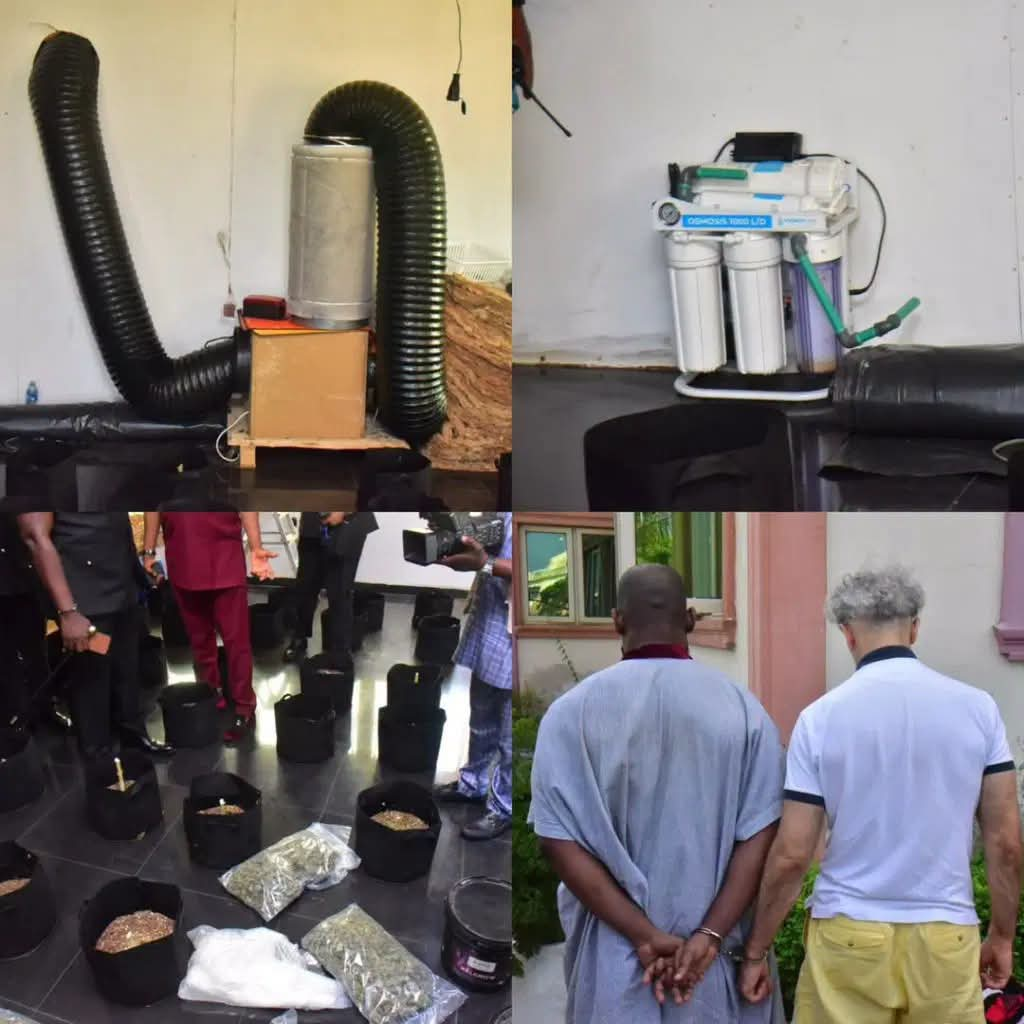
The Lagos State Police Command says its operatives have uncovered a suspected high-tech indoor cannabis farm at a residential property in the  Apapa,l area of the state.

The suspects are a 49-year-old Polish national and a 36-year-old Nigerian.

According to the police, the suspects are Thomas Razvickas and James Chisome, both of whom reportedly reside at the property where the facility was discovered.

The operation was carried out on November 2 at about 8:15 a.m., following credible intelligence received by police operatives, according to a statement issued on Tuesday by the Command’s Police Public Relations Officer, SP Abimbola Adebisi.

A search of the premises led to the discovery of a sophisticated indoor farming facility reportedly equipped for the cultivation, harvesting and processing of substances suspected to be cannabis.

The police said the two suspects had been taken into custody, adding that they had made confessional statements and were providing useful information to assist ongoing investigations.

See also  BREAKING: Christ Embassy Church HQ Oregun Lagos on fire

The Commissioner of Police in Lagos State, CP Tijani Fatai, visited the scene to inspect the facility, assess the scale of the operation and receive a briefing on the investigation.

Fatai commended the operatives for their vigilance and intelligence-led policing, while reaffirming the Command’s commitment to tackling drug-related offences and dismantling criminal networks in the state.

He also appreciated members of the public for providing credible information and urged residents to sustain their cooperation with the police.

Continue Reading

News

Troops kill ISWAP commanders, two Arab fighters in Borno

Published

on

By


The gallant troops of the Nigerian Army have killed Abu Hajara, a high-profile member of the Islamic State West Africa Province (ISWAP) Shura Council, and Abul Walid, a prominent commander and close associate of Ba Shuwa, the group’s overall Wali (leader).

In astatement issued on Sunday, the acting media information officer of Operation Hadin Kai, Mohammed Goni, said that two other high-ranking Arab fighters were also killed during the engagement in Kukawa LGA of Borno state on October 31.

Goni said the attack came three days after troops killed 55 terrorists, including three key commanders.

“Combined troops of Joint Task Force deployed in Kukawa defeated massive ISWAP terrorists attack on their locations and troops utilised both ground and air assets from the air component,” the statement reads.

“Following the engagement, troops recovered scores of arms, ammunition and communication devices.

“The successful engagement further demonstrates the combat readiness, vigilance and superior firepower of Operation HADIN KAI troops in sustaining pressure on terrorist elements across the theatre.

See also  Breaking: Lagos assembly confirms Bush, 21 others as Sanwo-olu's commissioners, rejects 17 nominees

“The attack on troops location at Kukawa comes barely 3 days after Buni Yadi attack where as at date 55 terrorists were neutralised including key commanders such as Ali Mandara Abba Gajiri (Munzir), Habu Ikkima Nakif Yana Faruk and Commander Gogore.”

Goni described the killing of the ISWAP fighters as a “significant blow to the leadership and operational capability” of the group.

Continue Reading

Trending News