Connect with us

News

Generators provide Nigerians 48.6% of electricity consumption – NBS

Published

on


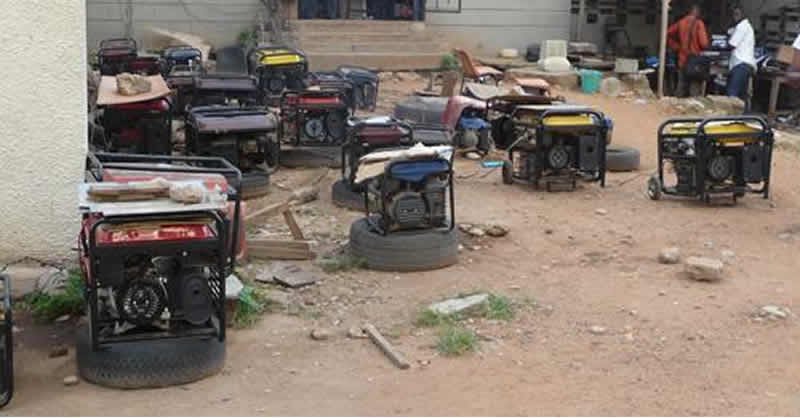
Latest data obtained from the National Bureau of Statistics has shown that generators powered by petrol, diesel and gas provide 48.6 per cent of the electricity consumed by power users across the country.

A document by the NBS on Power Sector Data Preview, which was presented to the Abuja Chamber of Commerce and Industry this month showed that almost half of the country’s electricity supply was from generators.

The report further showed that the national grid was providing 51.2 per cent of the country’s power needs, indicating that many citizens in Nigeria depend on generators for electricity.

The NBS document showed that petrol-powered generators accounted for the bulk (22.6 per cent) of the electricity supplied by generators.

This was followed by diesel-powered generators, 16.6 per cent, while gas-powered generators accounted for 9.4 per cent of the self-generated electricity.

The bureau said out of 51.2 per cent of electricity provided by the country’s power grid, gas-powered plants accounted for 39.5 per cent, while hydroelectric plants were providing 11.7 per cent.

See also  Nigeria’s inflation hits 31.70% in Feb – NBS

Off-grid renewables, according to the NBS, accounted for 0.1 per cent of the power consumed nationwide.

Commenting on the poor performance of the power sector despite being privatised more than eight years ago, the President, Nigerian Institution of Power Engineers, Israel Abraham, said the expectations of citizens in the privatised industry had not been met.

He disclosed this in a presentation sent to the ACCI, titled, “Nigerian power sector reform: Implementation, challenges and way forward.”

Abraham said, “In its efforts to improve the power supply situation in the country, the government opted for the reforms and eventual privatisation of the sector to attract private sector finance, technical and administrative expertise.

“However, the government and citizens’ expectations have not been fully realised many years after the exercise.”

He explained that the commercialisation and corporatisation of the sector, being the most critical stage in the reform implementation where bold and realistic decisions ought to have been taken, was skipped entirely in the implementation process.

See also  Police begins investigation into alleged attack on Funke Akindele's campaign team inside Lagos market

Abraham said, “It is at this stage that private sector initiatives, such as transparency and corporate governance frameworks are introduced into the industry that will attract capital inflow to improve operational efficiencies, reducing technical and non-technical losses.

“Unfortunately, this critical stage was skipped entirely in our implementation process.”

On the way forward, the NIPE president said there was a need to strengthen institutions such as the Nigerian Electricity Regulatory Commission, System Operator and Market Operator established to drive the reform implementation process.

He said, “Unbundle the Transmission Company of Nigeria into its component units, Transmission Service Provider, Market Operator and System Operator to instil confidence in the market. Ensure full implementation of the ruling documents (Acts, Market Rules and Grid Code) to bring discipline in the market.

“Government to reduce to the barest minimum political interference in the operation of the industry regulator -NERC, for it to be truly independent and that will instil confidence in new investors.”

See also  New Year Countdown: Know first and last country to enter 2024

Continue Reading
Click to comment

Leave a Reply

Your email address will not be published. Required fields are marked *

News

EFCC uncovers illegal oil refinery in Ogun

Published

on

By

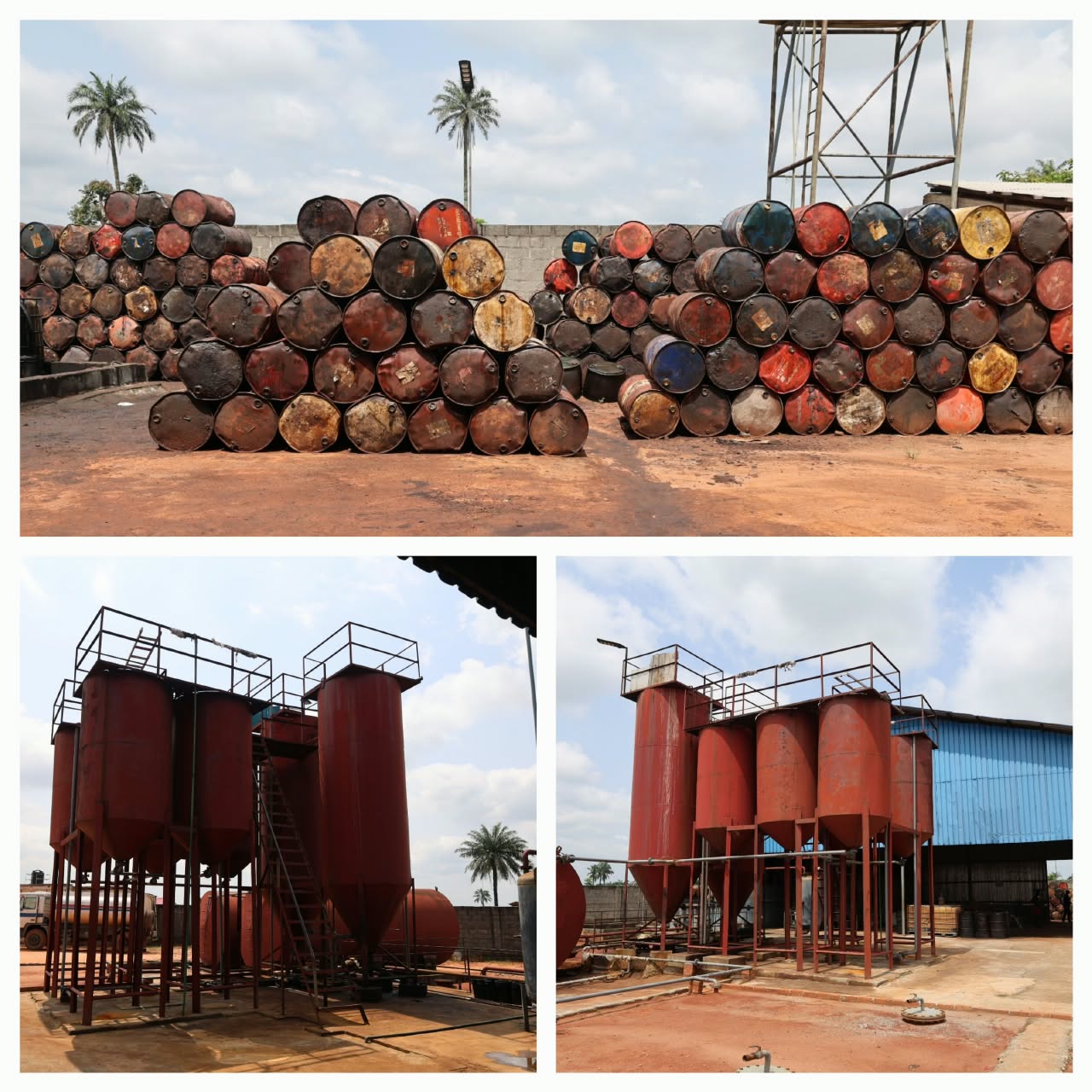
The Economic and Financial Crimes Commission (EFCC) says its operatives have uncovered an illegal oil refinery operated by Chinese nationals in the Ogere area of Ogun State.

According to a statement issued on Tuesday by the EFCC’s spokesperson, Dele Oyewale, the facility was discovered on Saturday, October 31, 2026, by operatives of its Lagos Zonal Directorate 2 following intelligence gathering and surveillance of the activities of illegal sludge oil refiners.

Oyewale said the facility was deserted when operatives stormed the premises, following an earlier crackdown on four illegal lithium processing plants in the area.

The operatives discovered waste products from the refining process and underground tanks suspected to have been used for heating and processing sludge oil.

According to the statement, “The Economic and Financial Crimes Commission uncovered an illegal oil refinery operated by Chinese in the Ogere area of Ogun State.

“The operation, conducted on Saturday, October 31, 2026, by operatives of the Lagos Zonal Directorate 2 of the EFCC, followed credible intelligence and surveillance by the Commission on the activities of the illegal sludge oil refiners.

See also  BREAKING: Nigeria’s inflation rate drops to 18%

“The refinery was found deserted when EFCC operatives stormed the premises, following the Commission’s earlier clampdown on four illegal lithium processing plants in the area. However, waste products from the refining process were discovered at the location.”

Oyewale said operatives also discovered underground tanks believed to have been used for heating and processing sludge oil.

“Two of the underground tanks inspected contained substances suspected to be Automotive Gas Oil (AGO), otherwise known as diesel.

“Preliminary investigations revealed that the operators sourced sludge oil, also known as black sludge, from Warri, Delta State, and Port Harcourt, Rivers State, and transported it to the illegal facility in Ogere for processing,” Oyewale added.

He said the operators subjected the sludge oil to intense heat, allowing lighter petroleum components to pass through chambers and filters in a process believed to produce diesel for sale in the Nigerian market.

“Personnel at the facility told EFCC operatives that the Chinese operators never disclosed their identities nor the name of the company behind the facility.

See also  Petrol tanker explodes in Ondo

“Consequently, operatives of the Lagos Zonal Directorate 2 of the EFCC have since taken over the premises as investigations continue to establish the identities of the operators, the ownership of the facility and the full extent of the suspected illegal activities and economic sabotage,” he added.

Continue Reading

News

Police bust high-tech indoor Cannabis farm in Lagos, arrest two suspects

Published

on

By

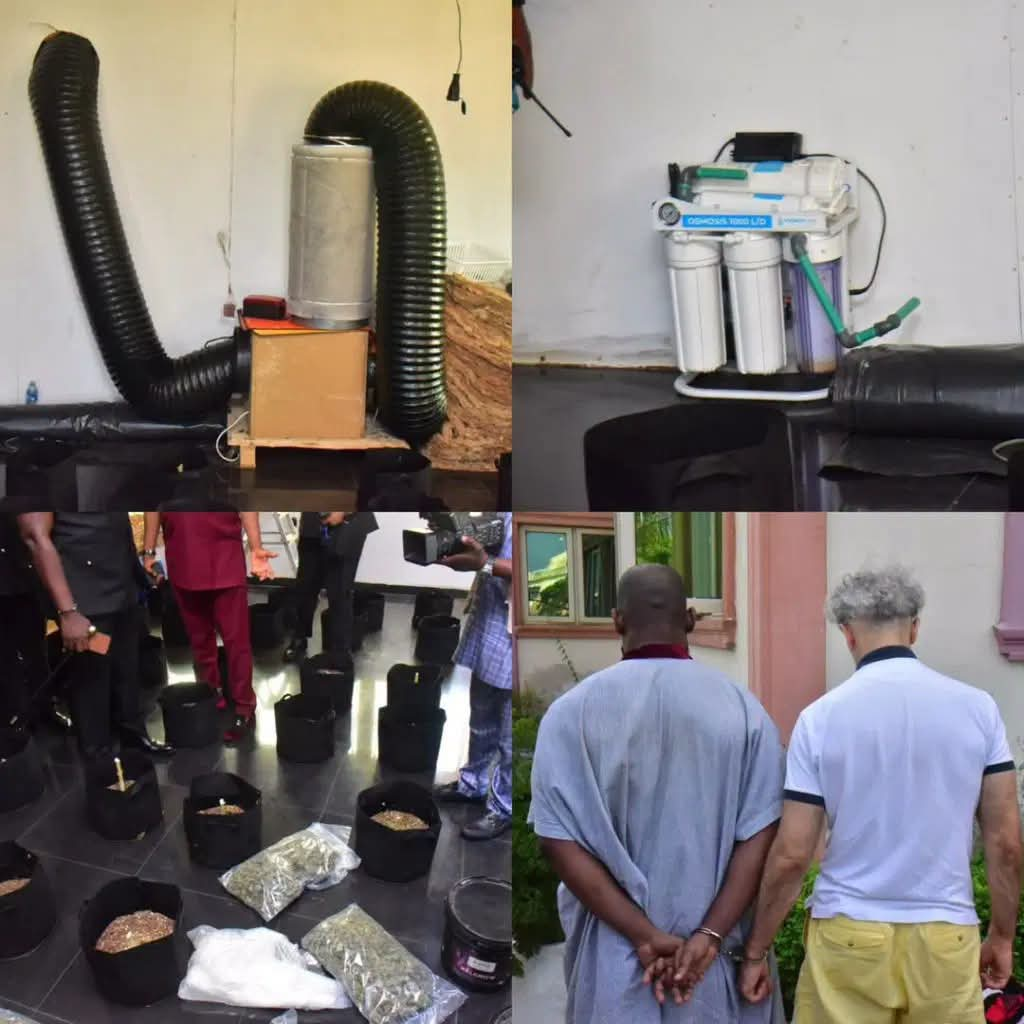
The Lagos State Police Command says its operatives have uncovered a suspected high-tech indoor cannabis farm at a residential property in the  Apapa,l area of the state.

The suspects are a 49-year-old Polish national and a 36-year-old Nigerian.

According to the police, the suspects are Thomas Razvickas and James Chisome, both of whom reportedly reside at the property where the facility was discovered.

The operation was carried out on November 2 at about 8:15 a.m., following credible intelligence received by police operatives, according to a statement issued on Tuesday by the Command’s Police Public Relations Officer, SP Abimbola Adebisi.

A search of the premises led to the discovery of a sophisticated indoor farming facility reportedly equipped for the cultivation, harvesting and processing of substances suspected to be cannabis.

The police said the two suspects had been taken into custody, adding that they had made confessional statements and were providing useful information to assist ongoing investigations.

See also  Rivers seals Atiku campaign office for ‘violating executive order’

The Commissioner of Police in Lagos State, CP Tijani Fatai, visited the scene to inspect the facility, assess the scale of the operation and receive a briefing on the investigation.

Fatai commended the operatives for their vigilance and intelligence-led policing, while reaffirming the Command’s commitment to tackling drug-related offences and dismantling criminal networks in the state.

He also appreciated members of the public for providing credible information and urged residents to sustain their cooperation with the police.

Continue Reading

News

Troops kill ISWAP commanders, two Arab fighters in Borno

Published

on

By


The gallant troops of the Nigerian Army have killed Abu Hajara, a high-profile member of the Islamic State West Africa Province (ISWAP) Shura Council, and Abul Walid, a prominent commander and close associate of Ba Shuwa, the group’s overall Wali (leader).

In astatement issued on Sunday, the acting media information officer of Operation Hadin Kai, Mohammed Goni, said that two other high-ranking Arab fighters were also killed during the engagement in Kukawa LGA of Borno state on October 31.

Goni said the attack came three days after troops killed 55 terrorists, including three key commanders.

“Combined troops of Joint Task Force deployed in Kukawa defeated massive ISWAP terrorists attack on their locations and troops utilised both ground and air assets from the air component,” the statement reads.

“Following the engagement, troops recovered scores of arms, ammunition and communication devices.

“The successful engagement further demonstrates the combat readiness, vigilance and superior firepower of Operation HADIN KAI troops in sustaining pressure on terrorist elements across the theatre.

See also  New Year Countdown: Know first and last country to enter 2024

“The attack on troops location at Kukawa comes barely 3 days after Buni Yadi attack where as at date 55 terrorists were neutralised including key commanders such as Ali Mandara Abba Gajiri (Munzir), Habu Ikkima Nakif Yana Faruk and Commander Gogore.”

Goni described the killing of the ISWAP fighters as a “significant blow to the leadership and operational capability” of the group.

Continue Reading

Trending News