Connect with us

News

EXPOSED: How Governor Ikpeazu Wired Billions to Cybercafe, Political Associates

Published

on

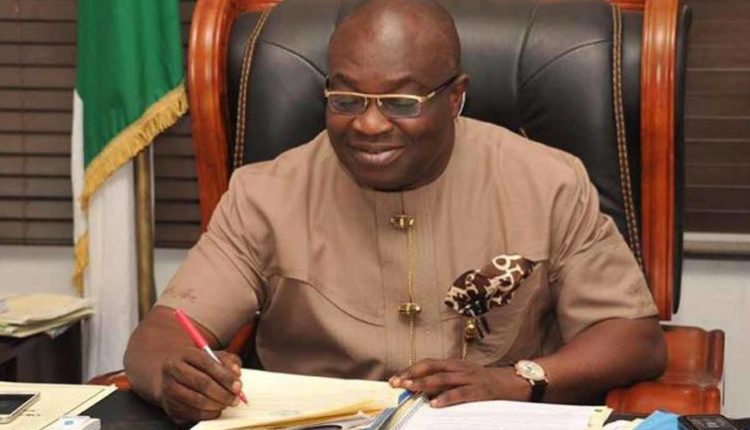
Governor Okezie Ikpeazu’s business and political associates, including those facing corruption charges, are laughing all the way to the bank in Abia State.

Mushroom companies linked to business and political allies of Governor Okezie Ikpeazu have been receiving billions from state-run bank accounts for as-yet-unknown contracts, Peoples Gazette can report based on a trove of financial records our reporters recently analysed.

Mr. Ikpeazu has often lamented Abia’s inability to generate enough revenues towards social and capital development of residents, yet the governor approved billions to his political underlings without securing relative service delivery, bank documents said.

Between 2016 and 2017, an estimated N3.4 billion went to three companies owned by Enyinnaya Nwafor, a close friend of Mr. Ikpeazu’s, from state bank accounts.

Mr. Nwafor, son of a departed former deputy governor, has used Tunnel End Investment Co. Ltd, Rock-Waters Integrated Services Ltd, Tetra-Lock Business Solutions Ltd to receive contracts in Abia under Mr. Ikpeazu.

Mr. Nwafor remained closely associated with Mr. Ikpeazu despite being under EFCC investigation, and his junior brother, Chimaeze, is a personal assistant to the governor. Both of them have been identified to the Gazette as critical to the governor’s questionable manoeuvre of public funds.

Delhope Resources Ltd, a registered Internet cafe, received contracts worth N412 million from Mr. Ikpeazu’s administration. It belonged to his business associate Innocent Adiele.

The Gazette highlighted the suspicious transactions to seek comments from Mr. Ikpeazu’s administration officials, including the information commissioner John Okiyi, but did not receive clarifications in time for this report.

See also  NFF owes national teams despite FG’s N17b grant, CAF $4m largesse

Messrs. Nwafor and Adiele also did not return multiple requests seeking comments from the Gazette for this story. But Mr. Nwafor had previously denied all allegations of corruption.

Mr. Ikpeazu has also said he has been running Abia, in Nigeria’s Southeast, as prudently as he could, dismissing criticism of corruption and incompetence as unfounded and politically-motivated.

Vulnerable accounts

Out of N105 billion debits from the Abia accounts reviewed by the Gazette for 2016 and 2017, at least N3.8 billion went to Tunnel End, Rock-Waters, Tetra-Lock and Delhope. The Gazette learnt that several companies linked to Mr. Ikpeazu’s associates received funds between 2016 and 2017, but their CAC filings could not be immediately obtained.

Further analysis of Abia’s finances under Mr. Ikpeazu showed three bank accounts were specifically targeted for questionable withdrawals in favour of businesses linked to the governor’s friends.

The state’s excess crude accounts, local revenue accounts and foreign loan interest accounts all saw massive withdrawals in favour of Tunnel End, Rock-Waters, Tetra-lock, and Delhope between 2016 and 2017. Other companies run by Mr. Ikpeazu’s associates that also received suspicious payment are still being identified.

On January 13, 2016 Tunnel End Investment received a payment of N176 million from the state’s excess crude oil account 1014381352 with Zenith Bank.

On January 26 of the same year, it received N100 million from the same account while on January 27, it received N275 million in two tranches of N250 million and N25 million with another N200 million paid to the company on May 1, 2016.

See also  (UPDATED) Edo election: PDP  heads to court

On February 8, 2017, a sum of N150 million was paid to Tunnel End from the state’s foreign loan interest account while five days later, the company received a payment of N993 million from the same account and N47.85 million was paid from the ministry of agriculture account on February 21, 2017.

For Rock-Waters, N176 million was paid on January 13, 2016 while N200 million and N10 million were paid on January 18, 2016 with an additional N100 million paid on January 21, 2016. All from the excess crude oil account and sent to firms linked to a man under corruption probe.

The company also received N50 million on October 26, 2016 while N30 million was paid on November 23, 2016 and N47 million on December 15, 2016. All from the consolidated IGR account.

Similarly, the company was paid N496.2 million on February 13, 2017 while N50 million was paid on April 18, 2017. All from the state’s foreign loan interest account.

Tetra-Lock was paid the sum of N149.6 million on January 13, 2016; while N40 million and N47 million were paid on November 13 and December 15, 2016, respectively.

Delhope got a payment of N100 million on January 6, 2016 and N92.4 million on January 15 of the same year while N150 million was credited to the company on October 26, 2016. On February 16, 2017 the company also received the sum of N70 million from the state’s foreign loan interest account.

Lost priority

See also  Immigration detains Sowore, seizes passport

Abia has long been amongst the states with poor leadership ranking, especially since 1999 when Orji Kalu handed over to his associate Theodore Orji who then handed over to another associate Mr. Ikpeazu.

Roads, sanitation and other basic needs that required urgent attention have suffered regression, which residents said would have been mitigated had Mr. Ikpeazu and his predecessors not conducted the state business in secrecy.

Mr. Ikpeazu said his administration has been repairing roads to take the state away from its status as the dirtiest in the country, but critics said this did not go far enough.

“The governor has clearly lost the priority when it comes to governance,” anti-corruption campaign Anayo Emeka said in a statement to the Gazette on Monday.

Ms. Emeka, based in the capital Umuahia, said Mr. Ikpeazu has awarded a lot of contracts that could not withstand basic scrutiny since 2015.

“They awarded contracts for billions of naira but when you get to the site of the contract you will find out that the job there cannot be more than N50 million or N100 million,” she said.

Most of the transfers obtained by the Gazette were conducted during Mr. Ikpeazu’s first time between 2015 and 2019, but the activist said the governor’s second term, which began mid-last year, had left the state worse off.

“You have only exposed what happened during his first term,” Ms. Emeka said. “You will find out that his second term is very bad for the state.”

Continue Reading
Click to comment

Leave a Reply

Your email address will not be published. Required fields are marked *

News

EFCC says it froze Osun account over ‘fraudulent handling’ of N11bn ecological, intervention funds

Published

on

By

The Economic and Financial Crimes Commission (EFCC) has explained that it froze the bank account of the Osun state government over alleged fraudulent handling of N11 billion ecological and intervention funds.

The anti-graft agency, in a statement on Wednesday, said it has been investigating the Osun state government since March regarding the alleged mishandling of the funds.

According to the agency, some officials of the state government, including the accountant-general of the state, had been interviewed by EFCC investigators.

The agency said amid the probe, it observed that huge transfers of funds were being made from the account into different corporate entities since August 2.

“These ongoing investigations of the state government would not have warranted any placement of Post No Debit order on its account but for the precipitate and unwarranted movement of funds from the accounts to different suspicious accounts since August 2, 2026,” the statement reads.

See also  BREAKING: Popular actress Ada Ameh is dead

“The Commission noticed huge transfers of funds into different corporate entities and had to swiftly halt the trend by freezing the accounts from which such heavy funds are being moved.

“The EFCC’s preventive mandate is a public-inclined framework of safeguarding public funds, assets and resources.

“The Commission cannot watch idly while a state government’s account is being pillaged.”

The anti-graft agency said it is aware of the forthcoming Osun governorship election, adding that it is “uncharitable” to overlook the huge transfers of funds over the “excuse of an upcoming election”.

“The Osun State government account was frozen to save public funds from being looted,” the agency said.

In a letter dated August 5, 2026, and signed by Adenike Babalola, assistant commander of the EFCC on behalf of the director of investigation, the anti-graft agency directed First Bank not to allow withdrawals from the Osun state government’s statutory allocation account as part of an ongoing investigation.

See also  (UPDATED) Edo election: PDP  heads to court

The agency instructed the bank to place a post-no-debit restriction on the account pending the conclusion of the probe.

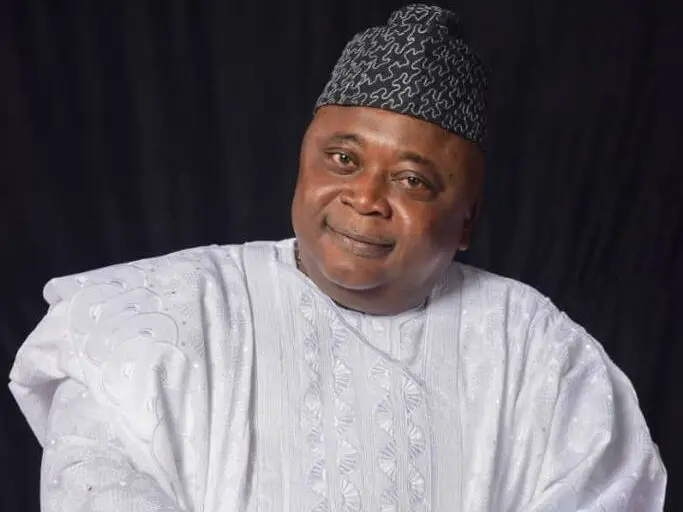
Reacting to the development, Ademola Adeleke, Osun governor, said the state government will not accept a situation in which federal government agencies trample upon the rights of subnational governments.

Adeleke said the Osun government has been witnessing numerous sponsored attacks, including the harassment of Accord party members and the move to stall the operations of LGAs in the state.

Adeleke said he has directed the attorney-general of the state to challenge the “illegality”.

Continue Reading

News

Osun threatens lawsuit as EFCC freezes govt account 10 days to election

Published

on

By

Less than 24 hours after Governor Ademola Adeleke alleged that the Economic and Financial Crimes Commission (EFCC) was planning to freeze the state government account domiciled with First Bank, the anti-graft agency has reportedly freezed the account, according to Vanguard.

The account, reportedly used for the payment of workers’ salaries, was placed on “Post No Debit” status by the anti-graft agency.

The development came hours after Governor Ademola Adeleke raised the alarm that the EFCC was planning to freeze the state government’s accounts and those of top government officials ahead of the August 15 governorship election.

In a statement issued earlier on Wednesday by the Commissioner for Information and Public Enlightenment, Kolapo Alimi, Adeleke described the alleged move as an attempt to cripple government activities before the poll.

The governor had insisted that there was no legal basis for freezing the accounts of a state government, arguing that the EFCC lacked the statutory powers to take such action.

See also  Tinubu to address Nigerians in nationwide broadcast at 7pm today

However, a source reportedly told Vanguard that the account had already been restricted.

“I can confirm that the state government account has been frozen by the EFCC. It is no longer an allegation. The governor will address the press shortly to update the public on the situation,” the source reportedly told Vanguard.

The reason for the restriction was not immediately known as of the time of filing this report.

The EFCC had yet to issue an official statement on the development.

The development comes as Osun prepares for its August 15 governorship election, with the account restriction expected to generate political reactions ahead of the poll.

Meanwhile, the state’s Attorney General and Commissioner for Justice, Oluwole Jimi-Bada, had said he has the mandate of the governor to sue the Economic and Financial Crimes Commission for freezing the government accounts.

Jimi-Bada said a ‘Post no debit’ letter from the EFCC was forwarded to the management of the First Bank where Osun government accounts were domiciled on Wednesday.

See also  Rumble in the house of gospel music: Popular gospel artiste Tope Alabi under fire

The commissioner, who expressed readiness to proceed to court, said the move by the anti-graft agency may hamper government’s business, noted that Governor Ademola Adeleke was not using state funds to run its campaign for reelection.

“I have the mandate of the governor to proceed to the Federal High Court to challenge this move. EFCC can investigate the accounts but it can’t freeze the accounts without order of court.

Continue Reading

News

WAEC releases 2026 WASSCE results, withholds 167,486 candidate’s results over malpractice 

Published

on

By

The West African Examinations Council says it is withholding the results of 167,486 candidates, representing 8.59 per cent of those who sat the 2026 Computer-Based West African Senior School Certificate Examination for School candidates, over alleged examination malpractice.

This was disclosed by the Head of WAEC Nigeria National Office, Dr Amos Dangut, who announced the release of the results in Lagos on Wednesday.

The number of withheld reults, however, represents a decline from the 9.7 per cent recorded in 2025.

Dangut said the council withheld the affected results due to various infractions, including the increasing use of mobile phones in examination halls despite the existing ban and organised cheating in some schools.

“The increasing use of cell phones in the examination hall, in spite of the existing ban, and organised cheating in some schools, are other nagging issues,” Dangut said.

He added that some supervisors and invigilators found assisting candidates in malpractice had been arrested and would face disciplinary action through the relevant state ministries of education.

See also  Tinubu to address Nigerians in nationwide broadcast at 7pm today

A total of 1,959,668 candidates from 24,207 schools registered for the examination across Nigeria, Benin Republic, Côte d’Ivoire and Equatorial Guinea, while 1,950,726 candidates eventually sat for the examination.

1,200,514 candidates (61.54 per cent) obtained credits and above in at least five subjects, including English Language and Mathematics.

1,687,378 candidates (86.50 per cent) secured credits and above in a minimum of five subjects, with or without English Language and Mathematics.

The number of candidates who obtained credits in five subjects including English and Mathematics dropped by 1.42 percentage points compared with the 2025 examination.

Of the 1.2 million candidates who achieved credits in English and Mathematics:

558,883 (28.65 per cent) were male.

641,631 (32.89 per cent) were female.

Overall, 997,267 females (51.12 per cent) and 953,459 males (48.88 per cent) participated in the examination.

WAEC said 1,834,695 candidates, representing 94.05 per cent, had their results fully processed and released, while the results of 116,031 candidates (5.95 per cent) were still being processed.

See also  Rumble in the house of gospel music: Popular gospel artiste Tope Alabi under fire

The council also disclosed that 1,213 candidates with special needs participated in the examination. They included:

137 visually impaired candidates;

491 candidates with hearing impairment;

55 spastic and mentally challenged candidates; and

41 physically challenged candidates.

The 2026 examination marked the second edition of the Computer-Based WASSCE for School Candidates, following the introduction of the format by WAEC.

Dangut said the council introduced several innovations, including the Digital Examiner Mark System to improve the speed of processing results, serialisation of question papers to curb malpractice, and a new portal that allows candidates to generate e-PINs directly for checking their results.

The examination was conducted between April 24 and June 19, 2026, with 102,708 examiners involved in marking across 88 marking venues.

Dangut, who described the briefing as his third and final engagement as WAEC Nigeria National Office head, said candidates sponsored by states indebted to the council would not have their results released until the outstanding payments were cleared.

See also  NFF owes national teams despite FG’s N17b grant, CAF $4m largesse

Continue Reading

Trending News