Connect with us

Business

Oando Plc’s historic Obodo Crude lift and rise as Nigeria’s global energy champion

Published

on


By Victor Ojelabi

In a staggering achievement for Nigeria’s oil and gas industry, Oando Trading, a subsidiary of the Wale Tinubu-led Oando Group, etched its name into the nation’s energy history books by becoming the first company to lift Nigeria’s newest crude blend, Obodo.

This development in April 2025 is not just a commercial breakthrough; it symbolises the growing strength and ambition of indigenous oil companies poised to dominate the global energy conversation.

The Obodo crude, a medium sweet blend, is extracted from the onshore OML 150 block operated by Continental Oil & Gas Limited, a company under the ownership of business magnate Dr. Mike Adenuga, Jr., GCON.

The block functions under a production sharing contract with the Nigerian National Petroleum Company Limited (NNPCL), headed by Group Chief Executive Officer Bayo Ojulari.

To complete the value chain, the crude was stored and lifted via the FPSO Tamaratokani, a state-of-the-art floating production, storage, and offloading vessel owned by Century Group under the leadership of Ken Etete.

Its strategic location off the Niger Delta coast enables swift access to global markets, ensuring that Nigeria’s oil flows efficiently into the international energy supply.


Oando Trading’s export tanker, Atlantic Spirit, made the historic first lift of Obodo crude, coordinated seamlessly by Century Group’s technical teams.

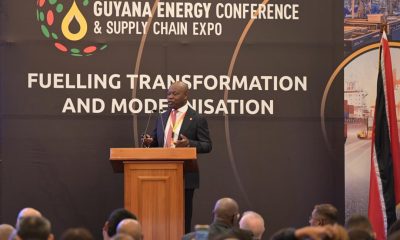
See also  Oando boss, Adewale Tinubu takes centre stage at Guyana Energy Conference


The symbolic importance of this transaction was not lost on Oando’s CEO, Wale Tinubu, who remarked, “This isn’t just a trade; it’s a message. The message that Nigeria’s energy industry is ready, capable, and rising. One historic barrel at a time.”


This important milestone aligns with President Bola Ahmed Tinubu’s Renewed Hope agenda, which aims to boost Nigeria’s daily oil production by one million barrels.


For stakeholders like NNPCL, Oando, Century Group, and Continental Oil & Gas, the Obodo lift stands as proof to the capability of Nigerian companies to drive national energy goals through indigenous leadership and innovation.


But the story of Oando doesn’t end with one successful lift. In fact, it is only the latest chapter in a bold transformation that has seen the company evolve from a local oil marketer to Nigeria’s leading integrated energy solutions provider—and now, a rising global brand in the energy sector.


Central to Oando’s ascendancy is its strategy of acquiring high-value assets to expand its upstream portfolio.


In 2024, Oando acquired a 100% stake in Nigerian Agip Oil Company Limited (NAOC) from Italian energy giant Eni S.p.A.


The landmark $783 million transaction was hailed as the “Energy Deal of the Year 2024” at the Nigeria International Energy Summit.


With this acquisition, Oando significantly increased its interest in four critical onshore assets—OMLs 60, 61, 62, and 63—and consolidated its role as a major operator in Nigeria’s oil heartland.

See also  BREAKING: Nigeria’s GDP grew by 3.46% in Q4 2023, says NBS


But Oando’s ambitions go beyond national borders.


The company was recently named the preferred bidder to lease the Guaracara refinery in Trinidad and Tobago, a strategic move into the Caribbean energy market.


This expansion marks Oando as one of the few African energy firms extending its footprint into other regions, positioning itself as a truly global player.


Oando’s rise is not just based on strategic vision; it is backed by numbers.

For the financial year ending December 2024, the company posted a 45% increase in revenue, hitting ₦4.1 trillion, up from ₦2.9 trillion in the previous year.


Its total assets soared to ₦7.5 trillion, a nearly threefold rise from ₦2.6 trillion, establishing both aggressive growth and investor confidence.


This growth is underpinned by equally ambitious production targets.


The company has announced plans to increase its daily crude oil output to 100,000 barrels and gas output to 1.5 billion standard cubic feet over the next five years.


These targets place Oando at the centre of Nigeria’s push for energy security and economic transformation.


Also, in an industry often criticised for its environmental impact, Oando is charting a progressive course.

See also  Nigeria repays $500m Eurobond debt


It recently signed a memorandum of understanding to develop a 1.2-gigawatt solar project—the largest in Nigeria’s history.


This bold step into renewables reflects the company’s growing awareness of the global energy transition and its desire to be a part of the solution, not just the status quo.

At the heart of Oando’s transformation is Wale Tinubu, a figure synonymous with strategic leadership in Africa’s energy space.

Recognised as a Global Young Leader by the World Economic Forum and celebrated for his tenacity and foresight, Tinubu has steered Oando through decades of regulatory, operational, and financial challenges to emerge as a beacon of what is possible for African corporations on the world stage.

From the historic lifting of Obodo crude to high-profile global acquisitions and renewable energy ventures, Oando is demonstrating that an indigenous Nigerian firm can be both a national leader and a global competitor.

Its journey exemplifies a broader shift in Africa’s energy narrative; one in which African companies are not just participants but pacesetters in the global energy economy.


As the Atlantic Spirit sails into international waters bearing Nigeria’s latest crude blend, it carries more than oil; it carries the aspirations of a nation and the emergence of Oando as a true African energy giant with a global vision.

 

Continue Reading
Click to comment

Leave a Reply

Your email address will not be published. Required fields are marked *

Business

Wema Bank launches Hackaholics Accelerator 2026 Cohort with ten startups

Published

on

By

Wema Bank, Nigeria’s most innovative bank and the pioneer of Africa’s first fully digital bank, ALAT, has launched the 2026 Hackaholics Accelerator Program, welcoming ten startups into the cohort.

The Hackaholics Accelerator, a selective growth program under Wema Bank’s Hackaholics platform, is designed to help promising Nigerian startups strengthen their business foundations and prepare for sustainable scale and investment.

After six years of driving innovation through Hackaholics, Wema Bank is extending its support beyond ideation and competition into hands-on startup building through Hackaholics Accelerator. The initiative provides founders with the structure, mentorship, and ecosystem access they need to turn strong ideas into viable, scalable businesses.

The 2026 cohort comprises ten startups in total, drawn from the top 10 performing finalists from Hackaholics 6.0. The startups include Farmslate, Ploy, Stocmed, Feest (Chao), Varsityscape, MamaAlert, Sane, Cyclex, Kieva, and Loocomo.

Commenting on the evolution of Hackaholics and the second edition of its Accelerator program, MD/CEO of Wema Bank, Moruf Oseni, said it reflects the Bank’s commitment to supporting founders beyond ideation and helping promising innovations grow into sustainable businesses.

See also  Wema Bank empowers 100,000 MSMEs in Ekiti

“Over the past six years, Hackaholics has grown into more than a competition; it has become a platform that reveals the depth of innovation and entrepreneurial potential that exists across Nigeria,” Oseni said. “With this second edition of Hackaholics Accelerator, we are taking the next step by supporting founders beyond the ideation stage and into the process of building sustainable businesses.

The startups selected for this cohort represent some of the most promising solutions emerging from the Hackaholics ecosystem, and we are committed to helping them refine their models, strengthen their foundations, and scale their impact.”

Speaking on the ten startups selected for the cohort, Babatunde Mumuni, Chief Transformation Officer, Wema Bank, added that the Accelerator will guide founders through a structured process to strengthen their businesses and prepare them for sustainable growth.

“The startups selected for this cohort already have strong foundations, with products already in market, early traction, and clear potential for growth,” Mumuni said. “Each of the selected startups brings a unique solution to real challenges across different sectors. What Hackaholics Accelerator provides is the environment to strengthen those foundations through hands-on mentorship, strategic guidance, and access to the right networks. Over the course of the program, we will work closely with these founders to refine their models, deepen market traction, and prepare them for sustainable scale.”

See also  Nigeria repays $500m Eurobond debt

All 10 startup founders will undergo a series of training sessions led by industry experts across key areas critical to startup growth. Facilitators for the programme include the Chief Transformation Officer, Corporate Transformation & Innovation, Wema Bank, Babatunde Mumuni; Head, Strategy & Investor Relations, Wema Bank, Femi Akinfolarin; Head, Data Transformation, Wema Bank, Olamide Jolaoso; and Team Lead, Corporate Social Investment, Wema Bank, Oluwatoyin Adetunji.

Other facilitators include the Managing Director, Impact Hub Lagos, Idowu Akinde; Managing Director, B4B Partners, Napa Onwusa; Startup Advisor and Scout, Onaopemipo Dara; Mentor at Google for Startups, Rosemond Phil-Othihiwa; Head of Growth, Africhange, Tega Ogigirigi; and Startup Advisor and Mentor, Ademola Adewuyi.

Hackaholics Accelerator is supported by Wema Bank’s broader innovation infrastructure, including IDEAx Labs, the Bank’s innovation and venture platform, and its corporate venture programme, which focuses on enabling startup growth through partnerships, infrastructure, and capital access.

Since its launch in 2019, Hackaholics has grown into one of Nigeria’s most influential youth innovation platforms, attracting over 15,000 applicants and supporting hundreds of digital solutions across multiple industries.

See also  It's A Done Deal! Jubril Adewale Tinubu shines like new Penny as he acquires NAOC

Through the Hackaholics initiative, Wema Bank has disbursed over $400,000 in funding to young innovators and startup founders across Nigeria.

Startups, such as Feegor, Myitura, and Bunce are among those that have participated in previous editions of the program, reflecting the Accelerator’s focus on supporting growth-ready companies across diverse sectors. This second edition builds on that progress by helping startups move decisively from innovation to growth.

Continue Reading

Business

Banks to charge 7.5 VAT for mobile transfer, PoS transaction fees

Published

on

By

Banks are set to commence the deduction of 7.5 percent value-added tax (VAT) on banking services, including point of sale (POS) transaction fees, mobile banking transfer fees, from January 19. 

In an email to customers, Moniepoint Microfinance Bank said the charge stems from a government-endorsed regulatory change.

According to reports, the VAT is charged on the N50 stamp duty and does not affect the actual amount being transferred or withdrawn.

The proceeds of the charge will be remitted to the Nigerian Revenue Service (NRS).

“We would like to inform you of an upcoming government-endorsed regulatory change regarding Value Added Tax (VAT),” Moniepoint said.

“From Monday, 19 January 2026, we are required to collect a 7.5% VAT, to be remitted to the Nigerian Revenue Service (NRS) (formerly known as the Federal Inland Revenue Service).

“VAT will apply to certain banking services that include: electronic banking charges such as POS transaction fees, mobile banking fees (transfers), USSD transaction fees, POS activation fee, card issuance fee and Moniebook subscription.”

See also  Dwindling revenue: Nigeria faces hard times, says FG

According to the bank, the charge also applies to other fees, such as loan processing and documentation fees.

“Services that DO NOT attract VAT include: interest on loans and advances, and interest on deposits and savings,” Moniepoint said.

“Please note: This is not a price increase by Moniepoint. Moniepoint is required to collect and remit VAT to the Nigerian Revenue Service (NRS).

“The NRS has communicated a deadline of 19th January for all financial institutions (commercial banks, microfinance banks and electronic money transfer operators) to start collecting and remitting VAT.”

The bank clarified that VAT applies only to banking or service fees and not to interest, adding that the charge will be listed separately on transaction reports and statements.

The new tax laws retain the VAT rate at 7.5 percent.

Continue Reading

Business

Wema Bank Launches Upgraded Version of ALAT Banking App

Published

on

By


…introduces Voice Banking, Tap and Pay and Uptime Prediction

Wema Bank, Nigeria’s most innovative bank and pioneer of Africa’s first fully digital bank, ALAT, has launched the upgraded version of its flagship digital banking platform, ALAT by Wema. Designed as the next phase in digital banking, the upgraded version of ALAT delivers a smarter, faster, and more intuitive experience, reinforcing Wema Bank’s leadership in technology-driven financial services.


Tagged ALAT: The Evolution, the upgraded version represents a significant advancement in how customers interact with their bank.


It enables seamless banking through intelligent features such as voice banking (called SAW), which allows customers to carry out banking activities using natural voice commands, reducing friction and improving accessibility. It also introduces Tap and Pay for quick, secure, and convenient contactless transactions, alongside uptime prediction that enhances transparency, reliability, and confidence around service availability.


Together, these innovations are designed to simplify everyday banking while anticipating customer needs in real time, reinforcing Wema Bank’s commitment to trust, efficiency, and customer-centric digital experiences.

See also  World Bank approves $1.57bn for Nigeria to improve healthcare services, address flooding


Announcing the upgraded version, the Managing Director and Chief Executive Officer of Wema Bank, Mr. Moruf Oseni, said, “ALAT: The Evolution is more than an upgrade. It is a clear demonstration of our commitment to redefining digital banking in Africa.

” By understanding the future of banking and listening closely to our customers, we have upgraded ALAT by Wema to a digital banking platform that is smart, intelligent and dependable.

“This evolution reinforces our promise to deliver innovation that genuinely enhances how people live, work, and transact everyday.”


He added that migrating to the upgraded app is seamless. “Existing customers can simply visit the Google Play Store or Apple App Store to update their existing ALAT app and sign-in with their existing login details (All their account information and transaction history remain intact on their profile and they will also gain access to new features that make banking faster, more intuitive, and more reliable).

See also  Nigeria repays $500m Eurobond debt


For new customers, all they have to do is visit the Google Play Store or Apple App Store to download ALAT by Wema app and click the Get Started icon to onboard seamlessly.


Speaking on the technology in the upgraded ALAT by Wema, Mr. Olusegun Adeniyi, Chief Digital Officer at Wema Bank, explained, “With ALAT: The Evolution, we set out to enhance not just functionality but the overall banking experience. By integrating voice banking, contactless payments, and predictive reliability, we are delivering a platform that is built on powerful technology and responds intelligently to customer needs. This upgrade reflects our long-term digital vision to create a digital bank that is adaptive, intuitive, and consistently available.”


Built on speed, intelligence, and user-centric design, ALAT: The Evolution redefines everyday banking through intuitive features such as voice-enabled transactions, contactless payments, and predictive service reliability. Designed to anticipate customer needs in real time, the platform delivers a smarter, more seamless, and dependable digital banking experience that reflects Wema Bank’s vision for the future of finance.

See also  BREAKING: Nigeria’s GDP grew by 3.46% in Q4 2023, says NBS


With the upgraded version of ALAT, Wema Bank continues to strengthen its position as a digital-first institution, delivering innovative solutions that empower individuals and businesses to bank with confidence in an increasingly digital economy.

Continue Reading

Trending News