Connect with us

Business

ExxonMobil announces plan to invest $10bn in Nigeria’s deep-water oil operations

Published

on

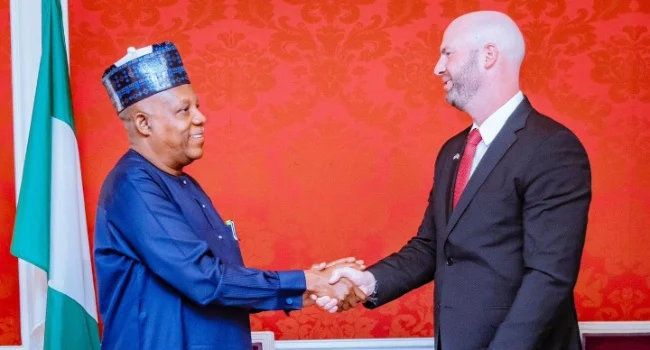
ExxonMobil has announced plans to invest $10 billion in Nigeria’s deep-water oil operations.

Shane Harris, chairman and managing director of ExxonMobil Affiliates in Nigeria, spoke on Wednesday during a high-level meeting with Vice-President Kashim Shettima on the sidelines of the ongoing 79th session of the United Nations General Assembly (UNGA) in New York.

In a statement by Stanley Nkwocha, senior special assistant to the president on media and communications, Harris reaffirmed the company’s commitment to investing in Nigeria.

“Our commitment to Nigeria remains unwavering. As we celebrate 70 years of oil production and 8 billion barrels produced, we’re not retreating but refocusing our investments on deep-water opportunities,” he said.

Harris said the company is working closely with President Bola Tinubu’s office to secure favourable fiscal arrangements to make the investment possible.

“The centerpiece of ExxonMobil’s new strategy is the Owo project, a substantial subsea tie-back that could represent a $10 billion investment,” he said.

“Despite the planned divestment of its onshore assets to Seplat Energy, ExxonMobil aims to inject $1 billion annually into maintenance operations and an additional $1.5 billion to boost production by 50,000 barrels per day over the next few years.”

See also  Campaign funds: Probe Peter Obi, Yesufu, Afenifere – LP tells EFCC, NSA

‘EXXONMOBIL’S INVESTMENT IS DUE TO ECONOMIC REFORMS’

Shettima described the investment as a testament to the administration’s economic reforms and investment-friendly policies.

“This potential investment by ExxonMobil aligns perfectly with the President Bola Ahmed Tinubu administration’s vision for a more investment-friendly Nigeria,” Shettima said.

“We are committed to creating an enabling environment for such transformative projects.

“The renewed hope agenda places a strong emphasis on ease of doing business. We have initiated comprehensive reforms to streamline bureaucratic processes, enhance transparency, and provide fiscal incentives that make Nigeria an attractive destination for global investors.”

Shettima highlighted several recent policy changes introduced by the administration, including unifying the exchange rate, removing petrol subsidy and implementing tax reforms.

The decisions, he said, are designed to create a stable and predictable business environment despite their short-term challenges.

Regarding the oil and gas sector, the vice-president said the government is actively working on revising the fiscal framework for deep-water operations, ensuring both investment appeal and fair returns for Nigerians.

See also  Tinubu departs UK for France

“The potential ExxonMobil investment is a clear indication that we are moving in the right direction,” he said.

“As we welcome ExxonMobil’s renewed commitment, we see this as just the beginning. Our doors are open to all investors across various sectors. The message is clear: Nigeria is open for business, and the President Tinubu administration is your partner in progress.”

DP WORLD TO DEVELOP MULTIBILLION-DOLLAR PORT

DP World, an international maritime giant, has announced plans to develop a multibillion-dollar port project in Nigeria.

Sultan Ahmed bin Sulayem, group chairman and chief executive officer (CEO) of DP World, announced the company’s intentions during a courtesy visit to Shettima on the sidelines of the ongoing UNGA in New York.

Nkwocha said the proposal comes as a direct response to Tinubu’s aggressive investment drive and efforts to improve the ease of doing business in the country.

“Nigeria is a massive market with hugely underutilised potentials. The Nigerian market has the capacity to dominate this sector in Africa. It is a major African country with a huge asset and resource base,” Sulayem said.

“With our supply chain of over 2,500 points of sale to Nigeria, we will bring in the requisite capital, human and material resources needed to achieve this feat.”

See also  Presidential election: Amaechi, Cole worked against Tinubu’, Wike alleges

Sulayem expressed confidence in the Nigerian economy, citing the country’s vast import and export market as a key factor in their decision to invest.

Welcoming the initiative, the vice-president said the proposal is a testament to Tinubu’s avowed commitment to attracting foreign investments to Nigeria.

He emphasised the administration’s ongoing efforts to create a more investor-friendly environment.

“Nigeria is open to investors from around the world. We are witnessing a total rejuvenation in terms of economic policies aimed at freeing up the economy and making way for a free, fair, and enduring market,” Shettima said.

He assured the investors of the government’s full support and the administration’s dedication to facilitating foreign investment and economic growth.

Others present at the meetings included Doris Uzoka-Anite, minister of industry, trade, and investment; Hannatu Musa Musawa, minister of arts, culture, and creative economy; and Jamila Ibrahim Bio, minister of youth development, among many others.

Business

Nigeria’s foreign reserves rise to $52.66 billion, highest in 17 years

Published

on

By


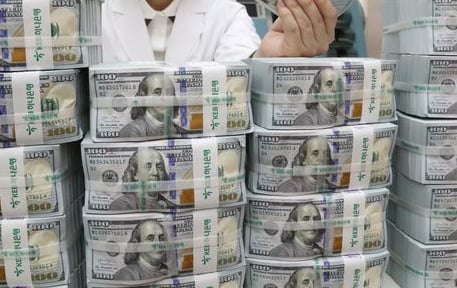
Nigeria’s gross external reserves surged to $52.66 billion as of August 19, reaching their highest level in more than 17 years.

This was contained in the latest data from the Central Bank of Nigeria (CBN).

The reserves stood at $52.65 billion on August 19, up from $45.56 billion recorded on January 2, representing an increase of about $7.09 billion or 15.6 percent in less than eight months.

The latest position also surpasses the previous 2026 peak of about $52.04 billion recorded in July.

Data from the CBN showed that reserves crossed the $52 billion mark for the first time this year in July, reaching $52.02 billion on July 20.

The figure was the highest since January 2009, when reserves stood at about $52.01 billion.

The reserve position had declined earlier in the year, falling from $49.18 billion on April 1 to about $48.33 billion in early May.

See also  Ogun Customs seized N229m contraband in one week - Controller

It subsequently recovered, crossing the $50 billion mark in June and rising above $51 billion before surpassing $52 billion in July.

The governor of the CBN, Olayemi Cardoso, had earlier attributed the increase in reserves to stronger foreign exchange inflows, including receipts from crude-oil-related taxes and third-party inflows.

Cardoso also said the reserve level provided import cover for about 11 months of goods and services, significantly above the three-month international benchmark.

The increase in the external buffer has coincided with improved foreign exchange liquidity and a stronger naira.

Recent market data showed the naira appreciating to about N1,346.49 per dollar in the official market last week.

Also, in its 2026 macroeconomic outlook, the apex bank projected that Nigeria’s external reserves would rise to about $51.04 billion by the end of the year.

The latest figure is about $1.62 billion above that projection.

Continue Reading

Business

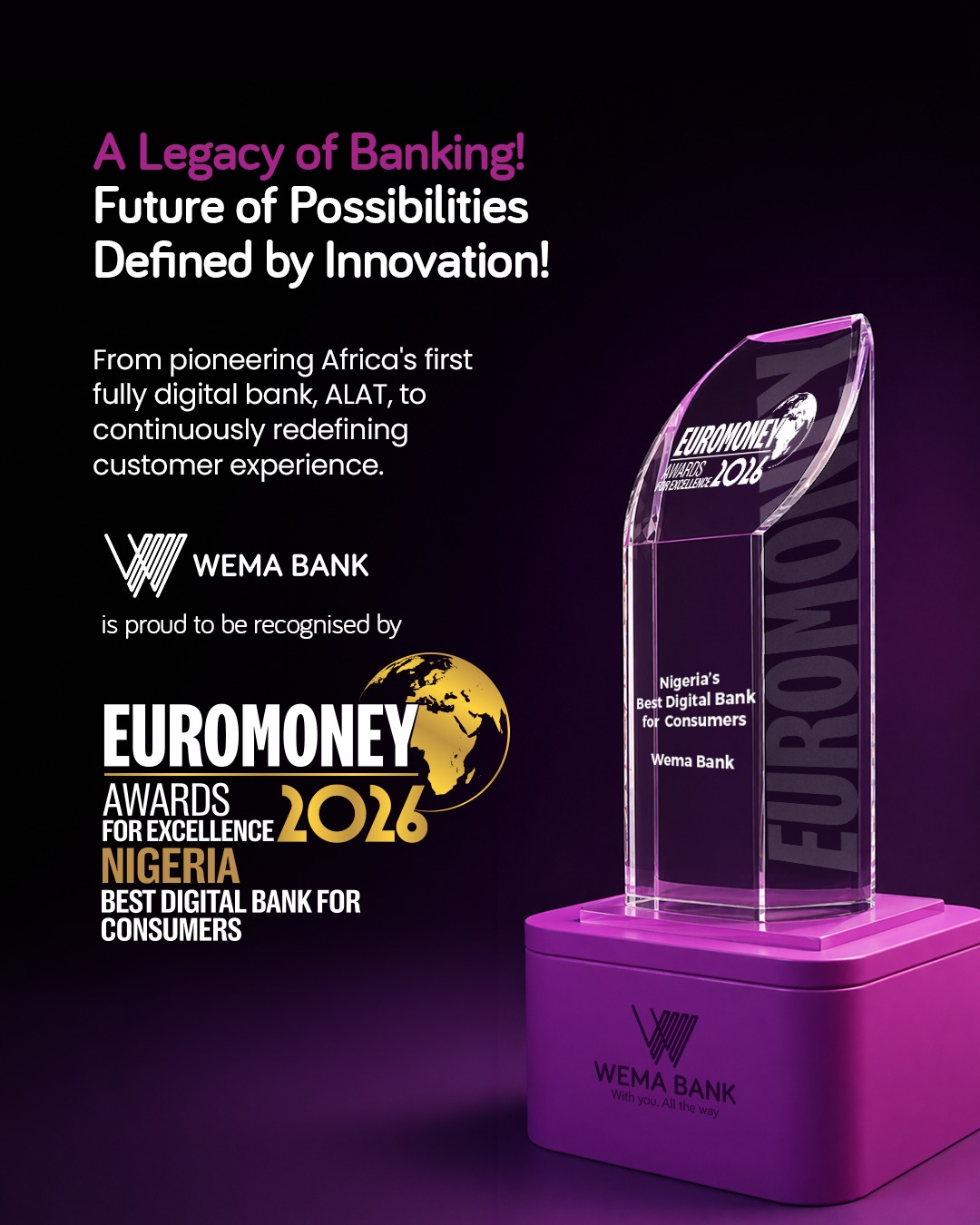
Wema Bank wins Euromoney’s Nigeria’s best digital bank for consumers 2026 award

Published

on

By

Recognition affirms bank’s leadership in digital innovation and customer-centric banking

Wema Bank, Nigeria’s oldest indigenous bank and pioneer of Africa’s first fully digital bank, ALAT, recently added another feather to its already heavily-studded cap after it was named Nigeria’s Best Digital Bank for Consumers 2026 by Euromoney, one of the world’s most respected authorities on financial services and banking excellence.

The prestigious recognition affirms the Bank’s sustained leadership in digital innovation, customer experience and financial inclusion, reinforcing its position as one of Nigeria’s leading technology-driven financial institutions.

Presented annually, the Euromoney Awards for Excellence celebrate banks that are redefining financial services through innovation, measurable impact and outstanding customer value.

In selecting Wema Bank for the award, Euromoney recognised the Bank’s successful digital transformation journey, its continuous innovation through ALAT, Africa’s first fully digital bank, and its unwavering commitment to delivering simpler, smarter and more accessible banking experiences for customers.

See also  Police reject N174m bribe from 28-year-old notorious fraudster

Commenting on the recognition, the Managing Director/Chief Executive Officer of Wema Bank, Moruf Oseni, said: “This award is a strong validation of the deliberate investments we have made over the years to build a truly digital bank that puts customers at the centre of everything we do. Innovation for us has never been about technology for its own sake. It has always been about creating solutions that make banking easier, faster, safer and more rewarding for every customer.

“From pioneering Africa’s first fully digital bank with ALAT to continuously evolving our digital capabilities, we have remained focused on anticipating customer needs and building experiences that create real value. We are honoured by this recognition from Euromoney and inspired to continue pushing the boundaries of innovation as we shape the future of banking in Nigeria.”

A key milestone in Wema Bank’s digital transformation has been the evolution and upgraded version of ALAT, which introduced next-generation capabilities including voice banking, tap-to-pay functionality, personalised financial services and integrated investment opportunities through strategic partnerships.

See also  Good morning! Nigerian Newspapers Headlines: FAAC bonanza: Govs face questions as payouts hit N47tn

Together with faster digital onboarding, AI-powered fraud monitoring, intelligent customer personalisation and an expanding agency banking network, these innovations continue to enhance customer experience while extending financial services to more Nigerians.

Euromoney also recognised Wema Bank’s ability to leverage technology to build deeper customer relationships through data-driven personalisation, enabling customers to receive tailored recommendations across savings, investments and credit products based on their financial needs and behaviour.

For over eight decades, Wema Bank has remained at the forefront of innovation in Nigeria’s financial services industry. As the pioneer of Africa’s first fully digital bank, the Bank continues to redefine banking by combining technology, customer insight and innovation to deliver seamless, secure and inclusive financial solutions for individuals, businesses and communities.

The Euromoney recognition further reinforces Wema Bank’s commitment to building the future of banking through continuous innovation, operational excellence and customer-centric solutions that create lasting value.

Continue Reading

Business

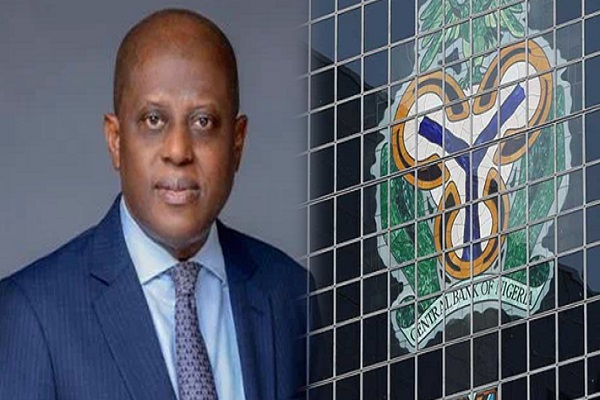
CBN revokes licences of 46 microfinance banks

Published

on

By

The Central Bank of Nigeria (CBN) has revoked the operating licences of 46 microfinance banks (MFBs).

The apex bank cited the failure of the banks to meet regulatory requirements for continued operation.

In a statement issued on Wednesday by Hakama Sidi-Ali, acting director of corporate communications, the apex bank said the revocation took effect from July 1, 2026, in line with Sections 12 and 13 of the Banks and Other Financial Institutions Act (BOFIA), 2020.

The CBN said the action was approved by Olayemi Cardoso, the apex bank governor, as part of efforts to safeguard the stability of the financial system, protect depositors and ensure compliance with regulatory standards.

“According to the revocation order, the action became necessary because of one or more of the circumstances: Insufficient assets to meet liabilities, closure of operations without the CBN approval, Inactivity and cessation of financial intermediation, failure to commence operations within 12 months of licence approval, and failure to maintain minimum capital funds unimpaired by losses,” CBN said.

See also  Police repel Boko Haram attack, defuse planted bomb in Borno

“The revocation of the licences is part of the Bank’s ongoing efforts to safeguard the stability of the financial sector, protect depositors, and ensure that licensed institutions comply with current laws and regulatory requirements,” the statement reads.

CBN added that it remains committed to promoting a safe, sound and resilient financial system and would continue to take supervisory and regulatory actions where necessary to maintain public confidence in Nigeria’s financial sector.

The affected microfinance banks are:

1. Minji-Se Churchill MFB (tier 1) in Rivers

2. Merchant MFB (tier 2) in Abia

3. Janmaa MFB (tier 1) in Kwara

4. Busu MFB (tier 2) in Niger

Advertisement

5. Gold MFB (tier 1) in Lagos

6. Zain MFB, formerly Dawakin Tofa MFB, a tier 2 lender in Kano

7. Bompai MFB (tier 1) in Kano

8. Ajwa MFB (tier 2) in Kano

Advertisement

9. Now Now Digital MFB (tier 2) in Kano

10. Crystabel Microfinance Bank (tier 1) in Bayelsa

See also  Campaign funds: Probe Peter Obi, Yesufu, Afenifere – LP tells EFCC, NSA

11. Chanelle MFB (state-based) in Lagos

12. Abia SME MFB (tier 1) in Abia

13. Kamba MFB (tier 2) in Kebbi

14. Iwade MFB (tier 2) in Ogun

15. Winview MFB (tier 1) in Abuja

16. Zuru MFB (tier 2) in Kebbi

17. Minjibir MFB (tier 1) in Kano

18. Shanono MFB (tier 2) in Kano

19. Sumaila MFB (tier 2) in Kano

20. Rimin Gado MFB (tier 2) in Kano

21. Mwaghavul MFB (state-based) in Plateau

22. Sycamore MFB (tier 2) Kano

23. TOFA MFB (tier 2) in Kano

24. Safegate MFB (tier 1) in Lagos

25. Creekline MFB (tier 2) in Delta

26. Bestar MFB (tier 1) in Oyo

27. Livingspring MFB (tier 1) in Cross River

28. Apple MFB (tier 2) in Ogun

29. Stanford MFB (state-based) in Uyo

30. Frontline MFB (tier 2) in Anambra

31. Zafec MFB (tier 2) in Kaduna

32. Supreme MFB (tier 1) in Lagos

See also  Chelsea win UEFA Super Cup

33. Bejin-Doko MFB (tier 2) in Niger

34. Kanopoly MFB (tier 1) in Kano

35. Bellbank MFB, formerly Tsanyawa (Tier 2), in Kano

36. Yeneng MFB (tier 2) in Plateau

37. Creditville MFB (tier 1) in Lagos

38. MBAG MFB (tier 1) in Lagos

39. Straight Sahara MFB (tier 1) in Benue

40. Our Pass MFB (tier 2) in Ondo

41. VERDANT MFB (tier 1) in Lagos

42. Basawa MFB (tier 2) in Kaduna

43. Casha MFB (tier 2) in Abuja

44. Esteem MFB (tier 2) in Kano

45. Enterpreneur MFB (tier 1) in Lagos

46. Avantus MFB (tier 2) in Osun

It would be recalled that the CBN increased the capital base for banks, in March 2024, giving them until March 31, 2026, to meet the requirements.

On March 6, 2026, the financial regulator disclosed that 30 banks have met the minimum capital requirement.
Continue Reading

Trending News