Connect with us

Lifestyle

What makes Nigeria different from the rest of Africa — American tourists who have spent 36 years in Nigeria

Published

on


Liza Gatsby and Peter Jenkins, two American tourists, arrived in Nigeria in 1998 on 10-day transit visas that were approved for them. But 36 years after, the duo have remained in the country, with beautiful stories of their hosts.

The two tourists recounted their experiences in an interview with a content creator, David Nkwa.

According to them, they never planned to stay in Nigeria beyond their approved days of visitation until they saw the need to save drill monkeys in the country because they were impressed by the dominance of interesting opportunities in areas of Science and Wildlife Conservation, the roads, the hospitality of Nigerians and the living condition that appeared better compared to America in those days.

“I’ll tell you what I like about Nigerians. Okay, that’s what makes Nigeria different from every other country in Africa. They would say ‘hey! Oyinbo, come in na, sit down, make we talk. Make I go buy you the drink.’ That is the difference between Nigeria and the rest of Africa.


“There were a lot of interesting opportunities in areas of Science and Wildlife Conservation that we became involved in, and we’re still here 36 years later. We arrived with a 10-day transit visa, and we have been here for 36 years.

See also  President Buhari’s 2022 Independence Day address (Full speech)

“We founded a nonprofit organisation called Pandas that ranches monkey drills in Bano and Calabar in Cross River State. I don’t think that one species is more important than another, just like I don’t think that human beings are more important than drills or elephants are more important than whales; I think we are all of equal value, and the drill is a scarce species, it’s one of the rarest animals in Africa and it’s one of those animals you never thought you would even see when we were traveling across Africa, you know I had my Wildlife Field Guide and you look at the pictures,” Gatsby, one of the tourists said.

Speaking on why Calabar was their place of choice, Jenkins said they had done their research and that aside from Cameroon, Calabar was another place for monkey drills, stressing that no scientist or tourist had discovered that those animals were living there until 1987 when they consulted the local people in the community and got funding to make it habitable while conserving the rare species of Monkeys and other animals including girafees.

See also  Good morning! Newspaper Headlines Today: Kwankwaso’s ally Jibrin meets Tinubu at Aso Villa, sparks 2027 alliance speculation


Jenkins added, “I love Nigeria, this is a great place. Come and live in Calabar and be at rest.When we got here, the population of Nigeria in early ’90s and the late 80s was around 65 million.


“The amount of natural resources that were still intact was extraordinary, and the density of wildlife generally in the forest was better compared to today. In fact, it’s appallingly low now, but in those days, this was a wonderful place to do research. Communities were very welcoming in those days; life was cheap; here, diesel, which is what our Land Rover ran on, was 35 Kobo, and with 29 kobo to the market, you would come back with two heavy bags with change in the pocket.


“We were comfortable and found Nigeria habitable. It was the best value country on this continent by far. The food was cheap, the road was perfect. There was no gallop deaper than a botlle cap.”

See also  Nigeria would have collapsed if Atiku had won presidential election, says Bode George


Meanwhile, Gabsty identified the lack of patriotism as the challenge facing many Nigerians while berating the growing negligence of the country’s culture, heritage, identity, music, traditional herbs, and healing.


“Nigerians don’t have pride in Nigeria’s natural heritage. I think that’s a big issue because that’s what it takes to try to make a difference. People don’t take pride in their cultural identity, language, traditional herbs, and healing.


“There was this huge wealth of knowledge when we came here on traditional healing and herbs from the forest, and that was another thing that put value on the natural resources here, but which of these old herbalists have an apprentice who is learning from them and when these old guys are gone all that knowledge is going to be lost?


“You go to the market now; we see herbal teas and herbal cures imported from China. How do we know that those things work? What’s wrong with our traditional ones here?” She queried.

Lifestyle

Aisha Achimugu: From Business Powerhouse to Paris Style Icon

Published

on

By

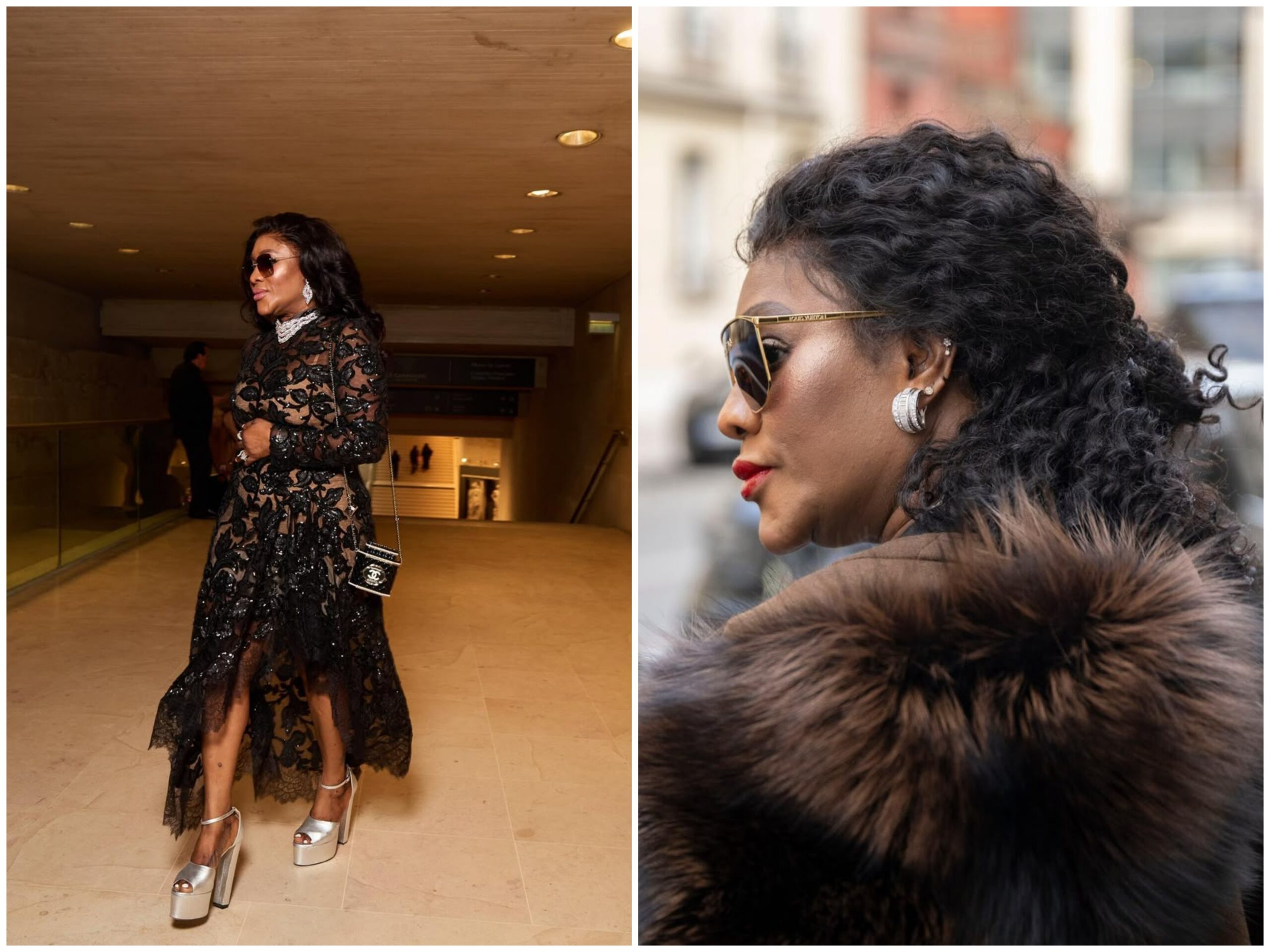
Paris has always had a way of making fashion feel less like clothing and more like theatre. And when the world’s style aristocracy gathered for the Spring/Summer 2027 season, Nigerian high flying businesswoman, Aisha Achimugu, arrived with the kind of polished glamour that commands attention without demanding it.

Against the timeless backdrop of the French capital, Achimugu stepped into the world of Paris Fashion Week in a look that married sophistication with modern femininity. Her ensemble was defined by a refined silhouette, impeccable tailoring and the kind of carefully considered styling in which every detail appeared deliberate. The proportions were elegant, the finish luxurious, while her accessories added just the right measure of sparkle and personality.

Her beauty look complemented rather than competed with the outfit. Immaculately styled hair, luminous makeup and a poised, confident bearing completed the picture, allowing the clothes to retain their quiet authority. It was a lesson in restraint: nothing appeared excessive, yet every element, from the jewellery to the finishing touches, contributed to the overall effect.

See also  Nigeria would have collapsed if Atiku had won presidential election, says Bode George

The real strength of Achimugu’s Paris appearance, however, was in the details. The interplay of texture and silhouette gave the look dimension, while the accessories provided those subtle flashes of glamour associated with the best society dressing. There was an understanding of proportion, balance and occasion, a recognition that at Paris Fashion Week, being noticed is not necessarily about wearing the loudest look in the room.

For Achimugu, fashion has never seemed like an afterthought. It is part of the persona, the jewellery, the sculpted silhouettes, the luxurious textures, the immaculate finishing and that unmistakable confidence of a woman comfortable in her own skin.

Her Paris appearance offered yet another glimpse into the glamorous lifestyle of the Felak Concept Group boss, whose public persona has over the years straddled business, philanthropy, high society and fashion.

In the city, amid the fashion houses and international style elite, Achimugu appeared more than as a spectator but as a Nigerian woman confidently occupying a global fashion space. Her look spoke in the sophisticated language of Parisian dressing, polished, assured and intentionally glamorous, while retaining the unmistakable confidence of a woman bringing her own sense of style to the occasion.

See also  Planned protests against economic hardship likely to be hijacked, UN warns

And as the lights of Paris dimmed on another fashionable season, her appearance left behind the unmistakable impression of a woman who understands that fashion, at its most powerful, is as much about presence as it is about clothes.

Continue Reading

Lifestyle

70-year-old ex-Kogi senator Ocheja marries best friend’s granddaughter

Published

on

By

A video from the wedding of former Kogi East Senator Emmanuel Dangana Ocheja and his new wife has surfaced online.

According to a report by Punch Online, the white wedding was held in Abuja on September 19, 2026

Ocheja, 70, is said to have held his traditional wedding with his new wife, identified simply as Winifred, on September 13.

The traditional ceremony was followed by their white wedding on September 19.

Ocheja is seen in the video dressed in matching colours with Winifred as they danced together.

The former senator appeared cheerful as the couple shared an intimate moment while guests watched and celebrated with them.

A photo from their white wedding has also surfaced online, showing Ocheja dressed in a white suit and black bow tie.

Winifred, said to be the granddaughter of Ocheja’s best friend, wore a sparkly wedding gown and held a bouquet as she posed beside her husband.

See also  President Buhari’s 2022 Independence Day address (Full speech)

Ocheja is a Law graduate from Ahmadu Bello University (ABU), Zaria. He ventured into politics in the early 2000s.

He represented Kogi east senatorial district in the national assembly between 2011 and 2015 under the People’s Democratic Party (PDP).

Ocheja later resigned from the PDP and announced that he had joined the All Progressives Congress (APC).

Continue Reading

Lifestyle

How I manage Davido’s finances, spending habits — Sharon Adeleke

Published

on

By

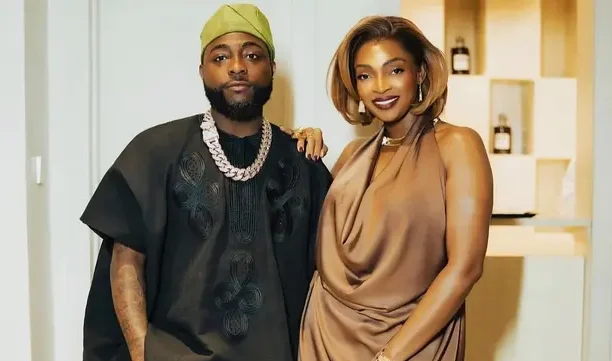
Sharon Ademefun Adeleke, the elder sister of Afrobeats superstar, Davido, has revealed how she manages her brother’s finances and her unconventional approach to marriage.

Sharon disclosed this while appearing on the Morayo Show, adding that she regularly discusses Davido’s finances with him, particularly his spending on cars and jewellery.

“One of the major things I’m always getting on my brother is jewellery and cars. My God!” she said.

“Me and him will sit down. We will have a finance meeting every week because I think it is important for him to know how his money is being spent.

“And I will now say, ‘David, please, no more cars, no more jewellery.’ Twenty-four hours later, you will start seeing it on the blogs that he bought another car.”

Sharon, a mother of three, also spoke about her marriage, saying she made it clear to her husband from the outset that she did not intend to follow a traditional approach.

See also  Ondo Amotekun deploys new recruits

“When I met my husband, I explained to him that there isn’t going to be a traditional kind of marriage,” she said.

“I remember, I think in the first few months of us dating, I cooked and all the things. When he was eating, I was like, ‘Oh babe, are you enjoying the food?’ He said yes.

“And I said, ‘Good. Now you know I know how to cook, but I don’t like cooking, and I hope that’s not going to be a problem.”

The entrepreneur revealed how she built her wig-making business. She said she learnt to make wigs out of frustration with the difficulty of securing skilled hairstylists and wig makers, who were often fully booked.

“I learnt how to make wigs because I was frustrated because really good hairstylists and wig makers are always busy. Even if you drop your things with them, every week they will still be busy,” she said.

“So, one day I said, ‘What is this wig making? Let me just try.’ At that time, there was maybe one video or two compared to now, when if you go on YouTube, you can find thousands of videos about wig making.

See also  JAPA: ‘I still get paid as a civil servant two years after leaving Nigeria’ — UK cab driver confesses

“I was heavily pregnant and very bored, so my husband took me to the beauty shop, and I bought all the pieces. I just started trying, and then I started doing it more and more. Then my friends started asking me to make wigs for them.”

Sharon said she believes people sometimes discover their businesses unexpectedly rather than through careful planning.

“I’m a big believer that when God gives you a business, you kind of fall into it sometimes. It is not something that you planned,’ she said.

“When I started going into it, I started going for training all over the world.”

Continue Reading

Trending News