Connect with us

Business

Why GSK is leaving after 51 years of doing business in Nigeria

Published

on


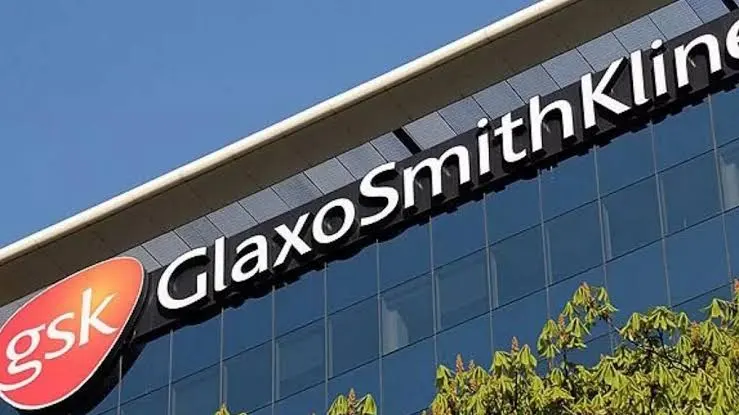
GlaxoSmithKline (GSK), last Thursday announced plans to discontinue operations in Nigeria, ending its 51-year existence in the country after the company’s first office was opened in Lagos on July 1, 1972.

The British multinational pharmaceutical and biotechnology company is best known for household brands like Panadol and Sensodyne.

In a corporate filing, the pharmaceutical giant said it would now adopt a distributor-led model to supply the country with its products.

GSK Nigeria said it was working with its advisers to determine the next steps and intends to submit a scheme of arrangement to the Securities and Exchange Commission (SEC) for the possible return of capital to its local shareholders.

“In our published Q2 results we disclosed that the GSK UK Group has informed GlaxoSmithKline Consumer Nigeria PLC of its strategic intent to cease commercialisation of its prescription medicines and vaccines in Nigeria through the GSK local operating companies and transition to a third-party direct distribution model for its pharmaceutical products,” the firm said.

“The Haleon Group has also separately informed the board of its intent to terminate its distribution agreement in the coming months and to appoint a third-party distributor in Nigeria for the supply of its consumer healthcare products.

“For the above reasons, and having, together with GSK UK, evaluated various other options, the board of GlaxoSmithKline Consumer Nigeria Plc has concluded that there is no alternative but to cease operations.”

The company further advised shareholders to seek professional advice and continue to exercise caution when dealing its shares until a further announcement is made.

While GSK did not speak on reasons for the move, speculations abound regarding the factors that led to this drastic action.

TheCable will attempt a response based on interviews and the facts we have about the company’s challenges.

See also  US House speaker Kevin McCarthy impeached

FOREIGN EXCHANGE CRUNCH

GSK Nigeria’s sales in the first half (H1) of 2023 dropped to N7.75 billion from N14.8 billion in the same period a year ago.

In its 2023 H1 report, the company lamented that the business environment continued to be very challenging with foreign exchange (FX) availability affecting its ability to settle foreign currency-denominated trade payables with product suppliers.

“As a result, it remained difficult to maintain consistent supply to the market,” GSK Nigeria added.

An index analysis of the company’s financial results within the six-month period showed that the firm made more money (N5.25 billion) from the sale of its consumer healthcare brands than its pharmaceutical brands (N2.49 billion).

Between January and June 2022, the company generated a revenue of N10.59 billion from the sale of its pharmaceutical brands while it made N4.21 billion from its consumer healthcare brands.

Last year, at the 52nd annual general meeting (AGM) of GSK Nigeria, Edmund Onuzo, chairman of the board of directors, spoke of the impact of FX scarcity on their operations.

He said the company’s ability to secure essential foreign currency for importing products had been severely compromised.

“While we expect sustained economic growth in 2023, we cannot overlook some factors which must be duly considered in this quest for economic growth and development in Nigeria. The factors include foreign exchange availability for businesses, insecurity, unemployment, and high cost of doing business, coupled with the uncertainty around fuel subsidy removal,” Onuzo had said.

“The challenges ahead are quite significant, as some of you may have read reports from a few media houses regarding the supply constraints on GSK drugs in the market, we must mention that it continues to be very challenging with foreign exchange non-availability affecting our ability to settle foreign currency-denominated trade payables with product suppliers.”

See also  Jandor files petition against Sanwo-Olu, Rhodes-Vivour over ‘alleged electoral act breach, fake WAEC result’

Recently, drug manufacturers appealed to the government to address the issue of FX scarcity as it could lead to drug shortages in the county.

INCREASED COMPETITION FROM LOCAL FIRMS AND GLOBAL IMPORTS

In addition to FX, TheCable understands that GSK faced increased competition from local companies and imports from India and China.

According to Ade Popoola, the managing director of Reals Pharmaceuticals, GSK exited the country due to the increasing crowding out of its products by competition from mostly India.

“It’s like being in the middle of an expressway. When you have too much traffic, the rate at which you will progress will be difficult no matter how good your car is,” Popoola explained.

“The look-alike from India crowded them out. You find out that if you have been selling 250,000 units per year, when cheaper alternatives come in, it will first of all reduce to 200,000, and subsequently to 150,000, and 100,000.

“Later you will find yourself struggling to sell 50,000 because the hospital buying from you prefers alternatives because the other companies too may be quality. Once they crowd you out, you find it difficult to maintain your volume, and when you can’t maintain your volume, you cannot pay your cost.

“The Indian will sell at 20 percent of your price. It has happened to me, so I know what I am saying.”

GSK’S STRATEGIC SHIFT IN AFRICA

In 2018, GSK made headlines when Emma Walmsley, its chief executive officer (CEO), unveiled plans to scale back operations in Africa as part of the company’s strategic realignment.

Walmsley said the company would no longer market medicines to healthcare professionals in 29 sub-Saharan African markets and instead adopt a distributor-led model.

See also  200 trucks to load petrol daily at Port Harcourt refinery – Presidency

She said GSK would continue to run local operations in Kenya and Nigeria while retaining representative offices in Cote d’Ivoire and Ghana.

However, in 2022, GSK announced that it would adopt a third-party distribution model for its drugs and vaccines in Kenya from next year (2023).

While the cessation of operations in Nigeria may come as a shock to many, it aligns with the firm’s overall goals for the African region.

SHAREHOLDERS REACT TO GSK NIGERIA’S EXIT

Speaking on the development, Bisi Bakare, the national coordinator of Pragmatic Shareholders Association, said the scarcity of forex has made things difficult for GSK in the country, thus prompting the move to stop operations.

She also expressed her unhappiness at the impact the exit would have on unemployment in the country.

“We are not happy about it. We feel very bad. But when you look at the challenges the company is also going through, we know we can’t force them to stay. Shortage of forex is really affecting their business even though the problem is not peculiar to them,” Bakare said.

“Our children and elderly people working with them will also have to leave their jobs. Jobs are scarce now. Their decision to leave Nigeria will add to unemployment in the country.”

On his part, Godwin Anono, president of Standard Shareholders Association, said the lack of a conducive environment for doing business prompted GSK’s departure from Nigeria.

”A foreign company cannot be prevented from leaving if they have made up their mind. Nigeria will remain Nigeria. For shareholders, if the value of a share is N3, then with our interest, they pay us N5, we will collect it and move on,” Anono said.

 

Continue Reading
Click to comment

Leave a Reply

Your email address will not be published. Required fields are marked *

Business

Wema Bank sets November 6 for HACKAHOLICS 7.0 grand finale, unveils ‘Festival of the future’ as theme

Published

on

By

Wema Bank, Nigeria’s oldest indigenous bank, most innovative and pioneer of Africa’s first fully digital bank, ALAT, has announced November 6, 2026, as the date for the grand finale of Hackaholics 7.0, its flagship innovation platform.

Themed ‘Festival of the Future’, the grand finale will bring together innovators, technology leaders, startup founders, investors and other key players in Nigeria’s innovation ecosystem for an immersive celebration of ideas, technology and the possibilities shaping the future.

Beyond the much anticipated announcement of this year’s Hackaholics finalists, the event will feature innovation showcases, interactive experiences and conversations exploring how emerging technologies are transforming the way people live, work, build and create.

Designed to go beyond the traditional innovation competition, the Festival of the Future will provide a platform for participants and attendees to experience emerging technologies, discover innovative solutions, connect with industry players and engage in conversations about the opportunities and challenges of a rapidly evolving world.

The event will also recognise and celebrate outstanding innovators whose ideas have demonstrated the potential to address real-world challenges and create meaningful impact.

Speaking on the significance of the grand finale and the inspiration behind the Festival of the Future, Wema Bank’s MD/CEO, Moruf Oseni, explained that the concept builds on the Bank’s commitment to creating a future of possibilities while encouraging Nigerians to take a more active role in shaping that future.

See also  Jandor files petition against Sanwo-Olu, Rhodes-Vivour over ‘alleged electoral act breach, fake WAEC result’

“The world is changing at an unprecedented pace. Artificial intelligence and emerging technologies are transforming industries, businesses and everyday life, creating opportunities that would have been difficult to imagine just a few years ago. The question is no longer simply what the future holds, but how prepared we are to shape it.

“This thinking inspired the Festival of the Future. We want to create an experience that brings innovation closer to people, encourages meaningful conversations and challenges us to think differently about how we will live, work, build and create in the years ahead,” he said.

Reaffirming Wema Bank’s commitment to supporting innovation and empowering young Nigerians, Oseni noted that Hackaholics has continued to evolve beyond a competition into a platform for discovering talent, nurturing ideas and connecting innovators with opportunities.

“Since we launched Hackaholics, our goal has remained consistent; to provide young Nigerians with the platform, resources, opportunities and support they need to transform their ideas into practical solutions. We believe that the future of innovation in Nigeria must be driven by the talent, creativity and potential of our people.

See also  US House speaker Kevin McCarthy impeached

“With Hackaholics 7.0, we are taking that commitment further. Beyond recognising outstanding ideas, we want to bring together the people, conversations and experiences that can inspire the next generation of solutions.

“Our ambition is to continue building an ecosystem where innovation thrives, possibilities are unlocked and Nigeria is better positioned for the future,” he added.

Launched on July 1, 2026, under the theme “Powering Possibilities,”Hackaholics 7.0 commenced with a nationwide pitch centre tour designed to discover and support innovative ideas from young Nigerians across different regions of the country.

The four-month tour attracted 5,329 participants and 1,632 innovative ideas and solutions, with pitch centres hosted across seven locations: Uyo, Kano, Yabatech, Benin, Ibadan, Enugu and Lagos.

Through three distinct tracks; the Ideathon, Hackathon and Social Impact, the initiative provided opportunities for students, graduates, technology enthusiasts, developers and social innovators to present solutions addressing challenges across different sectors.

The Ideathon focused on promising ideas, the Hackathon provided a platform for technology developers and builders, while the Social Impact track recognised solutions designed to deliver measurable value to society.

See also  Good morning! Nigerian Newspapers  Headlines: Terrorism: Forest routes fuelling South-West kidnappings

At the conclusion of the nationwide tour, 59 participants emerged from the various pitch centres, reflecting the diversity of ideas, talent and innovation discovered throughout the programme.

As Hackaholics 7.0 progresses towards its final stage, the 59 finalists will be further shortlisted to 20, who will present refined versions of their solutions at the Pre-Pitch scheduled for November 4, 2026.

On November 5, the participants will embark on an Ecosystem Tour powered by Wema Bank, providing an opportunity to visit other top institutions within the technology and innovation ecosystem, interact with industry professionals and gain practical insights ahead of the grand finale.

The journey will culminate on November 6 at the Festival of the Future, where the top innovators will be recognised and celebrated.

Through Hackaholics, Wema Bank continues to demonstrate its commitment to driving innovation, supporting entrepreneurship and creating opportunities for young Nigerians to contribute meaningfully to economic development.

Continue Reading

Business

Nigeria’s foreign reserves rise to $52.66 billion, highest in 17 years

Published

on

By


Nigeria’s gross external reserves surged to $52.66 billion as of August 19, reaching their highest level in more than 17 years.

This was contained in the latest data from the Central Bank of Nigeria (CBN).

The reserves stood at $52.65 billion on August 19, up from $45.56 billion recorded on January 2, representing an increase of about $7.09 billion or 15.6 percent in less than eight months.

The latest position also surpasses the previous 2026 peak of about $52.04 billion recorded in July.

Data from the CBN showed that reserves crossed the $52 billion mark for the first time this year in July, reaching $52.02 billion on July 20.

The figure was the highest since January 2009, when reserves stood at about $52.01 billion.

The reserve position had declined earlier in the year, falling from $49.18 billion on April 1 to about $48.33 billion in early May.

See also  Jandor files petition against Sanwo-Olu, Rhodes-Vivour over ‘alleged electoral act breach, fake WAEC result’

It subsequently recovered, crossing the $50 billion mark in June and rising above $51 billion before surpassing $52 billion in July.

The governor of the CBN, Olayemi Cardoso, had earlier attributed the increase in reserves to stronger foreign exchange inflows, including receipts from crude-oil-related taxes and third-party inflows.

Cardoso also said the reserve level provided import cover for about 11 months of goods and services, significantly above the three-month international benchmark.

The increase in the external buffer has coincided with improved foreign exchange liquidity and a stronger naira.

Recent market data showed the naira appreciating to about N1,346.49 per dollar in the official market last week.

Also, in its 2026 macroeconomic outlook, the apex bank projected that Nigeria’s external reserves would rise to about $51.04 billion by the end of the year.

The latest figure is about $1.62 billion above that projection.

Continue Reading

Business

Wema Bank wins Euromoney’s Nigeria’s best digital bank for consumers 2026 award

Published

on

By

… Recognition affirms bank’s leadership in digital innovation and customer-centric banking

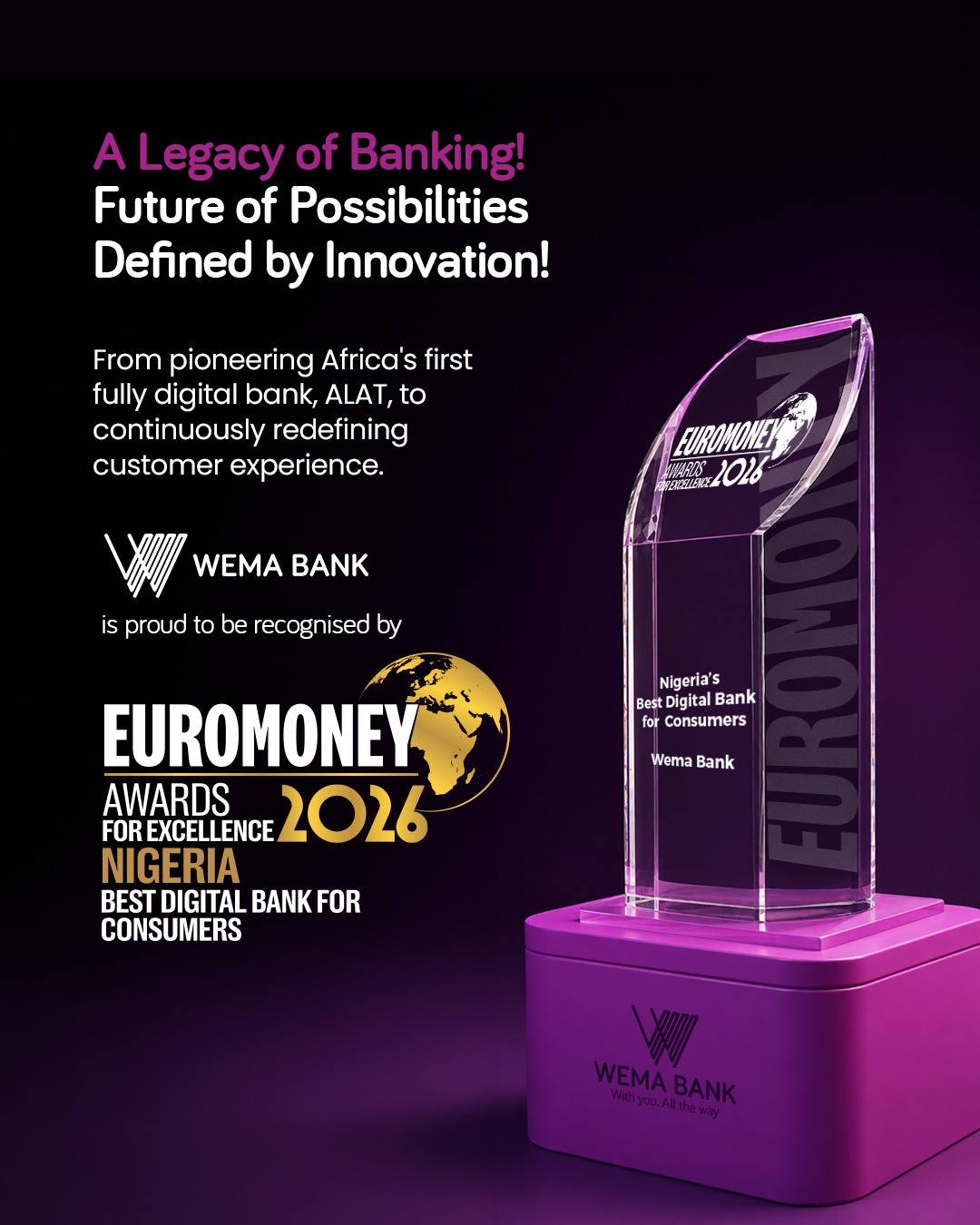
Wema Bank, Nigeria’s oldest indigenous bank and pioneer of Africa’s first fully digital bank, ALAT, recently added another feather to its already heavily-studded cap after it was named Nigeria’s Best Digital Bank for Consumers 2026 by Euromoney, one of the world’s most respected authorities on financial services and banking excellence.

The prestigious recognition affirms the Bank’s sustained leadership in digital innovation, customer experience and financial inclusion, reinforcing its position as one of Nigeria’s leading technology-driven financial institutions.

Presented annually, the Euromoney Awards for Excellence celebrate banks that are redefining financial services through innovation, measurable impact and outstanding customer value.

In selecting Wema Bank for the award, Euromoney recognised the Bank’s successful digital transformation journey, its continuous innovation through ALAT, Africa’s first fully digital bank, and its unwavering commitment to delivering simpler, smarter and more accessible banking experiences for customers.

See also  London museum returns 'stolen' Benin artefacts to Nigeria

Commenting on the recognition, the Managing Director/Chief Executive Officer of Wema Bank, Moruf Oseni, said: “This award is a strong validation of the deliberate investments we have made over the years to build a truly digital bank that puts customers at the centre of everything we do. Innovation for us has never been about technology for its own sake. It has always been about creating solutions that make banking easier, faster, safer and more rewarding for every customer.

“From pioneering Africa’s first fully digital bank with ALAT to continuously evolving our digital capabilities, we have remained focused on anticipating customer needs and building experiences that create real value. We are honoured by this recognition from Euromoney and inspired to continue pushing the boundaries of innovation as we shape the future of banking in Nigeria.”

A key milestone in Wema Bank’s digital transformation has been the evolution and upgraded version of ALAT, which introduced next-generation capabilities including voice banking, tap-to-pay functionality, personalised financial services and integrated investment opportunities through strategic partnerships.

See also  200 trucks to load petrol daily at Port Harcourt refinery – Presidency

Together with faster digital onboarding, AI-powered fraud monitoring, intelligent customer personalisation and an expanding agency banking network, these innovations continue to enhance customer experience while extending financial services to more Nigerians.

Euromoney also recognised Wema Bank’s ability to leverage technology to build deeper customer relationships through data-driven personalisation, enabling customers to receive tailored recommendations across savings, investments and credit products based on their financial needs and behaviour.

For over eight decades, Wema Bank has remained at the forefront of innovation in Nigeria’s financial services industry. As the pioneer of Africa’s first fully digital bank, the Bank continues to redefine banking by combining technology, customer insight and innovation to deliver seamless, secure and inclusive financial solutions for individuals, businesses and communities.

The Euromoney recognition further reinforces Wema Bank’s commitment to building the future of banking through continuous innovation, operational excellence and customer-centric solutions that create lasting value.

Continue Reading

Trending News