Connect with us

News

Benjamin Kalu sworn-in as deputy speaker

Published

on


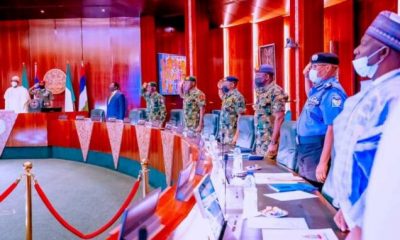
Member of the House of Representatives representing Bende Federal Constituency in Abia State, Benjamin Kalu, has emerged the Deputy Speaker of the House of Representatives for the 10th National Assembly.

The anointed candidate of the All Progressives Congress (APC) emerged unopposed at the inauguration of the 10th House of Representatives on Tuesday in Abuja.

He was subsequently sworn in at 12:21pm on Tuesday.

Kalu takes over from the Deputy Speaker of the 9th National Assembly, Idris Wase.

The emergence of Kalu followed the election of a member from Zaria Federal Constituency in Kaduna State, Tajudeen Abbas as Speaker of the Green Chamber.

Abbas defeated Wase and Aminu Jaji in a voice vote on Tuesday at the National Assembly Complex in Abuja.

Abbas scored 352 votes of the total 359 votes cast while Jaji and Wase polled three votes each.

In the just-concluded elections, the ruling APC secured over 170 of the 360 seats in the green chamber, the highest by any party. The Peoples Democratic Party (PDP) came second with over 100 seats, the Labour Party (LP) with over 35 seats, the New Nigeria People’s Party (NNPP) with about 20.

See also  Nigerian shot dead by US neighbour over children’s disagreement

Many APC lawmakers had indicated interest to emerge the next Speaker of the House. They include Wase, Jaji, Alhassan Ado-Doguwa, Yusuf Gagdi, Aliyu Betara, Abdulraheem Olawuyi, Princess Onuoha, amongst others but all others stepped down with the exception of Wase and Jaji.

Earlier, Senator Godswill Akpabio from Akwa Ibom State was elected the President of the 10th National Assembly after he defeated Senator Abdul’aziz Yari.

Meanwhile, Senator Jibrin Barau, who represents Kano North Senatorial District, also emerged unopposed as Senate Deputy President, succeeding Ovie Omo-Agege.

Continue Reading
Click to comment

Leave a Reply

Your email address will not be published. Required fields are marked *

News

Tinubu deserves credit for bringing Nigeria back from the brink, says Emir Sanusi 

Published

on

By

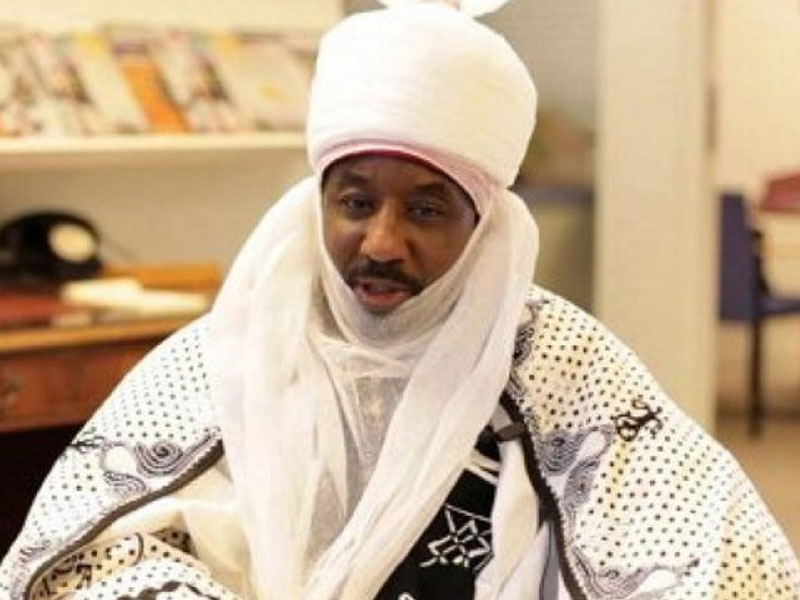
The Emir of Kano, Muhammadu Sanusi II, has said that President Bola Tinubu deserves credit for bringing Nigeria’s economy back from the brink, citing improvements in economic growth, inflation, foreign reserves, and export diversification.

Emir Sanusi, who gave the commendation while speaking on Tuesday at the Oxford Global Think Tank conference convened by Arunma Oteh, said the country is beginning to lay the foundations for economic stability, although significant challenges remain.

“I’m not a fan of politicians, but we need to give credit to President Tinubu’s administration for bringing us back from the brink,” he said.

Sanusi, a former Central Bank of Nigeria (CBN) governor, said the economy grew by 4.48 percent in the second quarter (Q2) of 2026, describing the performance as progress compared with the average growth recorded during the administration of former President Muhammadu Buhari.

“GDP in Q2 2026 was at 4.48 percent. It’s not as high as it was under the Yar’Adua/Jonathan government, but during the Buhari years, the economy grew by 0.9 percent. Today it’s at 4.5 percent. That’s progress,” he said.

See also  Visa applications seeking birthright citizenship will be denied, US tells Nigerians

Sanusi also noted the decline in inflation from about 30 percent to 14.6 percent, adding that it was projected to fall to 12.5 percent by the end of the year.

He said Nigeria’s gross domestic product (GDP) per capita, measured in dollar terms, had increased by 47 percent since 2023.

According to the emir, “If we continue at this rate, by the end of next year, GDP per capita will be back to where it was in 2005”.

He also cited the country’s foreign reserves, which he put at $55 billion, but cautioned that a significant portion of the inflows was driven by foreign portfolio investments (FPI), which are volatile.

He attributed the continued inflows partly to high oil prices amid the war in the Strait of Hormuz and the attractive returns available to investors in Nigeria.

“Our reserves are at $55 billion, and yes, a lot of it is driven by portfolio flows, which are volatile,” he said.

See also  Reps leaders visit Dangote refinery

He said high oil prices and returns on Nigerian investments have encouraged foreign investors to maintain their exposure to the country.

On diversification, Sanusi said “20 percent of Nigeria’s exports were coming from the Dangote refinery”, describing the development as evidence of progress beyond the country’s traditional export sources.

“There are clearly foundations being laid for stability. It’s not the end, but the first step towards stability,” he said.

The emir, however, criticised the Tinubu administration’s communication of its economic policies, saying the government appeared to interpret criticism and suggestions as attacks.

“This government doesn’t express itself properly. It sees every suggestion and contribution it does not like as an attack, and it doesn’t have good spokespersons,” he said.

Despite his reservations about the government’s communication, Sanusi said the administration deserved recognition for the economic gains recorded so far.

Continue Reading

News

EFCC uncovers illegal oil refinery in Ogun

Published

on

By

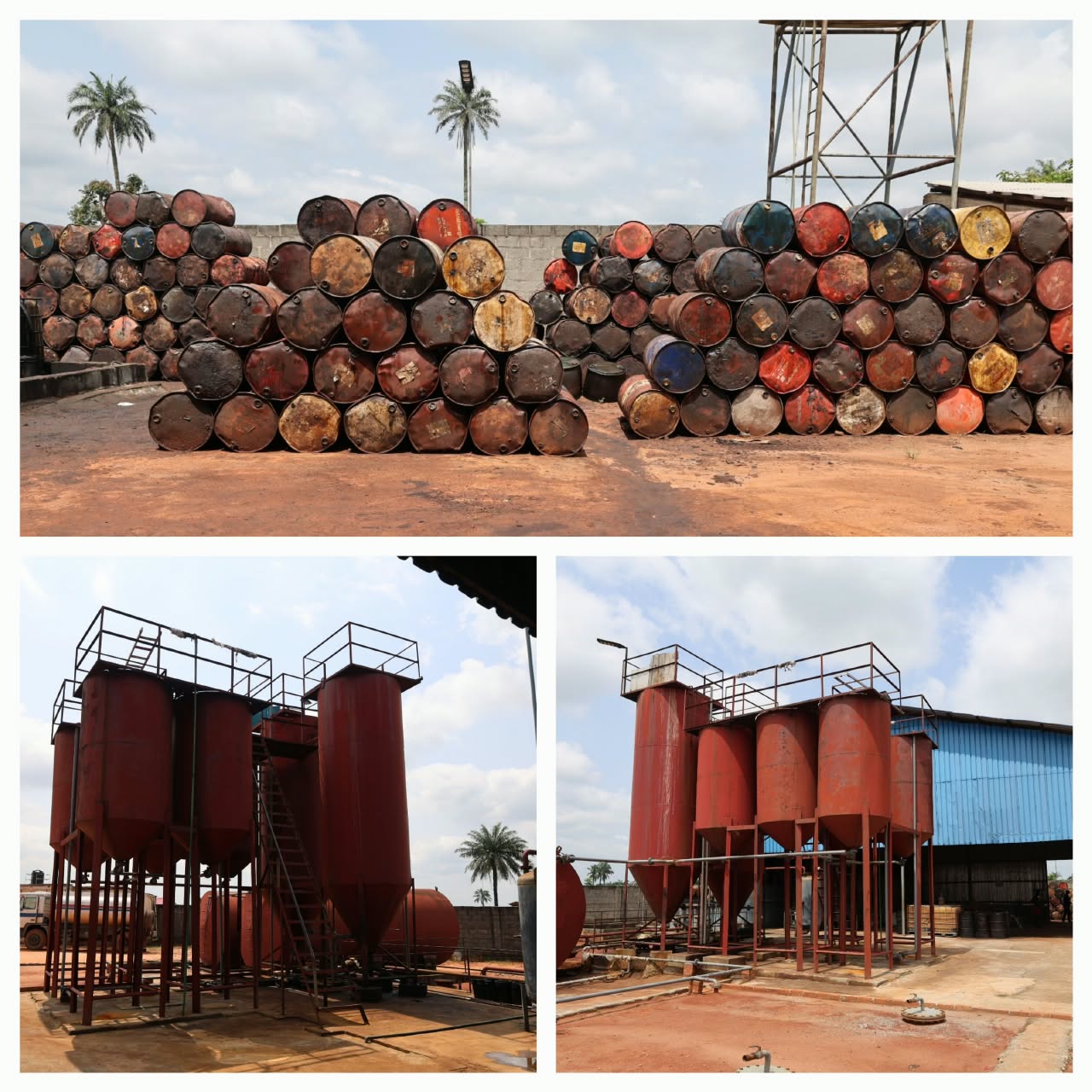
The Economic and Financial Crimes Commission (EFCC) says its operatives have uncovered an illegal oil refinery operated by Chinese nationals in the Ogere area of Ogun State.

According to a statement issued on Tuesday by the EFCC’s spokesperson, Dele Oyewale, the facility was discovered on Saturday, October 31, 2026, by operatives of its Lagos Zonal Directorate 2 following intelligence gathering and surveillance of the activities of illegal sludge oil refiners.

Oyewale said the facility was deserted when operatives stormed the premises, following an earlier crackdown on four illegal lithium processing plants in the area.

The operatives discovered waste products from the refining process and underground tanks suspected to have been used for heating and processing sludge oil.

According to the statement, “The Economic and Financial Crimes Commission uncovered an illegal oil refinery operated by Chinese in the Ogere area of Ogun State.

“The operation, conducted on Saturday, October 31, 2026, by operatives of the Lagos Zonal Directorate 2 of the EFCC, followed credible intelligence and surveillance by the Commission on the activities of the illegal sludge oil refiners.

See also  We will not fail Nigerians, Abbas, Kalu vow

“The refinery was found deserted when EFCC operatives stormed the premises, following the Commission’s earlier clampdown on four illegal lithium processing plants in the area. However, waste products from the refining process were discovered at the location.”

Oyewale said operatives also discovered underground tanks believed to have been used for heating and processing sludge oil.

“Two of the underground tanks inspected contained substances suspected to be Automotive Gas Oil (AGO), otherwise known as diesel.

“Preliminary investigations revealed that the operators sourced sludge oil, also known as black sludge, from Warri, Delta State, and Port Harcourt, Rivers State, and transported it to the illegal facility in Ogere for processing,” Oyewale added.

He said the operators subjected the sludge oil to intense heat, allowing lighter petroleum components to pass through chambers and filters in a process believed to produce diesel for sale in the Nigerian market.

“Personnel at the facility told EFCC operatives that the Chinese operators never disclosed their identities nor the name of the company behind the facility.

See also  NNPC reduces petrol price to N900/litre in Lagos, N940/litre in Abuja

“Consequently, operatives of the Lagos Zonal Directorate 2 of the EFCC have since taken over the premises as investigations continue to establish the identities of the operators, the ownership of the facility and the full extent of the suspected illegal activities and economic sabotage,” he added.

Continue Reading

News

Police bust high-tech indoor Cannabis farm in Lagos, arrest two suspects

Published

on

By

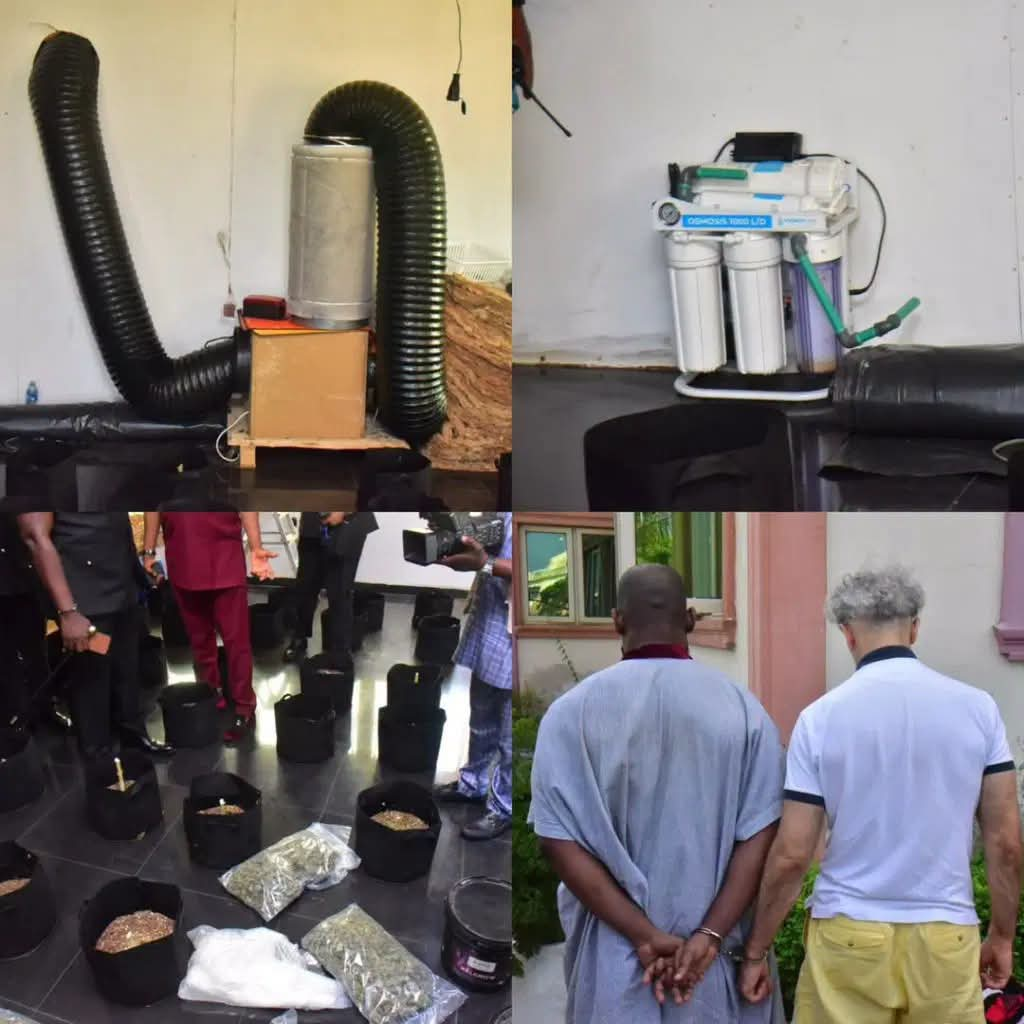
The Lagos State Police Command says its operatives have uncovered a suspected high-tech indoor cannabis farm at a residential property in the  Apapa,l area of the state.

The suspects are a 49-year-old Polish national and a 36-year-old Nigerian.

According to the police, the suspects are Thomas Razvickas and James Chisome, both of whom reportedly reside at the property where the facility was discovered.

The operation was carried out on November 2 at about 8:15 a.m., following credible intelligence received by police operatives, according to a statement issued on Tuesday by the Command’s Police Public Relations Officer, SP Abimbola Adebisi.

A search of the premises led to the discovery of a sophisticated indoor farming facility reportedly equipped for the cultivation, harvesting and processing of substances suspected to be cannabis.

The police said the two suspects had been taken into custody, adding that they had made confessional statements and were providing useful information to assist ongoing investigations.

See also  Supreme court nullifies enforcement of National Lottery Act in 36 states

The Commissioner of Police in Lagos State, CP Tijani Fatai, visited the scene to inspect the facility, assess the scale of the operation and receive a briefing on the investigation.

Fatai commended the operatives for their vigilance and intelligence-led policing, while reaffirming the Command’s commitment to tackling drug-related offences and dismantling criminal networks in the state.

He also appreciated members of the public for providing credible information and urged residents to sustain their cooperation with the police.

Continue Reading

Trending News