Connect with us

Sports

Qatar: A World Cup Without Beer At Stadiums

Published

on


FIFA have confirmed beer will not be sold at stadiums during the World Cup after a U-turn on the eve of the tournament – sparking fury from fans who have forked out thousands to attend games.

The governing body came under pressure from the Qatari royal family to ban all alcohol sales despite long-standing insistence products would be sold at games. FIFA have now confirmed they will stop selling Budweiser, one of the organisation’s biggest sponsors, at eight different stadiums, breaching a multi-million dollar contract in the process.

A statement read: “Following discussions between host country authorities and FIFA, a decision has been made to focus the sale of alcoholic beverages on the FIFA Fan Festival, other fan destinations and licensed venues, removing sales points of beer from Qatar’s FIFA World Cup 2022- stadium perimeters.

“There is no impact to the sale of Bud Zero which will remain available at all Qatar’s World Cup stadiums. Host country authorities and FIFA will continue to ensure that the stadiums and surrounding areas provide an enjoyable, respectful and pleasant experience for all fans.

See also  Alleged N10 billion fraud: Court grants ex-Kwara gov Ahmed ₦50m bail

“The tournament organisers appreciate AB InBev’s understanding and continuous support to our joint commitment to cater for everyone during the FIFA World Cup Qatar 2022.”

Budweiser deleted a tweet in which they simply declared “well, this is awkward…” in response to the news. AB InBev later released an official statement saying: “Some of the planned stadium activations cannot move forward due to circumstances beyond our control.”

Stadiums will sell alcohol in hospitality boxes, which start at $22,450 (£19k) for one match, with champagne still being supplied by FIFA’s official partner. Fans can purchase alcohol at fan parks, but the pricing of the drinks has been heavily criticised whilst they can only purchase up to four drinks at a time.

The official England fans group attacked the ban. The Football Supporters’ Association, which represents around 60,000 England fans and fan groups, said: “Some fans like a beer at the match, and some don’t, but the real issue is the last minute u-turn which speaks to a wider problem – the total lack of communication and clarity from the organising committee towards supporters.

See also  Troops raid terrorist camp in Anambra, recover weapons

“If they can change their minds on this at a moment’s notice, with no explanation, supporters will have understandable concerns about whether they will fulfil other promises relating to accommodation, transport or cultural issues.”

FIFA will now likely face a legal suit from Budweiser, who had the exclusive right to sell beer at World Cup matches. FIFA had already tried to find a compromise, moving Budweiser stands to areas where they were less visible after complaints from the country’s rulers.

The sale of alcohol is usually prohibited to Doha hotels in Qatar, a muslim country. Had they maintained that stance, the tournament may have suffered from a sponsorship point of view and there appeared to be an acceptance that they would have to ease up on their views towards alcohol for the tournament.

Back in February, when it emerged beer was set to be sold in stadiums, a spokesman for AB InBev the brewer which makes Budweiser, said: “For many around the world, having a beer is part of the shared fan experience of enjoying major sports events.”

See also  Court sacks 20 Cross River lawmakers for defecting from PDP to APC

Continue Reading
Click to comment

Leave a Reply

Your email address will not be published. Required fields are marked *

Sports

Tinubu gifts Flamingos N100m savings bond each

Published

on

By

President Bola Tinubu has rewarded each player of the victorious Flamingos with a N100 million five-year Federal Government savings bond for the team’s historic FIFA U-17 Women’s World Cup triumph in Morocco. 

The first lady, Oluremi Tinubu,  announced the reward on Wednesday while representing the president at a reception honouring the team at the State House Banquet, Abuja.

The N100 million savings bond reward for each player is a measure designed to secure their financial future and prevent the young footballers, many of whom are minors, from being overwhelmed by immediate access to large sums of money.

Shehu Dikko, chairman of the National Sports Commission (NSC), said the bonds would attract between 12 and 14 per cent annual interest, with each player expected to receive approximately N1.1 million monthly over the five years.

He added that by the time the bonds mature, the players would have attained adulthood and would be better positioned to make informed financial decisions.

See also  End of a Dream: France ends fairy-tale Morocco run, to meet Argentina in World Cup final

“These are young kids, under 17. There is no need to flood them with money. That can destroy their career. So we are now giving them what we call an FGN savings bond for like five years,” Dikko said.

“By the time those bonds mature, they are already adults. They can make a clear decision on what to do with their own money.”

Members of the team’s technical crew are also rewarded with N50 million each.

Flamingos defeated Japan 2-1 on Saturday to become the first African side to clinch the women’s U17 world title. The victory was also Nigeria’s first-ever global trophy in women’s football.


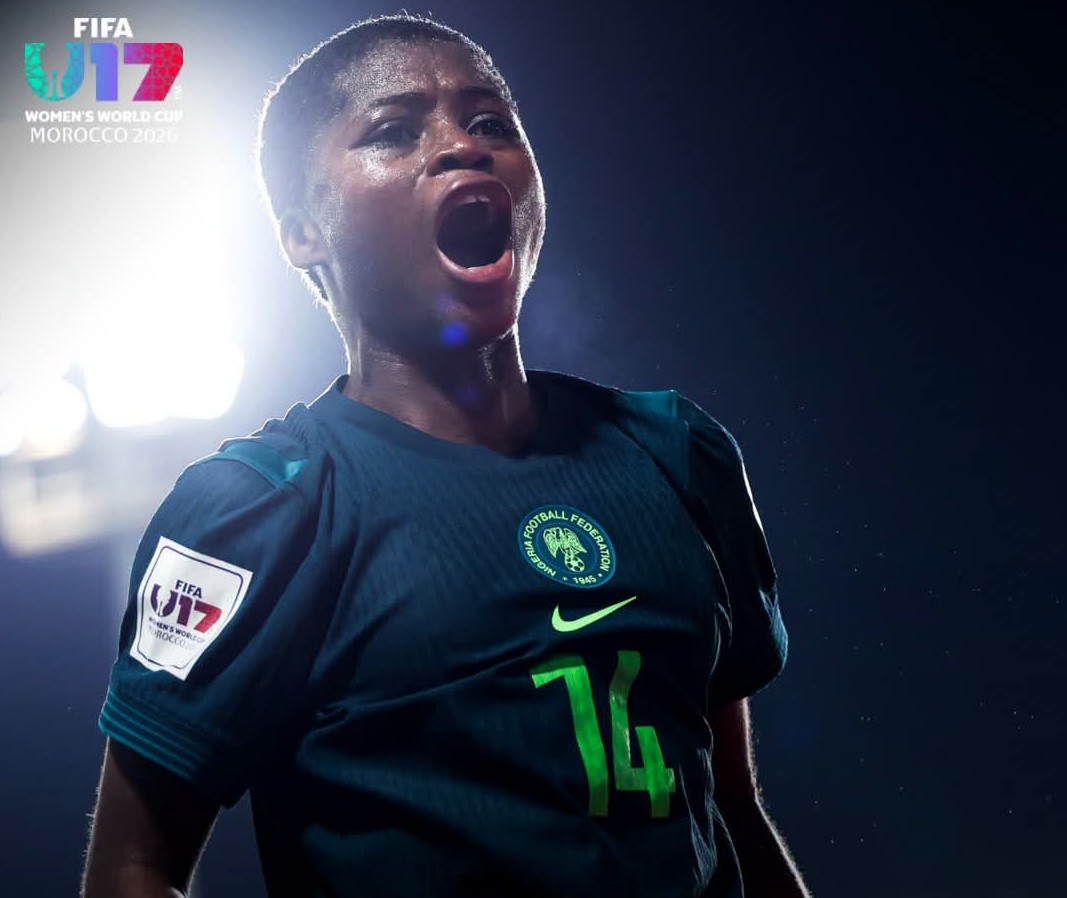
Oluebube Umejiaku was named the player of the tournament. The 16-year-old won multiple player-of-the-match awards throughout the tournament and scored four goals, including the decisive one against Japan.

The girls returned to the country on Monday with the trophy.

On Tuesday, the senate also donated N100 million to the team as a reward for their World Cup victory.

See also  Wike dissolves cabinet, sacks Chief of Staff, aide

Continue Reading

Sports

Flamingos beat Japan 2-1 to lift U-17 Women World Cup

Published

on

By


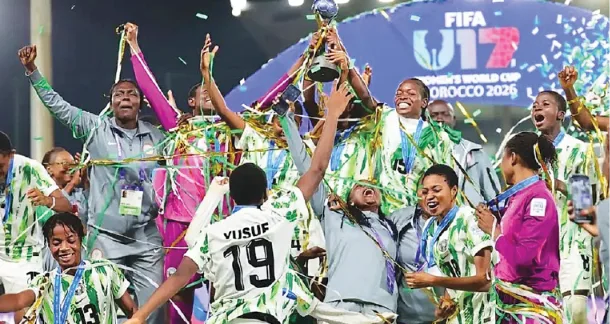
Nigeria U-17 women football team, the Flamingos, have been crowned champions of the 2026 FIFA U-17 Women’s World Cup in Morocco.

The Nigerian team defeated Japan 2-1 in a thrilling final match played at the Stade de Marrakech on Saturday night, securing the country’s first-ever title in the history of the competition.

It is a monumental achievement for Nigerian football, as the Flamingos have now become the first African team to win the FIFA U-17 Women’s World Cup since its inception in 2008.

Nigeria had a fairytale run to the final, overcoming formidable opponents like Brazil in the semi-finals to set up the clash against the Japanese side.

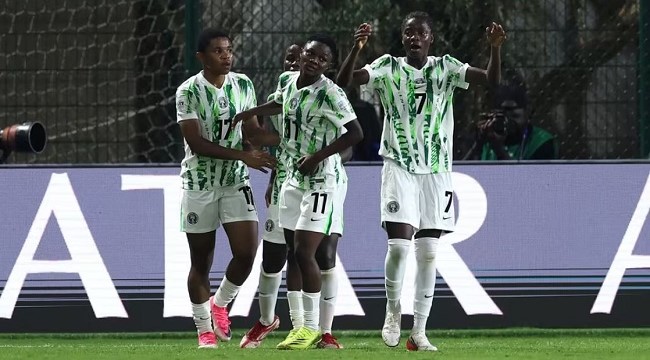
Both teams started the game with high intensity, but it was the Flamingos who broke the deadlock in the first half. A well-orchestrated attack saw forward Awawu Bashiru calmly slot the ball into the net in the 39th minute to put Nigeria ahead.

See also  Commonwealth Games: Amusan romps into 100m hurdles final

The Flamingos struck early in the second half to solidify their advantage. In the 47th minute, Oluebube Umejaiku fired home a brilliant finish to double Nigeria’s lead and put the team firmly in control of the contest.

Japan managed to pull one back in the 79th minute to reduce the deficit, but the goal proved to be a mere consolation as the Nigerian defense held firm until the final whistle.

Continue Reading

Sports

Nigeria’s Flamingos defeat Brazil 3-1 to reach first-ever women’s U-17 World Cup final

Published

on

By

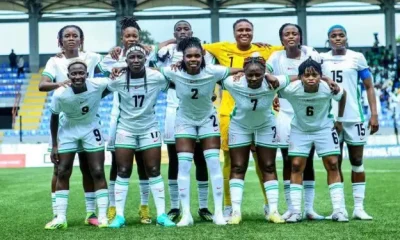
Nigeria’s U-17 female national team, Flamingos have qualified for the final of the 2026 Women’s U-17 World Cup.

The team defeated Brazil 3-1 vict in the semi-final in Sale, Morocco, on Wednesday.

A Queen Joseph opener and an Awawu Bashiru double drowned out Graise Kelly’s consolation goal, sending Nigeria to its first-ever final of the competition.

Before the kickoff whistle at the Mohammed VI Football Complex, a bronze medal in the 2022 edition was the highest Flamingos had achieved at the World Cup.

But after the Akeem Busari-led side wrapped up the game against a befuddled Brazilian team, only three days separated the Flamingos from Nigeria’s first global title in women’s football.

The first half ended goalless until the match picked up pace just after halftime. Oluwakeyi Adegbuyi drove into the Brazilian area, and her scuffed shot swerved into Joseph’s path, who tucked it in to give Nigeria the lead.

See also  It's morally fair for APC to zone Presidency to South-West -Sanwo-Olu

Then Bashiru doubled the advantage a few minutes later with an audacious cross-shot that lobbed, from the left byline, above everyone’s reach and into the net.

Bashiru then grabbed her second of the game after finishing a move that saw Flamingos practically pass the ball into the Brazilian net.

Brazil’s late strike was only good for a consolation against a team that outperformed them by all metrics.

Nigeria will face Japan, who defeated North Korea on penalties, in the final on Saturday.

Continue Reading

Trending News