Connect with us

Politics

Unforced error: How Buhari’s refusal to sign amended Electoral Act is shaping party primaries

Published

on


An omission by the National Assembly during the passage of the Electoral Act 2022 has impacted the power dynamics as the political parties select their candidates for the 2023 general elections.

The error is reflected in Section 84(8) of the Electoral Act which states: “A political party that adopts the system of indirect primaries for the choice of its candidate shall clearly outline in its constitution and rule the procedure for the democratic election of delegates to vote at the convention, congress or meeting.”

The implication of this is that only delegates elected for that purpose can vote at the convention. Although this section existed in the repealed Electoral Act 2010, another provision of that law allowed elected officials and party chieftains to vote as delegates at primaries.

Somehow, the federal lawmakers, who are some of the major victims of the omission, did not spot it until the races had started and the horses were on the tracks.

As a result of the error, smaller than usual circles of delegates have been selecting candidates, especially at the primaries of the two major parties, which began across the country this week and will end on Monday when the ruling All Progressives Congress will nominate its presidential candidate.

The opposition Peoples Democratic Party (PDP) will elect its own flag bearer a day earlier on Sunday. All the 18 parties have until Friday, June 3 to submit their lists of candidates to the Independent National Electoral Commission (INEC), according to the timetable published by the commission.

See also  Good Morning! Here Are Some Major News Headlines In The Newspapers Today: El-rufai dares Buhari over old Naira notes

After discovering that “fundamental error”, the two chambers of the National Assembly convened special sessions to hurriedly amend the section to reinstate the excluded “statutory delegates”.

These statutory delegates include the President, Vice-President, serving and former members of the National Assembly; serving and former governors and deputy governors; members of the National Working Committee and state chairmen and secretaries of the party.

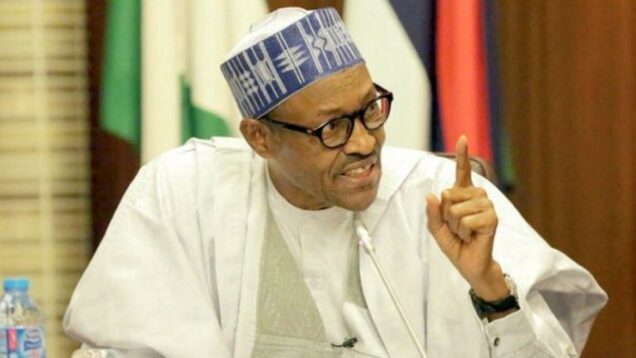
But the president, also a victim of the error, has refused to sign the amendment, despite entreaties from his friends and adversaries at the National Assembly. Instead, he has referred it to INEC and the office of the Attorney-General of the Federation for advice.

The president’s refusal to assent to the amendment has the primary implication of significantly cutting the number of delegates that will vote, for example, at the APC National Convention from over 7,000 to just over 2, 000, and that of the PDP from over 3,000 to less than 1,000.
While the APC constitution stipulates three delegates per local government area, that of the PDP stipulates one each, explaining that wide disparity.

The figures were similarly affected for delegates to the governorship and legislative elections’ primaries of the two parties.

For the smaller parties that do not have any or many elected officeholders, the impact may not be much felt as only their top party officials have been shut out of the primaries.

This new environment has increased the influence, and definitely too, as we shall see presently, the affluence of the elected delegates who will now on their own determine the fate of aspirants.
There have been reports of heavy inducement of delegates since the process began. In Kaduna and Niger states, dramatic video footage has emerged on social media of failed aspirants demanding or collecting back money they had paid delegates before the polls.

See also  Newspaper Headlines: 10 highlights of the day

The APC National Chairman, Abdullahi Adamu, on Wednesday, while speaking with a group of journalists in Abuja, acknowledged the prevalence of this malfeasance but chose to blame only the receivers of the bribes.

Fewer numbers of delegates mean more money for the delegates. Unofficial reports said two desperate aspirants in a senatorial primary rerun handed out as much as a million naira to each of the delegates. The offers would have been much lower if statutory delegates had swollen the number of the delegates, although total bribes might have been higher for the aspirants.

More fundamentally, however, the Electoral Act as it is has the certainly unintended consequence of further strengthening the hands of state governors, all of whom have been reported to have simply handpicked rather than allowed the election of the delegates. The game had always been lopsided in favour of governors, but now it will get even more grotesquely so.

In Abia State, Eyinnaya Abaribe, the senator who wanted to be governor, angrily pulled out of the PDP primary after alleging that Governor Okezie Ikpeazu had taken strange people instead of the elected delegates to the congress.

See also  BREAD OF WAHALA: CAN demands Sterling Bank CEO’s sacking over controversial Easter advert

Federal lawmakers had clearly intended to curb the excesses of state governors with the Electoral Act 2022. They passed the controversial Section 84 (12), which stipulates that appointed officials must resign before becoming eligible to vote or be voted for in party primaries.

That provision brought the lawmakers into a tiff with President Buhari as they rejected his request to amend that section, which the president said is unfair to the appointees and offends the provisions of the Constitution.

Some have cited that disagreement as the main reason the president has refused to sign their amendment to Section 84(8), which removed them and governors totally from participating as delegates in the primaries.

But while the governors can have their handpicked delegates do their biddings at the primaries, lawmakers can only watch from the sidelines as their fates are decided.

It is instructive that many senators and members of the House of Representatives lost at the PDP primaries, whether they were seeking a higher office or just wanted to return to their seats at the Three Arms Zone in Abuja.

To be fair to the governors though, this happened even in some states where the party is not in government. Party chiefs simply sat as a jury over the fate of the hapless lawmakers.

And the powers of the governors are being felt even beyond their states.

Continue Reading
Click to comment

Leave a Reply

Your email address will not be published. Required fields are marked *

Politics

2027: APC governors reject any form of political alliance, say it’s capable of undermining Tinubu’s re-election

Published

on

By

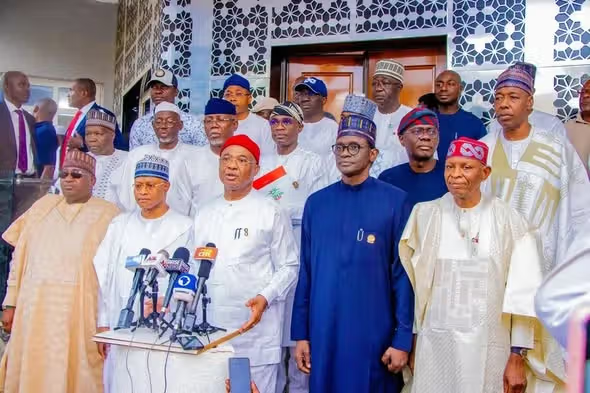
The Progressive Governors Forum (PGF) has said it will not endorse any alliance or political arrangements that could undermine President Bola Tinubu’s re-election bid or the party’s candidates in the 2027 elections.

The forum chairman, Imo governor, Hope Uzodimma, speaking in Abuja after the forum’s meeting, said his colleagues would exclusively support Tinubu and APC candidates at all levels in the 2027 elections.

“The forum unanimously resolved that its members will not participate in, support, or endorse any alliance or political arrangement capable of undermining the re-election of Mr president, weakening the APC or adversely affecting any candidate of the party at all levels,” Uzodimma, who was flanked by his colleagues, said.

“In other words, the forum has no intention to support any candidate at any level that is not an APC candidate.”

He said the governors’ campaign efforts would focus on all APC candidates contesting under the party’s platform.

See also  FULL TEXT: President Buhari’s nationwide address on naira redesign

“Because our candidates are standing in the election as being sponsored by our party, the governor’s campaign commitment is exclusively to all APC candidates,” Uzodimma said.

He said the forum would not entertain any arrangement that could “create confusion, divided loyalty or competing interests” within the party.

Uzodimma also said the APC would adopt an integrated, locally responsive campaign structure ahead of the 2027 elections, with all levels of the party’s campaign architecture aligned with Tinubu’s expectations and the party’s strategic objectives.

Nyesom Wike, minister of the Federal Capital Territory (FCT), is leading the rainbow coalition, a cross-party alliance supporting Tinubu’s 2027 re-election bid.

Wike said the coalition is a shift from party politics to a collective political movement focused on advancing the state’s interests.

Continue Reading

Politics

INEC clears 18 presidential candidates, running mates for 2027 poll

Published

on

By

The Independent National Electoral Commission (INEC) has released a list of 18 presidential candidates and their running mates for the January 2027 presidential election.

The final list, titled “Presidential and National Assembly Elections for Jan, 2027 – Presidential Final List of Candidates”, was signed by Rose Oriaran-Anthony, INEC secretary.

The list includes major contenders such as Atiku Abubakar of the African Democratic Congress (ADC), Bola Tinubu of the All Progressives Congress (APC), Peter Obi of the Nigeria Democratic Congress (NDC), and Omoyele Sowore of the African Action Congress (AAC).

Atiku is listed with Rotimi Amaechi as his running mate, while Tinubu is paired with Vice-President Kashim Shettima.

Obi, the NDC presidential candidate, is listed with Rabiu Kwankwaso, former governor of Kano State, as his running mate.

Sowore is paired with Haruna Magashi.

Other presidential candidates on the list are Rufai Omo-Aje of the Action Alliance (AA); Abbas-Bin Aliyu of the Action Democratic Party (ADP); Yusuf Kabiru of the Allied Peoples Party (APP); Seyi Makinde of the Allied Peoples Movement (APM); and Adenuga Sunday of the Boot Party (BP).

See also  NNPCL uncovers more than 4, 800 illegal connections on oil pipelines in Nigeria

Also listed are Adebisi Olusoji of the Democratic Leadership Alliance (DLA); Sunday Okereke of the Labour Party (LP); Ada Okwori of the National Democratic Party (NDP); and Nkem Okereke of the National Rescue Movement (NRM).

Donald Duke is listed as the presidential candidate of the Peoples Redemption Party (PRP), while Adewole Adebayo is the candidate of the Social Democratic Party (SDP).

The remaining candidates are Peter Agada of the Young Progressives Party (YPP) and Daniel Nwanyanwu of the Zenith Labour Party (ZLP).

The document also contains the ages, gender, and academic qualifications of the presidential and vice-presidential candidates.

The presidential and national assembly elections are scheduled for January 16, 2027, while the governorship and state houses of assembly elections would be held on February 6, 2027.

Continue Reading

Politics

‘We’ll take care of you if we win presidency’ — Kwankwaso asks Atiku to step down

Published

on

By

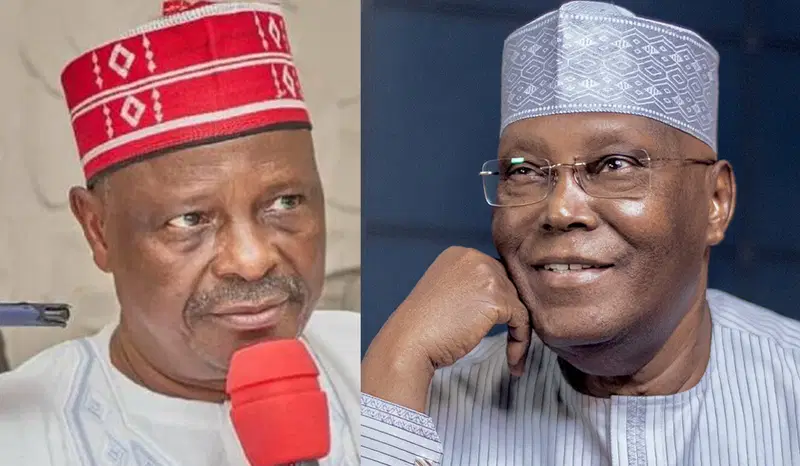
The vice-presidential candidate of the Nigeria Democratic Congress (NDC), Rabiu Musa Kwankwaso, has urged former Vice-President Atiku Abubakar to step down from the 2027 presidential race. 

Kwankwaso, a former governor of Kano state, spoke at his residence in Abuja during a meeting with members of the Fulani Farmers Association.

According to Thecable, Kwankwaso, who is running mate to Peter Obi, NDC presidential candidate, urged Atiku to reconsider his presidential ambition, citing his age and health.

He added that he and Obi would take care of Atiku if they won the presidency.

“Go to the Wazirin of Adamawa’s house and tell him in Fulani that he needs to focus on his traditional title of Wazirin, given his age and health,” he said in Hausa.

“If Allah grants us success, we will take good care of him, especially since you all come from Adamawa. An apology should be offered to him.”

See also  Buhari’s burial postponed to Tuesday in Daura

Abubakar has run for the number one office six times, but has been on the ballot as a presidential candidate on three occasions — 2007, 2019, and 2023.

In April, the former vice-president, who will turn 81 next year, said the 2027 general election would be his last attempt at the presidency.

Atiku was conferred the title of Wazirin Adamawa in June 2017 by Muhammadu Barkindo Aliyu Musdafa, the 12th traditional ruler of the Adamawa emirate, following the death of Muhammad Abba, the previous titleholder.

Atiku had held the title of Turaki of Adamawa since 1982, which was eventually passed to his son, Aliyu.

The Wazirin Adamawa is a high-ranking traditional title in the Adamawa Emirate, with the holder serving as the emir’s prime minister, most senior councillor, kingmaker and close adviser.

In 2025, Adamawa state government issued a directive requiring all kingmakers and traditional council members to be indigenes of the emirates or chiefdoms they represent.

See also  BREAD OF WAHALA: CAN demands Sterling Bank CEO’s sacking over controversial Easter advert

The policy was said to have stripped Atiku of the Wazirin title, as he hails from Jada in the Ganye emirate.

Continue Reading

Trending News