Connect with us

Business

AfDB targets 400,000 jobs in Nigeria

Published

on


The African Development Bank (AfDB) has said it is targeting the creation of 400,000 jobs through the establishment of Special Agro-industrial Processing Zones (SAPZs) across the country.

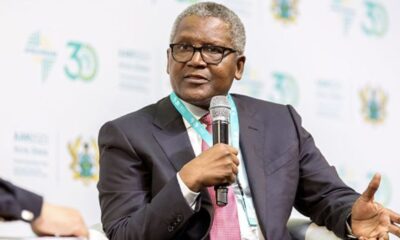
Lamin Barrow, the bank’s Director-General, Nigeria Country Department, who spoke at the Agribusiness & Food Security Summit organised by Vanguard Newspapers in Lagos yesterday, noted that being government-enabled and private sector- led, Phase 1 of the SAPZ Programme will mobilise significant investments in the agro-industrial hubs and agricultural transformation centres.

“It will impact some 1.5 million households as direct beneficiaries, with a target to create 400,000 direct jobs and up to 1.6 million indirect jobs. The bank and other co-financiers – International Fund for Agriculture Development (IFAD) and the Islamic Development Bank (IsDB) – have approved $538 million to finance the first phase of the programme in seven states and the Federal Capital Territory. The programme will support the Nigeria’s efforts to raise agricultural productivity, promote investments, create wealth and jobs, and transform the rural areas from being zones of misery into zones of economic prosperity,” he said.

See also  Baba Ijesha: Judgement victory for victims of abuse - Iyabo Ojo

Barrow said the bank is supporting Nigeria to implement bold policy measures to drive the transformation of agriculture and foster economic diversification through the development of SAPZs. The zones, he added, will be enabled with infrastructure and logistics to support private sector food and agri-business companies to process and add value to agricultural commodities close to the areas of production.

“We are living in challenging times. Before Russia’s invasion of Ukraine that threatens to disrupt the supply of 20-30 per cent of the country’s annual wheat imports of 5.6 million MT, Nigeria was already facing high food price inflation in recent times. The COVID-19 pandemic and its attendant socio-economic impacts have pushed millions of people into poverty. Global warming and extreme weather conditions continue to intensify, and the droughts experienced in 2020 have weakened food security and nutritional status in the country.

“For Africa to achieve inclusive and sustainable growth, we must boost food security and transform the agricultural sector. That is why the African Development Bank launched its Feed Africa Strategy in 2016 in response to the widening gap in food self-sufficiency in Africa, and to contribute to efforts to end hunger, malnutrition and extreme poverty, and increase Africa’s share of the global commodity value chains. Feed Africa takes a value chain approach to transforming the agriculture sector of African countries.

See also  Police arrest two for ‘supplying ammunition to kidnappers’ in Kaduna, Katsina, Zamfara

“Productivity is one of the major drivers of profitability in agricultural commodity value chains. Hence, the Technologies for African Agriculture Transformation (TAAT), one of the flagships of Feed Africa, seeks to double farm level productivity for nine strategic crops by deploying food production technologies to 40 million farmers. TAAT has made remarkable progress since it was launched in 2018,” he said.

He noted that TAAT helped Ethiopia to produce more than 80,000MT of certified seeds of four heat tolerant wheat varieties planted on 400,000 Ha of irrigated lowland fields in the 2021/2022 wheat season. Yields of wheat have increased from 1.5MT/Ha to 4MT/Ha on average in Ethiopia’s lowlands. The rapid expansion of wheat production into the lowlands helped Ethiopia increase wheat production by 1 million tons in 2020/2021, thereby reducing more than 50 per cent of Ethiopia’s wheat imports.

“Interestingly, these same heat tolerant varieties were introduced to Nigeria in 2013, but we achieved 114,000 Ha instead of 1.5 million Ha potential in areas where wheat can be grown. I am therefore pleased that with support from the African Development Bank, Nigeria has now established a National Wheat Innovation Platform that brings together farmers, seed companies, millers, and other key stakeholders to prepare and implement a National Wheat Strategy,” he said.

See also  Sanwo-Olu signs bills establishing two more varsities in Lagos

Business

Nigeria’s foreign reserves rise to $52.66 billion, highest in 17 years

Published

on

By


Nigeria’s gross external reserves surged to $52.66 billion as of August 19, reaching their highest level in more than 17 years.

This was contained in the latest data from the Central Bank of Nigeria (CBN).

The reserves stood at $52.65 billion on August 19, up from $45.56 billion recorded on January 2, representing an increase of about $7.09 billion or 15.6 percent in less than eight months.

The latest position also surpasses the previous 2026 peak of about $52.04 billion recorded in July.

Data from the CBN showed that reserves crossed the $52 billion mark for the first time this year in July, reaching $52.02 billion on July 20.

The figure was the highest since January 2009, when reserves stood at about $52.01 billion.

The reserve position had declined earlier in the year, falling from $49.18 billion on April 1 to about $48.33 billion in early May.

See also  Delta monarch declared wanted over murder of 17 soldiers turns himself in

It subsequently recovered, crossing the $50 billion mark in June and rising above $51 billion before surpassing $52 billion in July.

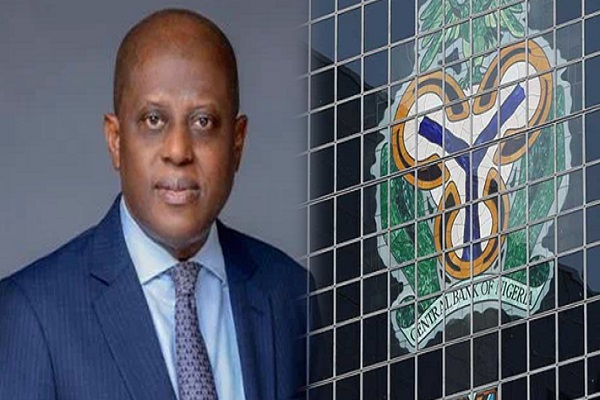
The governor of the CBN, Olayemi Cardoso, had earlier attributed the increase in reserves to stronger foreign exchange inflows, including receipts from crude-oil-related taxes and third-party inflows.

Cardoso also said the reserve level provided import cover for about 11 months of goods and services, significantly above the three-month international benchmark.

The increase in the external buffer has coincided with improved foreign exchange liquidity and a stronger naira.

Recent market data showed the naira appreciating to about N1,346.49 per dollar in the official market last week.

Also, in its 2026 macroeconomic outlook, the apex bank projected that Nigeria’s external reserves would rise to about $51.04 billion by the end of the year.

The latest figure is about $1.62 billion above that projection.

Continue Reading

Business

Wema Bank wins Euromoney’s Nigeria’s best digital bank for consumers 2026 award

Published

on

By

Recognition affirms bank’s leadership in digital innovation and customer-centric banking

Wema Bank, Nigeria’s oldest indigenous bank and pioneer of Africa’s first fully digital bank, ALAT, recently added another feather to its already heavily-studded cap after it was named Nigeria’s Best Digital Bank for Consumers 2026 by Euromoney, one of the world’s most respected authorities on financial services and banking excellence.

The prestigious recognition affirms the Bank’s sustained leadership in digital innovation, customer experience and financial inclusion, reinforcing its position as one of Nigeria’s leading technology-driven financial institutions.

Presented annually, the Euromoney Awards for Excellence celebrate banks that are redefining financial services through innovation, measurable impact and outstanding customer value.

In selecting Wema Bank for the award, Euromoney recognised the Bank’s successful digital transformation journey, its continuous innovation through ALAT, Africa’s first fully digital bank, and its unwavering commitment to delivering simpler, smarter and more accessible banking experiences for customers.

See also  She wrote a book ‘How to Murder Your Husband’, then she killed her husband

Commenting on the recognition, the Managing Director/Chief Executive Officer of Wema Bank, Moruf Oseni, said: “This award is a strong validation of the deliberate investments we have made over the years to build a truly digital bank that puts customers at the centre of everything we do. Innovation for us has never been about technology for its own sake. It has always been about creating solutions that make banking easier, faster, safer and more rewarding for every customer.

“From pioneering Africa’s first fully digital bank with ALAT to continuously evolving our digital capabilities, we have remained focused on anticipating customer needs and building experiences that create real value. We are honoured by this recognition from Euromoney and inspired to continue pushing the boundaries of innovation as we shape the future of banking in Nigeria.”

A key milestone in Wema Bank’s digital transformation has been the evolution and upgraded version of ALAT, which introduced next-generation capabilities including voice banking, tap-to-pay functionality, personalised financial services and integrated investment opportunities through strategic partnerships.

See also  We can go on strike any moment — ASUU

Together with faster digital onboarding, AI-powered fraud monitoring, intelligent customer personalisation and an expanding agency banking network, these innovations continue to enhance customer experience while extending financial services to more Nigerians.

Euromoney also recognised Wema Bank’s ability to leverage technology to build deeper customer relationships through data-driven personalisation, enabling customers to receive tailored recommendations across savings, investments and credit products based on their financial needs and behaviour.

For over eight decades, Wema Bank has remained at the forefront of innovation in Nigeria’s financial services industry. As the pioneer of Africa’s first fully digital bank, the Bank continues to redefine banking by combining technology, customer insight and innovation to deliver seamless, secure and inclusive financial solutions for individuals, businesses and communities.

The Euromoney recognition further reinforces Wema Bank’s commitment to building the future of banking through continuous innovation, operational excellence and customer-centric solutions that create lasting value.

Continue Reading

Business

CBN revokes licences of 46 microfinance banks

Published

on

By

The Central Bank of Nigeria (CBN) has revoked the operating licences of 46 microfinance banks (MFBs).

The apex bank cited the failure of the banks to meet regulatory requirements for continued operation.

In a statement issued on Wednesday by Hakama Sidi-Ali, acting director of corporate communications, the apex bank said the revocation took effect from July 1, 2026, in line with Sections 12 and 13 of the Banks and Other Financial Institutions Act (BOFIA), 2020.

The CBN said the action was approved by Olayemi Cardoso, the apex bank governor, as part of efforts to safeguard the stability of the financial system, protect depositors and ensure compliance with regulatory standards.

“According to the revocation order, the action became necessary because of one or more of the circumstances: Insufficient assets to meet liabilities, closure of operations without the CBN approval, Inactivity and cessation of financial intermediation, failure to commence operations within 12 months of licence approval, and failure to maintain minimum capital funds unimpaired by losses,” CBN said.

See also  Police arrest two for ‘supplying ammunition to kidnappers’ in Kaduna, Katsina, Zamfara

“The revocation of the licences is part of the Bank’s ongoing efforts to safeguard the stability of the financial sector, protect depositors, and ensure that licensed institutions comply with current laws and regulatory requirements,” the statement reads.

CBN added that it remains committed to promoting a safe, sound and resilient financial system and would continue to take supervisory and regulatory actions where necessary to maintain public confidence in Nigeria’s financial sector.

The affected microfinance banks are:

1. Minji-Se Churchill MFB (tier 1) in Rivers

2. Merchant MFB (tier 2) in Abia

3. Janmaa MFB (tier 1) in Kwara

4. Busu MFB (tier 2) in Niger

Advertisement

5. Gold MFB (tier 1) in Lagos

6. Zain MFB, formerly Dawakin Tofa MFB, a tier 2 lender in Kano

7. Bompai MFB (tier 1) in Kano

8. Ajwa MFB (tier 2) in Kano

Advertisement

9. Now Now Digital MFB (tier 2) in Kano

10. Crystabel Microfinance Bank (tier 1) in Bayelsa

See also  'An old man that could be your father' — Bode George chides Onanuga for 'insulting' Obasanjo

11. Chanelle MFB (state-based) in Lagos

12. Abia SME MFB (tier 1) in Abia

13. Kamba MFB (tier 2) in Kebbi

14. Iwade MFB (tier 2) in Ogun

15. Winview MFB (tier 1) in Abuja

16. Zuru MFB (tier 2) in Kebbi

17. Minjibir MFB (tier 1) in Kano

18. Shanono MFB (tier 2) in Kano

19. Sumaila MFB (tier 2) in Kano

20. Rimin Gado MFB (tier 2) in Kano

21. Mwaghavul MFB (state-based) in Plateau

22. Sycamore MFB (tier 2) Kano

23. TOFA MFB (tier 2) in Kano

24. Safegate MFB (tier 1) in Lagos

25. Creekline MFB (tier 2) in Delta

26. Bestar MFB (tier 1) in Oyo

27. Livingspring MFB (tier 1) in Cross River

28. Apple MFB (tier 2) in Ogun

29. Stanford MFB (state-based) in Uyo

30. Frontline MFB (tier 2) in Anambra

31. Zafec MFB (tier 2) in Kaduna

32. Supreme MFB (tier 1) in Lagos

See also  Sanwo-Olu signs bills establishing two more varsities in Lagos

33. Bejin-Doko MFB (tier 2) in Niger

34. Kanopoly MFB (tier 1) in Kano

35. Bellbank MFB, formerly Tsanyawa (Tier 2), in Kano

36. Yeneng MFB (tier 2) in Plateau

37. Creditville MFB (tier 1) in Lagos

38. MBAG MFB (tier 1) in Lagos

39. Straight Sahara MFB (tier 1) in Benue

40. Our Pass MFB (tier 2) in Ondo

41. VERDANT MFB (tier 1) in Lagos

42. Basawa MFB (tier 2) in Kaduna

43. Casha MFB (tier 2) in Abuja

44. Esteem MFB (tier 2) in Kano

45. Enterpreneur MFB (tier 1) in Lagos

46. Avantus MFB (tier 2) in Osun

It would be recalled that the CBN increased the capital base for banks, in March 2024, giving them until March 31, 2026, to meet the requirements.

On March 6, 2026, the financial regulator disclosed that 30 banks have met the minimum capital requirement.

Continue Reading

Trending News