Connect with us

Business

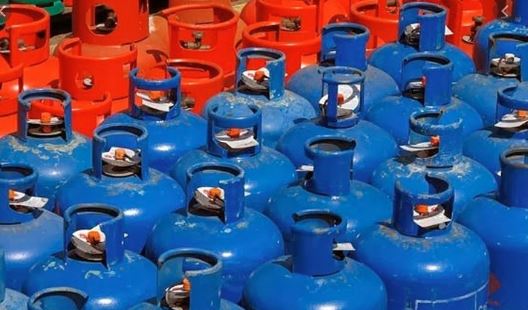
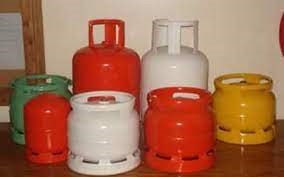
Cooking Gas price drops as supply rises

Published

on


The Federal Government has disclosed that it was putting measures in place to ensure further reduction in the cost of Liquefied Petroleum Gas, popularly called cooking gas.

Government disclosed this while reacting to the recent marginal drop in the cost of cooking gas.

According to findings, the price of 12.5kg LPG has dropped from N8,800 to between N8400 and N8200. In some outlets, the price of the commodity dropped to between N7,800 and N8,000 as of Thursday.

It will be recalled that the cost of LPG kept rising in 2021, and jumped by more than 240 per cent between January and October 2021.

The development forced some LPG users to shift to charcoal or firewood, as consumers of the commodity raised the alarm over the persistent hike in its price.

The product had increased by 240 per cent for 12.5kg, moving up from N3,000 to N10,200 within the first 10 months of 2021.

“It is in government’s interest for the price to go down consistently and there are certain initiatives that are being taken at the moment, which hopefully will see to further drops in price regardless of the international cost,” the Programme Manager, National LPG Expansion Implementation Plan, Office of the Vice President, Dayo Adeshina, stated.

See also  Price of 12.5kg cooking gas increased by 122% in one year - NBS

When asked to state one of such initiatives, he replied, “The discussions are still ongoing and there are certain things that you can do to stimulate the market which will have an effect. One of them also has to do with storage.”

About 65 per cent of the LPG is imported into Nigeria, while domestic production accounts for 35 per cent, hence the cost of the commodity in the global market affects the price locally.

Adeshina also said that the international price of the LPG had risen so high in October last year, but dipped towards the end of 2021 into January 2022, as this also contributed to the recent drop in the LPG price across the country.

He said, “If you look at the international pricing of the LPG, and that might change again because it is not a fixed price, in January last year, it was $250 per tonne.

“It rose to $875 per tonne by the end of October and started dropping by the end of November into December, and came down to around $500 per tonne at some point but went up again in December to $708 per tonne.”

See also  Supreme court to deliver verdict on LG autonomy suit Thursday

He added, “Now, as of the third of January this year, that figure is $744 per tonne. So you can see there is a drop from about $800 around November to $700 in January. The issue here is that the price has been fluctuating.

“Yes you have the effects of Customs and the position of the VAT that made people pay tax for what they imported even in 2019 and 2020. Of course, some importers stopped importing, but there is a resolution going on to resolve that aspect.”

Adeshina assured Nigerians that the government would come up with additional measures that would see to a further reduction in cooking gas prices regardless of the price fluctuation in the global market.

Commenting on the development, the National Chairman, Liquefied Petroleum Gas Retailers Association of Nigeria, Michael Umudu, confirmed the drop in LPG price, attributing it to the increase in supply by the NNPC and NLNG.

See also  Tinubu appoints six new directors for NPA, NIMASA

“Also, many LPG users stopped using the commodity at the time when the price kept increasing and this reduced demand pressure on cooking gas, hence causing a rise in its availability and then a gradual drop in price,” he stated.

Asked whether the Federal Government had removed the VAT on cooking gas imports, Umudu replied, “It (government) has not been enforcing the tax and has remained silent about it, but has not said anything about removing it. This also has helped in price reduction.”

Last month, the Group Managing Director of the Nigerian National Petroleum Company Limited, Mele Kyari, said the NNPC was increasing the supply of the LPG in a bid to force down its price.

Kyari said, “Two things are in play. One is the supply in the international market of gas. It moves with the price of every other petroleum product including crude oil and its derivatives.

“So definitely, it is a reflection of what is happening in the international market. However, what we are doing is to increase supply and once supply increases, price will come down.”


Continue Reading
Click to comment

Leave a Reply

Your email address will not be published. Required fields are marked *

Business

Nigeria’s foreign reserves rise to $52.66 billion, highest in 17 years

Published

on

By


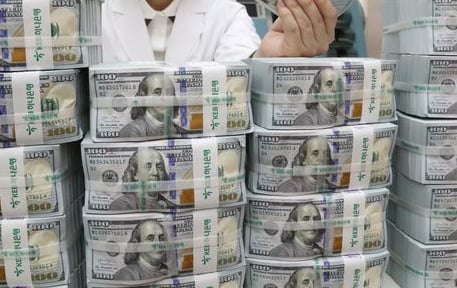
Nigeria’s gross external reserves surged to $52.66 billion as of August 19, reaching their highest level in more than 17 years.

This was contained in the latest data from the Central Bank of Nigeria (CBN).

The reserves stood at $52.65 billion on August 19, up from $45.56 billion recorded on January 2, representing an increase of about $7.09 billion or 15.6 percent in less than eight months.

The latest position also surpasses the previous 2026 peak of about $52.04 billion recorded in July.

Data from the CBN showed that reserves crossed the $52 billion mark for the first time this year in July, reaching $52.02 billion on July 20.

The figure was the highest since January 2009, when reserves stood at about $52.01 billion.

The reserve position had declined earlier in the year, falling from $49.18 billion on April 1 to about $48.33 billion in early May.

See also  FG approves N21.10b contracts for Aviation, Education, others

It subsequently recovered, crossing the $50 billion mark in June and rising above $51 billion before surpassing $52 billion in July.

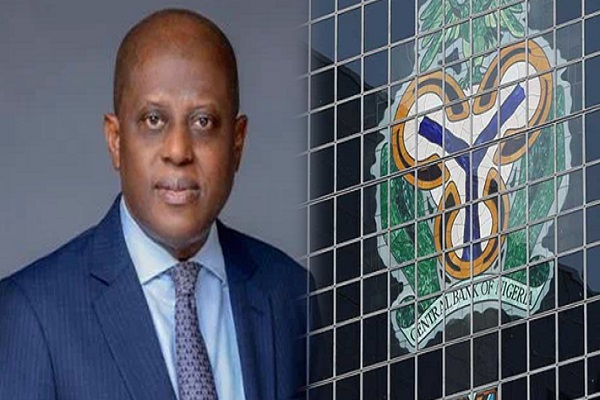
The governor of the CBN, Olayemi Cardoso, had earlier attributed the increase in reserves to stronger foreign exchange inflows, including receipts from crude-oil-related taxes and third-party inflows.

Cardoso also said the reserve level provided import cover for about 11 months of goods and services, significantly above the three-month international benchmark.

The increase in the external buffer has coincided with improved foreign exchange liquidity and a stronger naira.

Recent market data showed the naira appreciating to about N1,346.49 per dollar in the official market last week.

Also, in its 2026 macroeconomic outlook, the apex bank projected that Nigeria’s external reserves would rise to about $51.04 billion by the end of the year.

The latest figure is about $1.62 billion above that projection.

Continue Reading

Business

Wema Bank wins Euromoney’s Nigeria’s best digital bank for consumers 2026 award

Published

on

By

… Recognition affirms bank’s leadership in digital innovation and customer-centric banking

Wema Bank, Nigeria’s oldest indigenous bank and pioneer of Africa’s first fully digital bank, ALAT, recently added another feather to its already heavily-studded cap after it was named Nigeria’s Best Digital Bank for Consumers 2026 by Euromoney, one of the world’s most respected authorities on financial services and banking excellence.

The prestigious recognition affirms the Bank’s sustained leadership in digital innovation, customer experience and financial inclusion, reinforcing its position as one of Nigeria’s leading technology-driven financial institutions.

Presented annually, the Euromoney Awards for Excellence celebrate banks that are redefining financial services through innovation, measurable impact and outstanding customer value.

In selecting Wema Bank for the award, Euromoney recognised the Bank’s successful digital transformation journey, its continuous innovation through ALAT, Africa’s first fully digital bank, and its unwavering commitment to delivering simpler, smarter and more accessible banking experiences for customers.

See also  Retailers, consumers lament as cooking gas price soars to N500/kg

Commenting on the recognition, the Managing Director/Chief Executive Officer of Wema Bank, Moruf Oseni, said: “This award is a strong validation of the deliberate investments we have made over the years to build a truly digital bank that puts customers at the centre of everything we do. Innovation for us has never been about technology for its own sake. It has always been about creating solutions that make banking easier, faster, safer and more rewarding for every customer.

“From pioneering Africa’s first fully digital bank with ALAT to continuously evolving our digital capabilities, we have remained focused on anticipating customer needs and building experiences that create real value. We are honoured by this recognition from Euromoney and inspired to continue pushing the boundaries of innovation as we shape the future of banking in Nigeria.”

A key milestone in Wema Bank’s digital transformation has been the evolution and upgraded version of ALAT, which introduced next-generation capabilities including voice banking, tap-to-pay functionality, personalised financial services and integrated investment opportunities through strategic partnerships.

See also  Good morning! Here Are Some Major News Headlines In The Newspapers Today: NLC gives govs Dec 1 ultimatum for minimum wage payment

Together with faster digital onboarding, AI-powered fraud monitoring, intelligent customer personalisation and an expanding agency banking network, these innovations continue to enhance customer experience while extending financial services to more Nigerians.

Euromoney also recognised Wema Bank’s ability to leverage technology to build deeper customer relationships through data-driven personalisation, enabling customers to receive tailored recommendations across savings, investments and credit products based on their financial needs and behaviour.

For over eight decades, Wema Bank has remained at the forefront of innovation in Nigeria’s financial services industry. As the pioneer of Africa’s first fully digital bank, the Bank continues to redefine banking by combining technology, customer insight and innovation to deliver seamless, secure and inclusive financial solutions for individuals, businesses and communities.

The Euromoney recognition further reinforces Wema Bank’s commitment to building the future of banking through continuous innovation, operational excellence and customer-centric solutions that create lasting value.

Continue Reading

Business

CBN revokes licences of 46 microfinance banks

Published

on

By

The Central Bank of Nigeria (CBN) has revoked the operating licences of 46 microfinance banks (MFBs).

The apex bank cited the failure of the banks to meet regulatory requirements for continued operation.

In a statement issued on Wednesday by Hakama Sidi-Ali, acting director of corporate communications, the apex bank said the revocation took effect from July 1, 2026, in line with Sections 12 and 13 of the Banks and Other Financial Institutions Act (BOFIA), 2020.

The CBN said the action was approved by Olayemi Cardoso, the apex bank governor, as part of efforts to safeguard the stability of the financial system, protect depositors and ensure compliance with regulatory standards.

“According to the revocation order, the action became necessary because of one or more of the circumstances: Insufficient assets to meet liabilities, closure of operations without the CBN approval, Inactivity and cessation of financial intermediation, failure to commence operations within 12 months of licence approval, and failure to maintain minimum capital funds unimpaired by losses,” CBN said.

See also  Good morning! Here Are Some Major News Headlines In The Newspapers Today: NLC gives govs Dec 1 ultimatum for minimum wage payment

“The revocation of the licences is part of the Bank’s ongoing efforts to safeguard the stability of the financial sector, protect depositors, and ensure that licensed institutions comply with current laws and regulatory requirements,” the statement reads.

CBN added that it remains committed to promoting a safe, sound and resilient financial system and would continue to take supervisory and regulatory actions where necessary to maintain public confidence in Nigeria’s financial sector.

The affected microfinance banks are:

1. Minji-Se Churchill MFB (tier 1) in Rivers

2. Merchant MFB (tier 2) in Abia

3. Janmaa MFB (tier 1) in Kwara

4. Busu MFB (tier 2) in Niger

Advertisement

5. Gold MFB (tier 1) in Lagos

6. Zain MFB, formerly Dawakin Tofa MFB, a tier 2 lender in Kano

7. Bompai MFB (tier 1) in Kano

8. Ajwa MFB (tier 2) in Kano

Advertisement

9. Now Now Digital MFB (tier 2) in Kano

10. Crystabel Microfinance Bank (tier 1) in Bayelsa

See also  Inmates awaiting trial for 12 years in Kirikiri – NCS

11. Chanelle MFB (state-based) in Lagos

12. Abia SME MFB (tier 1) in Abia

13. Kamba MFB (tier 2) in Kebbi

14. Iwade MFB (tier 2) in Ogun

15. Winview MFB (tier 1) in Abuja

16. Zuru MFB (tier 2) in Kebbi

17. Minjibir MFB (tier 1) in Kano

18. Shanono MFB (tier 2) in Kano

19. Sumaila MFB (tier 2) in Kano

20. Rimin Gado MFB (tier 2) in Kano

21. Mwaghavul MFB (state-based) in Plateau

22. Sycamore MFB (tier 2) Kano

23. TOFA MFB (tier 2) in Kano

24. Safegate MFB (tier 1) in Lagos

25. Creekline MFB (tier 2) in Delta

26. Bestar MFB (tier 1) in Oyo

27. Livingspring MFB (tier 1) in Cross River

28. Apple MFB (tier 2) in Ogun

29. Stanford MFB (state-based) in Uyo

30. Frontline MFB (tier 2) in Anambra

31. Zafec MFB (tier 2) in Kaduna

32. Supreme MFB (tier 1) in Lagos

See also  12.5kg cooking gas may sell for N10,000 by Dec – Marketers

33. Bejin-Doko MFB (tier 2) in Niger

34. Kanopoly MFB (tier 1) in Kano

35. Bellbank MFB, formerly Tsanyawa (Tier 2), in Kano

36. Yeneng MFB (tier 2) in Plateau

37. Creditville MFB (tier 1) in Lagos

38. MBAG MFB (tier 1) in Lagos

39. Straight Sahara MFB (tier 1) in Benue

40. Our Pass MFB (tier 2) in Ondo

41. VERDANT MFB (tier 1) in Lagos

42. Basawa MFB (tier 2) in Kaduna

43. Casha MFB (tier 2) in Abuja

44. Esteem MFB (tier 2) in Kano

45. Enterpreneur MFB (tier 1) in Lagos

46. Avantus MFB (tier 2) in Osun

It would be recalled that the CBN increased the capital base for banks, in March 2024, giving them until March 31, 2026, to meet the requirements.

On March 6, 2026, the financial regulator disclosed that 30 banks have met the minimum capital requirement.

Continue Reading

Trending News