Connect with us

News

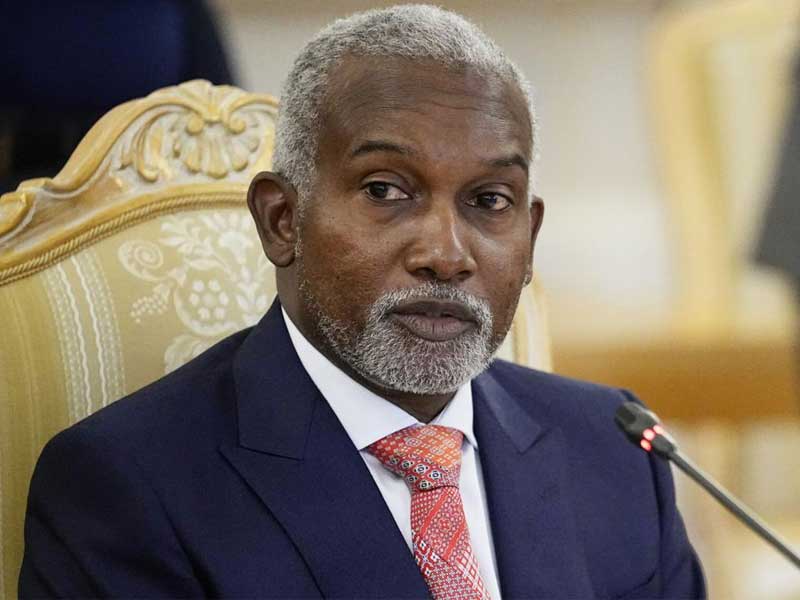
Yusuf Maitama Tuggar: The Man the Cap Fits

Published

on

Adebayo Adeoye

In every defining political season, the real question is not simply who can lead, but who fits the moment. In Bauchi State’s unfolding story, many believe Yusuf Maitama Tuggar is that fit — the man the cap sits on with ease and authority.

Leadership, like a cap, is symbolic and weighty. It demands balance, composure and a certain natural bearing. Not every head can carry it without strain. Tuggar, honed by years of public service and diplomatic finesse, wears it with quiet confidence. His demeanor is calm, his rhetoric measured, his vision deliberate.

On the global stage, he cultivated the art of negotiation, consensus-building and strategic engagement. He understands policy not as theory but as a living instrument for development. That rare fusion of international exposure and local awareness positions him uniquely in a state eager for growth and renewed direction.

Yet beyond résumé and reputation lies temperament. Tuggar’s strength is not in political theatrics but in thoughtful engagement. In an era where volume often substitutes for value, he represents depth over display, strategy over slogans.

Bauchi stands at a crossroads — rich in agricultural promise, blessed with youthful energy and hungry for investment-driven transformation. What it requires is steady, purposeful leadership. Tuggar’s outlook aligns with those aspirations, offering a vision rooted in structure, sustainability and inclusive progress.

See also  South Africa former President Jacob Zuma sentenced to 15 months in prison

Its most visible contribution lies in humanitarian welfare. Periodic distribution of food items, grains, and basic relief materials has provided short-term stability to vulnerable households, particularly in rural communities where inflation, climate pressures, and employment gaps remain acute.

Through his intervention on the 15th of December 2024, the ECOWAS Emergency Flood Response supported 850 households across Katagum, Jama’are, Zaki, Gamawa, and Giade local government areas, with a total of 1,000 households benefiting from the initiative. Last he made a personal donation of 20 Million Naira to the same zone to cushion the effects of flooding.

Agriculture, the backbone of Bauchi’s rural economy, has also benefited from targeted support. Fertiliser distribution, farming inputs, and seasonal assistance programmes have helped smallholder farmers maintain productivity.

In a state where agriculture is both livelihood and identity, even incremental support can reinforce food security and household resilience. This reflects an understanding that development, to be meaningful, must begin with the land and those who cultivate it.

Advocacy against indiscriminate tree felling in Bauchi State reflects a growing recognition that environmental protection is inseparable from economic stability and community well-being.

Ambassador Yusuf Maitama Tuggar has repeatedly emphasised the need to preserve trees as a safeguard against desertification, soil erosion, and declining agricultural productivity in northern Nigeria.

See also  Each state government should be allowed to set its minimum wage - Kaduna Gov, Dikko Radda

Beyond environmental concerns, this stance echoes longstanding regional traditions that treated tree conservation as essential to sustaining livelihoods and social stability. Encouraging responsible land use, reforestation, and public awareness not only protects the ecosystem but also reinforces food security, climate resilience, and the broader development prospects of the region.

Equally noteworthy is the foundation’s attention to youth empowerment, skills programmes, and leadership exposure initiatives suggest a recognition that the region’s future hinges on human capital. Northern Nigeria’s demographic reality — a young and rapidly growing population — demands investment not just in infrastructure, but in education, entrepreneurship, and civic responsibility. Foundations that prioritise youth development quietly contribute to social stability over time.

Community infrastructure initiatives, particularly borehole water projects, illustrate another practical dimension of the foundation’s work. Access to clean water remains one of the most immediate quality-of-life determinants in many rural areas. When such projects are delivered effectively, they improve health outcomes, reduce daily hardship, and foster community goodwill. Small infrastructure interventions often carry disproportionately large social returns.

Perhaps most significant, though less quantifiable, is the foundation’s emphasis on inclusive outreach. Assistance reportedly reaches diverse communities across religious and social lines. In a region where cohesion is essential for peace and development, such gestures reinforce shared citizenship rather than sectional identity.

Of course, foundations linked to public figures inevitably attract scrutiny. Critics sometimes question sustainability, transparency, or political motivations. These concerns are legitimate and should encourage stronger institutionalisation, clearer reporting, and collaboration with public agencies. Philanthropy is most effective when it complements, rather than substitutes, formal governance.

See also  Ooni a man of integrity, says Omolara’s father

Yet it would be unfair to dismiss tangible grassroots contributions simply because they arise from political actors. Nigeria’s history shows that local philanthropy — whether by traditional leaders, entrepreneurs, or public officials — has often filled critical gaps during periods of economic strain or institutional transition.

The Tuggar Foundation’s activities in Bauchi therefore represent more than charity. They reflect continuity between national service and community obligation. In an era where public trust in institutions can be fragile, such local engagement helps maintain a sense of connection between leadership and the people.

Ultimately, sustainable development requires both policy reform at the national level and sustained commitment at the community level. Foundations like this, when responsibly managed, can serve as useful complements — quietly reinforcing welfare, agriculture, youth development, and social cohesion where it matters most: at home.

When preparation meets opportunity, history takes note. And as Bauchi contemplates its next chapter, Yusuf Maitama Tuggar remains, for many, the man the cap fits — naturally, confidently and convincingly.

Continue Reading
Click to comment

Leave a Reply

Your email address will not be published. Required fields are marked *

News

Ex-IGP Egbetokun expresses happiness Tunji Disu is taking over, says they both benefitted from Tinubu mentorship

Published

on

By

Former inspector-general of police (IGP), Kayode Egbetokun, has said
he is happy that Tunji Disu is taking over from him as the country’s police chief.

Egbetokun spoke on Wednesday at the State House, Abuja, during the swearing-in and decoration of Disu as acting IGP.

The former IGP resigned from his position on Tuesday following a directive from President Bola Tinubu.

“I am happy that he is the one taking over from me. My advice to him is that he already knows all the things we have been doing together — strengthening operations, enhancing intelligence coordination, improving the inter-agency deployment model, dismantling several criminal syndicates, and improving our intelligence response mechanisms. I am sure he will continue to do that,” the former IGP said.

Egbetokun advised the new acting IGP to continue to remain committed to his duties, noting that Disu has been part of his administration from the beginning.

See also  Ooni a man of integrity, says Omolara’s father

“He was my principal staff officer; he was commissioner of police in Rivers state and in the FCT; he was assistant inspector-general in charge of my special protection unit,” Egbetokun said.

“When the president gave the presidential directive to withdraw police officers from VIP protection, he was the person I called upon to ensure that the directive was fully complied with, and he did it very well.”

Egbetokun said he is “particularly excited” to hand over to Disu, noting that they share “unique history” and both benefited from the mentorship of Tinubu during his tenure as governor of Lagos state.

“I remember learning many things from him (Tinubu), but there is something in particular I recall,” he said.

“He once said that a good leader should have a successor and a succession plan and must invest in his likeliest successors.

“I invested in likely successors in the Nigeria Police Force, and I am happy that one of those I invested in has been found most suitable for the job and has been decorated today.”

See also  Ghana’s polls reflect trust in Mahama’s vision to take country to greater heights - Tinubu

Egbetokun thanked the president for trusting him with different positions, especially when he appointed him as his chief security officer when he was governor of Lagos state, and subsequently as IGP when he became president.

“I am deeply grateful to him,” Egbetokun said.

Continue Reading

News

Ex-NNPC GM jailed 7 yearsin US over $2.1m bribe from Chinese oil firm

Published

on

By

A United States district court has sentenced Paulinus Okoronkwo, a Nigerian American, to 87 months in prison for receiving a $2.1 million bribe from Addax Petroleum, a subsidiary of Sinopec, a Chinese state-owned petroleum and gas conglomerate.

Okoronkwo is a former general manager of the Nigerian National Petroleum Corporation (NNPC), now NNPC Limited.

In a statement on Monday, the US government said John Walter, the district judge, ordered Okoronkwo to pay $923,824 in restitution to the Internal Revenue Service (IRS).

The judge also ordered the forfeiture of $1,039,997, which is the net proceeds of the sale of a home belonging to the ex-NNPC general manager.

In August 2025, Okoronkwo was found guilty of transactional money laundering, tax evasion, and obstruction of justice.

According to US prosecutors, while serving as NNPC’s upstream division general manager, Okoronkwo abused his position by accepting a $2.1 million payment from Addax Petroleum, the Switzerland-based subsidiary of Sinopec.

The prosecutors said the money, wired in October 2015 to his law firm’s trust account in Los Angeles, was disguised as payment for consultancy services but was a bribe to secure favourable drilling rights in Nigeria.

See also  Ghana’s polls reflect trust in Mahama’s vision to take country to greater heights - Tinubu

The prosecutors had presented evidence that Addax executives falsified records to show the payment as legal fees, dismissed internal staff who raised concerns, and provided misleading information to auditors.

Okoronkwo, who practised immigration, family, and personal injury law in Koreatown, was said to have later used nearly $1 million of the bribe money as a down payment on a home in Valencia, California, while failing to declare the income on his 2015 tax return.

In October 2025, a US court granted the forfeiture application filed by the US government against Okoronkwo’s property.

The property is located at 25340 Twin Oaks Place, Valencia, California 91381.


Continue Reading

News

Tinubu charges acting IGP Tunji Disu to lead with discipline, rebuild trust in police

Published

on

By

President Bola Tinubu has charged Tunji Disu, the acting inspector-general of police (IGP), to lead with discipline and rebuild public trust in the Nigeria Police Force (NPF).

The president spoke at the State House on Wednesday during the decoration of Disu with his new rank as the acting IGP, following the resignation of Kayode Egbetokun.

Tinubu also told the new acting IGP to confront the escalating threats of banditry, terrorism, and other criminal activities across the country head-on.

“I expect you to strengthen the discipline, enhance interagency collaboration, and restore public confidence in Nigeria police,” the president said.

“Lead firmly but fairly, demand professionalism at every level and ensure that safety of lives and property remains your highest priority.”

Tinubu praised Disu as a “straightforward individual, committed and respected,” with sufficient discipline, urging him to draw from Egbetokun’s experience and “make it better than you met it.”

See also  Ndume slams Bwala, says he's a failed lawyer, political liability to Tinubu

“Nigeria is challenged right now with banditry, terrorism and all sorts of criminal activities,” he said.

“You’ll be part of the thinking, and you’ve been part of the innovation. The challenge as you hold the baton of this leadership is the belief that you will excel and Nigeria will prevail.”

The president appreciated Egbetokun for his “dedication in service” and “good leadership attributes” in maintaining law and order.

“Nigeria is a grateful nation to you,” he said.

“You have not succeeded without a good successor. Therefore, the success of a Tunji Disu IGP, when confirmed, is part of your responsibility.”

Continue Reading

Trending News