Connect with us

News

Remove petrol, electricity subsidies once inflation subsides, IMF tells FG

Published

on


The International Monetary Fund (IMF) has advised the federal government to remove petrol and electricity subsidies once the social protection scheme has been enhanced and inflation subsides.


IMF disclosed this in a report titled “Nigeria: 2024 Article IV Consultation”.


The suggestion followed a surge in Nigeria’s inflation rate, which rose to 33.20 percent in March 2024 — up from 31.70 percent in February.


IMF said about 15 million households or 60 million Nigerians will potentially benefit from an enhanced social intervention scheme the federal government developed with World Bank support.


“The authorities have recently approved an enhanced social transfer mechanism developed with World Bank support, and some initial payments have been made,” IMF said.


“In response to governance concerns, the authorities automated and digitalized the system to build a robust mechanism that delivers swift and targeted support to vulnerable households—some 15 million households or 60 million Nigerians potentially benefit from the scheme.

See also  Ganduje invites Kano Gov Abba Yusuf to join APC


“Once the safety net has been scaled up and inflation subsides, the government should tackle implicit fuel and electricity subsidies.”


According to the IMF, the subsidies are costly and poorly targeted, with higher-income groups benefiting more than the vulnerable.


IMF also said with pump prices and tariffs below cost-recovery, subsidy costs could increase to three percent of gross domestic product (GDP) in 2024, compared to one percent of GDP in 2023.


SUBSIDIES TO DRIVE BUDGET DEFICIT UP

IMF said its staff projected a higher fiscal deficit than anticipated in the 2024 budget, adding that “higher implicit” fuel and electricity subsidies would drive the increase.


The federal government had projected N9 trillion budget deficit for this year.

Aside from the subsidies, IMF said other drivers are lower oil and gas revenue projections, continued suspension of excise measures included in the medium-term expenditure framework (MTEF), and higher interest costs.

See also  Buhari goes to London for medical check-up


“Staff factors in an under-execution of capital expenditure in line with past outcomes and estimates an FGN deficit of 4.5 percent of GDP relative to the 2024 budget target of 3.4 percent of GDP,” IMF said.

“For the consolidated government, this implies a projected deficit of 4.7 percent of GDP in 2024 —compared to 4.8 percent of GDP in 2023 measured from the financing side — which is appropriate given the large social needs and factoring in a realistic pace of revenue mobilization.


“Over the medium-term, staff projects consolidation in the non-oil primary deficit. With rising interest costs, government debt stabilizes towards the end of the projection period.”


On April 3, the Nigerian Electricity Regulatory Commission (NERC) approved an increase in electricity tariff for customers under the Band A category to N225 per kilowatt-hour (kwh), from N66 — to reduce electricity subsidy.


However, on May 6, electricity distribution companies (DisCos) said the tariff of Band A customers has been reduced to N206.80 per kwh.

See also  Finance minister hints at gradual removal of petrol subsidy from April 2023


On May 29, President Bola Tinubu announced petrol subsidy was gone, however, on August 15, 2023, TheCable reported the president was considering a “temporary subsidy” on petrol.


On April 15, Nasir el-Rufai, former governor of Kaduna state, said the federal government is spending more on petrol subsidy than before.


Also, Gabriel Ogbechie, chief executive officer (CEO) of Rainoil Limited, on April 17, said the federal government now spends N600 billion on petrol subsidy monthly.

News

Umahi advises Obi to wait for his turn

Published

on

By


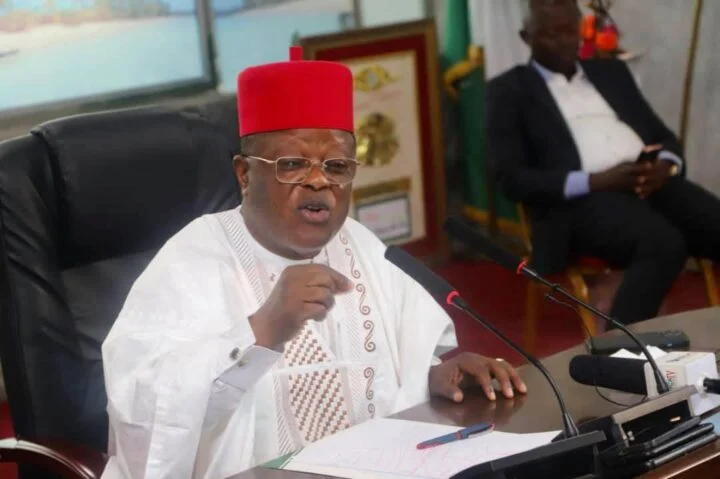
The minister of works, David Umahi, has said it is not yet the turn of the south-east to produce Nigeria’s president, urging the zone to be strategic in its political decisions.

Umahi, who spoke on Saturday during an inspection tour of the Alaoji axis of the Enugu-Port Harcourt expressway, said the south-east geopolitical zone will deliver 90 percent of its votes to President Bola Tinubu in the 2027 presidential election.

He commended Tinubu for “legacy projects” in the region and warned that failure to support the president would be detrimental to the south-east.

“All the marginalisation we complain about has been addressed by the president — unless we are not being truthful to ourselves, there is no more marginalisation in the south-east,” Umahi said.

“You know, giving the ministry of works to the south-east is no mean feat, because we have never had a minister of works.

See also  Beneficiaries of petrol subsidy will fight back — but we’ll defend Nigerians, says Tinubu

“You can see the results and the intention of the president. You can see the good heart of the president. So it’s time for payback.”

The minister said ongoing road projects from Port Harcourt to Enugu show the scale of federal presence in the region, noting that the south-east has never benefited as much in Nigeria’s history.

“When I was deputy governor, then governor for eight years, not a single federal road project came to the state. But today, we can boast of numerous projects ongoing,” he said.

“We can boast of projects worth trillions of naira in the south-east, just like in other regions. The biggest legacy projects of the president are in the south-east.

“We have service chiefs, key appointments, and a lot happening in the south-east under President Bola Ahmed Tinubu. So it’s time to support the president.

“The people of the south-east should support the president. We should not be guided by sentiments or non-strategic moves. We should tell our brother, Peter Obi, that it is not yet our turn.”

See also  Buhari goes to London for medical check-up

Umahi assured the contractor handling the project of prompt release of funds to ensure completion ahead of the president’s planned tour of projects in the south-east and south-south in May.

Umahi said the road section is designed to last 50 years and welcomed scrutiny from the public.

“Criticise us and praise us, nothing goes wrong. Our eyes are on the ball, and we are committed in prayers for the president. I urge Nigerians to visit project sites to verify progress,” he said.

“All projects have been sent to the ICPC for evaluation, so transparency is ensured.”

Umahi also inspected the Port Harcourt axis of the expressway being executed by an indigenous contractor.

Continue Reading

News

FCT council election: Wike vows to support only pro-Tinubu candidates

Published

on

By

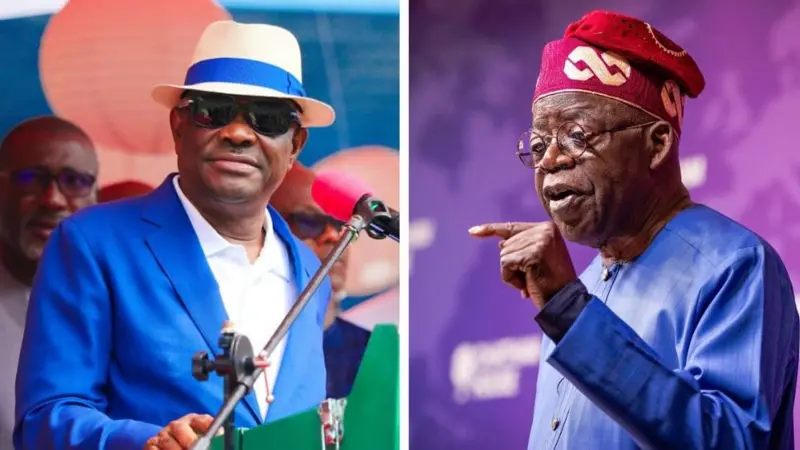
The minister of the Federal Capital Territory (FCT), Nyesom Wike, says he will ensure that only candidates aligned with President Bola Tinubu win the February 21 area council election.

Wike made the vow on Saturday in Abuja during the 60th birthday celebration of Sandy Onor, a former senator who represented Cross River central.

The minister said party affiliation would not influence his decision in the council elections, adding that his support will be for candidates backing the president.

“We have the FCT area council election coming up on February 21, and I have a duty to support any candidate that supports President Tinubu to win,” Wike said.

“It is also my duty to ensure that any candidate who is not supporting Tinubu does not win in the election, and I owe no apology for my stance.”

Ahead of the election, candidates have demanded a free and fair process with equal opportunity for all.

See also  Beneficiaries of petrol subsidy will fight back — but we’ll defend Nigerians, says Tinubu

In January, Moses Paul, a candidate of the African Democratic Congress (ADC) for the Abuja Municipal Area Council (AMAC), appealed to Wike to support his candidacy.

Paul said he shares the minister’s views on performance-driven governance, and described himself as “Mr Project”, a moniker associated with Wike when he was governor of Rivers.

The ADC candidate said he has addressed community needs within AMAC by supporting the renovation of primary schools and improvements to primary healthcare centres.

Christopher Maikalangu, chairman of AMAC, was elected in 2022 on the platform of the Peoples Democratic Party (PDP).

Maikalangu defected to the All Progressives Congress (APC) in April 2025 and is seeking re-election.

Continue Reading

News

Terrorism: First batch of US troops, military aircraft arrive Nigeria

Published

on

By

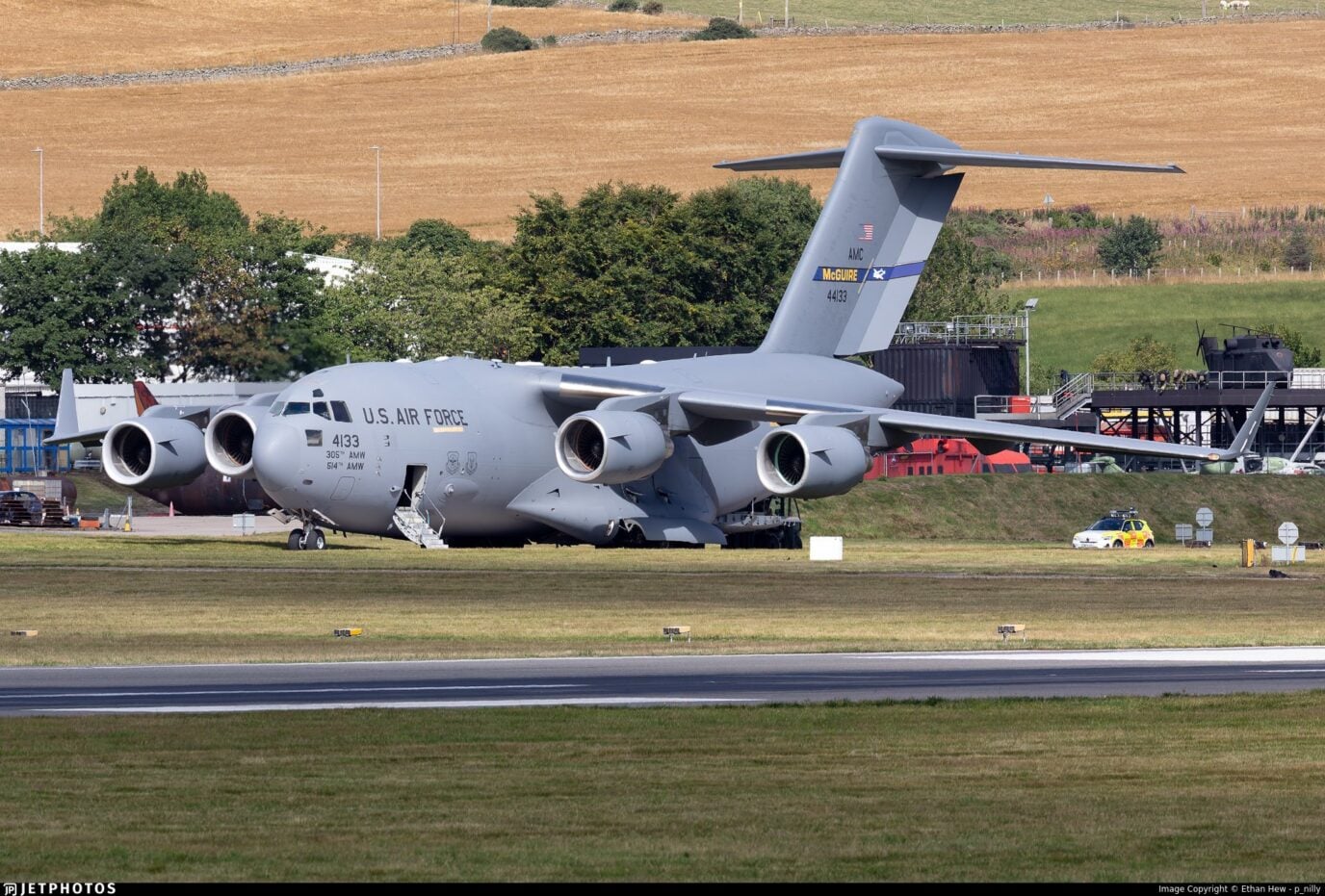
Five US military aircraft and the first batch of United States troops arrived in north-east Nigeria ahead of a joint offensive against ISWAP terrorists in the region.

According to the New York Times, a US military aircraft touched down in Maiduguri, the Borno state capital, on Thursday night.

By Friday evening, three aircraft were visible at the base, with equipment being offloaded from at least one of them.

Brant Philip, a counter-terrorism researcher and expert, said the military aircraft touched down in air force bases across Nigeria’s northern region over the past few days.

Also, on Tuesday, Reuters reported that the United States would send 200 troops to Nigeria to train the country’s military, as the West African nation battles insurgents across swathes of its territory.

A US official said the troops would supplement a handful of United States military personnel already on the ground in Nigeria.

See also  FG will continue electricity subsidy to ease burden on Nigerians, says NERC

The deployment follows increased security partnership between both nations since US President Donald Trump redesignated Nigeria as a “country of particular concern” over Christian genocide claims.

In a post on X, Philip shared that in furtherance of the security deal, six US Air Force cargo planes were deployed in West Africa over the past week.

Philip said one aircraft stopped in Ghana, with five proceeding to Nigeria.

He said a sixth aircraft arrived in Nigeria on Saturday and will likely follow the route towards the north-east.

Philip noted that one of the US planes, 1x C-17A, was deployed in the Kainji Airbase, while two others, 3x C-17A and 1x C-130J-30 flew to Maiduguri Airbase in Borno.

He said all of them left their respective bases on the same day they landed.

“Maiduguri Airbase will likely be the primary base of operations for supporting the Nigerian army against ISWAP,” the analyst said.

According to him, the Borno state capital is a critical location because the IS affiliate currently controls most of the rural areas in the state.

See also  Petrol subsidy removal, exchange rate regulation may cause initial hardship - Tinubu

He said parts of the deliveries may include at least one or more MQ-9 Reaper drones, attack helicopters and a large number of US troops.

Last week, Dagvin Anderson, US Africa Command (AFRICOM) commander, visited Nigeria’s capital city of Abuja.

Anderson was received by President Bola Tinubu, Nuhu Ribadu, national security adviser (NSA); Christopher Musa, minister of defence; Olufemi Oluyede, chief of defence staff; Waidi Shaibu, chief of army staff; and other senior security officials.

Shared security priorities, with a focus on countering terrorist organisations that threaten Nigeria, the United States, the wider region, and global security, were discussed.

Anderson said the US military had already deployed some forces in Nigeria as part of an expanded bilateral agreement to tackle terrorism and related security threats, though he did not disclose the exact size of the cavalry.

He noted that the troops will primarily focus on intelligence gathering and providing support to local forces.

See also  Four Nigerian students jailed in UK for violent street fight

Continue Reading

Trending News