
News
2023 Elections: Why Atiku lost presidential election

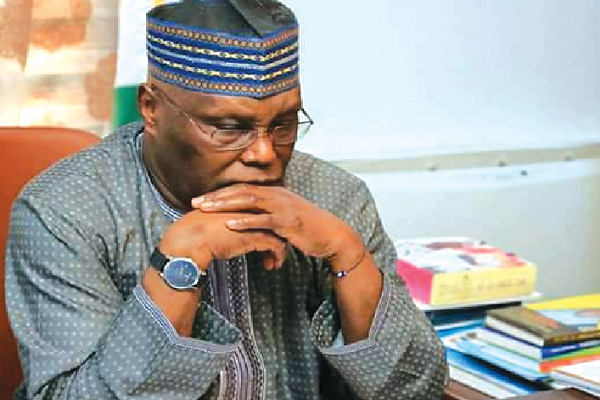
The enemy of my enemy is my friend. Of course, it is beautiful and interesting to see your enemies exchange blows, raining curses on one another and breaking apart. Asiwaju Bola Tinubu, a renowned Nigerian politician, is a testament to the political maxim that says a battle is easily won when enemies are divided.
At the just concluded presidential election in Nigeria, Mr Tinubu, 70, fondly called Jagaban, rode on the major weaknesses of his opponents — chronic division and lack of collaboration. He maximised this to grab Nigeria’s greatest power seat.
On 1 March, Mr Tinubu of the All Progressive Congres (APC) was declared the president-elect after defeating his major opponent, Atiku Abubakar of the People’s Democratic Party (PDP), in the most keenly contested and controversial election since 1999. Mr Tinubu polled a total of 8,794,726 votes to beat Mr Atiku, who scored 6,984,520 votes in the presidential elections.
But how did Mr Tinubu, a first-time presidential candidate, defeat Atiku, a man who had contested to be Nigeria’s president many times and failed?
The Baits for Tinubu’s Divide-and-Rule Antics
In 2015, Mr Tinubu had worked with major opposition parties, such as the Congress for Progressive Change (CPC) and a section of the PDP — including Atiku — to unseat a president they all wanted to be removed. This strategy worked like magic because the opposition was united for a course: installing Muhammadu Buhari who is now Nigeria’s outgoing president after eight years in the corridor of power.
In 2019, Atiku ran against Mr Buhari — with Peter Obi of the Labour party as his running mate — and lost in a keenly contested poll. About four years later, Atiku’s campaign pride against Mr Tinubu was that he had pulled 11 million votes, against Mr Buhari, hoping to overtake the latter’s strength in the core northern region.
Last year, Mr Obi suddenly left PDP for Labour Party to become the presidential candidate after claiming that forces beyond his power frustrated him out of his former party. Before then, Rabiu Kwankwaso, a political demigod in Kano, left PDP for the New Nigerian Peoples Party (NNPP), hoping it would be Nigeria’s third political force.
Why did Kwankwaso leave PDP abruptly?
Muhammad Jemu, his political ally provided an answer in an interview with Daily Trust, saying Kwankwaso and Obi’s breakaway from PDP was due to the leadership deficiencies of Iyorchia Ayu, the national chairman of the party.
“It was under Ayu’s watch that we lost Engr. Rabiu Kwankwaso, we lost Mr Peter Obi and today we are having challenges,” Mr Jemu said. “So, these are issues of failed leadership within the party which need to be corrected”
Atiku equally failed to provide leadership that could unite the party as the presidential candidate of the PDP.
Enters the Divide-and-Rule Strategist
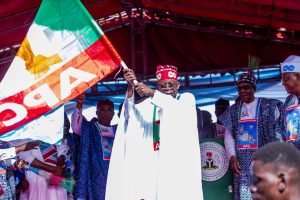
Interestingly, Mr Tinubu saw that the house of his major opposition was not in order and what did he do? He may not have started the crises but he fuelled the disunity by romancing grudging members of the PDP overtly and covertly and wooing them to his side. He adopted the divide-and-rule tactics and it worked potently.
Otherwise known as divide-and-conquer, political and sociological theorists say this tactic has been an effective military and political strategy for over 2,500 years. And, between 2022 and now, we have seen this at play on the Nigerian political earth.
“The art of using troops is this: When ten to the enemy’s one, surround him; when five times his strength, attack him; if double his strength, divide him,” says Sun Tzu, the brilliant military strategist and the author of The Art of War, a classic book on politics and military antics.
Mr Tinubu may have taken this lesson from Sun Tzu and used it well. Funnily enough, Abdulmumin Jibrin, a former director-general of Mr Tinubu’s campaign organisation, joined Mr Kwankwaso’s NNPP, citing a rift between him and Kano Governor Abdullahi Ganduje. Mr Jibrin maintained a good relationship with Mr Tinubu, despite his new political affiliation. Later, on national television, Mr Kwankwaso would say if he realised his presidential mission would fail, he would rather prefer to align with Mr Tinubu than return to Atiku in PDP.
Sources familiar with the political weather of the two parties said Mr Tinubu’s moles had planted discontent and distrust, stirring insurmountable differences between a political group who should have more things in common than they have differences. This is a significant factor that broke the party into three and nearly broke it up.
In the 33 Strategies of War, Robert Green taught a module of lessons about how to use this strategy effectively to win military and political battles, noting that an ideal warrior should not be intimidated by an enemy’s whole. Instead, he advised, one should look at their individual parts and look for ways to separate each piece. Mr Tinubu also excelled in playing this and it worked so potently.
Here are the four major factors that led to Atiku’s downfall and Mr Tinubu’s roles in them.
The Peter Obi Tsunami
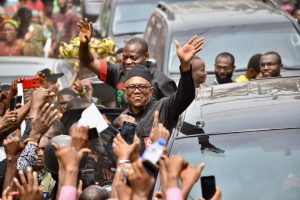
Two things worked for Peter Obi: It is the first time in Nigeria’s recent democratic history that an Igbo man would come so close to the corridor of presidential power. Also, the Christianisation of his campaigns against Mr Tinubu’s Muslim-Muslim ticket went down the consciousness of Christians who think Nigeria would be Islamised if the Lagos godfather become Nigeria’s president. Interestingly, the Anambra trader-cum-politician was embraced by his Igbo kinsmen across the country; nearly all the Christian communities in the country swallowed the gospel of his campaigns.
This should ordinarily work against Mr Tinubu, right?
No, it would rather work for him and against Mr Atiku, who used to be Mr Obi’s principal!
Initially, many Nigerians underplayed Mr Obi’s romance with young people on social media. But his political momentum would expand like burning dry grass. Mr Obi, former vice-presidential candidate of the PDP, would soon hijack some of the political structure of his former principal, Atiku. Most southeast and south-south voters would prefer him to an Atiku on the basis of kinsmanship.
Churches in the South-east, South-south and South-west began local mobilisation for Mr Obi with many of them dissuading their followers that voting for another party, aside from Labour Party, is antichrist. A large number of followers of Mr Obi were former sympathisers of Atiku, including Christian communities in the North-east and North-central.
But politicians who knew the consequence of Mr Obi’s momentum warned that he might be indirectly clearing the pathway to success for Mr Tinubu. One of them is the current Governor of Anambra State, Charles Soludo, who said in an open letter: “Indeed if I were Asiwaju Tinubu, I would even give Peter Obi money as someone heading one of the departments of his campaign because Obi is making Tinubu’s pathway to victory much easier by indirectly pulling down PDP. It is what it is!”
Mr Soludo was right.
By the time elections of states would be counted and collated, Mr Obi had polled over six million votes across Nigerian states, with strongholds in the southwest, south-south and Christain-dominated states. Now, imagine half of these votes were for Atiku. By now, he would have been the president-elect.
Kwankwaso: the ‘Kano President’
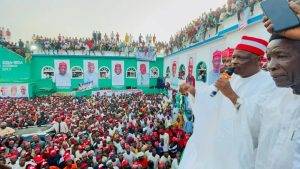
If Kano was a country, Mr Kwankwaso would undoubtedly be the president. After he left PDP to build NNPP, his followers in Kano embraced him with love and passion. Even before the polls, it was clear he would win the state. But would he win any other state? No.
The common thing for a smaller party like Mr Kwankwaso’s is to merge with a larger one to have a stake in victory. When he kept saying he would win across the Nigerian state, many Nigerians did not understand his logic. But his exit from the PDP clearly favoured Mr Tinubu even though he did not join the APC.
If he had defected to PDP, it would have boosted Atiku’s chances as the PDP candidate would have secured a significant number of Mr Kwankwaso’s one million votes in Kano. First, he watched as the PDP momentum was put aground in the state and hijacked their structure, being the former leader of the party in Kano. He built a structure for the party so much that it was difficult for APC, the ruling party in the state to even come near him.
However, the current Kano Governor, Mr Ganduje, ensured Tinubu got a reasonable share of the votes in the state, using his might. Mr Kwankwaso would, in the end, bury the Kano structure of the PDP against Mr Atiku’s political ambition.
The ‘Wicked Wike’ and the anti-party works of the G5
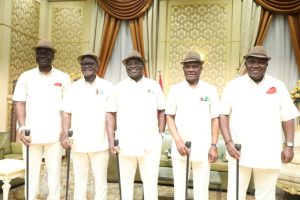
Tinubu’s APC won Rivers? This was how many Nigerians’ tongues were left wagging, especially on social media. But the answer to their question is simple.
After he lost the PDP’s presidential primary election to Atiku, Nyesom Wike, the outgoing Governor of Rivers, became really disgruntled. Things got worse when Atiku ignored Mr Wike to pick Governor Ifeanyi Okowa of Delta as his running mate.
Mr Wike, however, pledged to work with the winner of the primary on only one condition: Mr Ayu, the national chairman of the party from the north, must resign since Atiku is also a northerner. Among other reasons, he argued that you can’t northernise a political party and expect the support of southerners.
Again, Atiku failed to provide leadership on the matter. Then, Mr Wike’s empathisers such as Governor Seyi Makinde of Oyo State, Governor Samuel Ortom of Benue State and two other governors, formed an anti-party group. Their agitation: Mr Ayu must resign and a southern chairman of the party must emerge.
As the crisis festered, Mr Tinubu came in with his divide-and-rule antics. He approached Mr Wike with a saucy offer. On two occasions, the two men met abroad for negotiations. In the end, Mr Tinubu successfully wooed Wike to his side. He also met the other four governors for negotiations.
“I wish you good luck,” the governor was quoted as saying to Mr Tinubu. “I support the principle of fairness, equity and justice and that is what G5 stands (for). G5 does not stand for anybody.”
Although Wike was accused of denying supporters of Peter Obi to vote on election day with many describing him as “wicked Wike”, he delivered Rivers State for Tinubu’s APC. Before then, he had denied PDP and LP the venue of campaigning in the state and made it difficult for them to canvass for votes.
In Oyo State, Governor Makinde refused to attend any rally involving Atiku, being a member of the G5. On election day, Tinubu won his polling unit before finally winning the PDP state. The same thing played in Ekiti State. Ayo Fayose, former governor of the state and PDP member, publicly declared support for Mr Tinubu, citing the fact that it was the turn of the south to wield presidential power.
APC Northern Governors
In what appears to be his last chance to be Nigeria’s president, other factors, apart from the PDP crises fuelled by Mr Tinubu, also worked against Atiku.
First, at a time he apparently thought he could play the northern card to win elections, the APC northern governors clamoured that it was the turn of the south to pick whom to be president. They all queued behind Mr Tinubu.
Going into the polling field, Mr Atiku’s strategists were sure that a PDP victory rested on sweeping the Muslim North to cancel out the anticipated deficits from the South. They were wrong. A combination of Kwankwaso’s insistence on not withdrawing, the failure of the APC northern leaders to betray Tinubu, and Atiku’s inability to influence enough mass sentiments contributed to his fall.
One key lesson here: You can’t win your enemies when they are solidly united. Scatter them and you’ll be able to conquer them. Diane Goettel, a political strategist, corroborated this phenomenon, saying: “Leaders who use a divide and conquer strategy may encourage or foster feuds between smaller powers. This kind of political manoeuvring requires a great understanding of the people who are being manipulated. To foster feuds, for example, one must understand the political and social histories of the parties intended to take part in the feuds.”
Atiku eventually won in more northern states than Mr Tinubu. But in most of the states he won, Mr Tinubu garnered significant votes there; largely due to the support of the northern governors. However, in northern states such as Kano and Borno that Atiku lost, he lost woefully, also largely due to the role of the APC governors there.
CULLED FROM PREMIUM TIMES







News
Good morning! Nigerian Newspapers Headlines: 2027 gov poll: Succession firestorm heats up in 10 states

-
 Privacy5 years ago
Self-imposed Oba vacates ‘palace’ after warnings by community
-
 News4 years ago
Insecurity: Buhari presides over National Security Council meeting (Photos)
-

 News5 years ago
Nollywood Actress Nkechi Blessing speaks on plastic surgery, big butts
-
 Entertainment4 years ago
DJ Dimple Nipple dropped by longtime boyfriend after claiming D’Prince allegedly demanded sex for roles
-

 News5 years ago
Plus size rocks: Ghanaian plus size dancer who can’t travel by air because of her size
-
 Opinion5 years ago
Leave our community, Imobi orders self-imposed Oba
-

 News5 years ago
How CCTV ’caught’ Baba Ijesha molesting minor
-

 Sports4 years ago
Meet Ashleigh Plumptre, the ‘Oyinbo’ member of Nigeria Super Falcons [Video]