Connect with us

Business

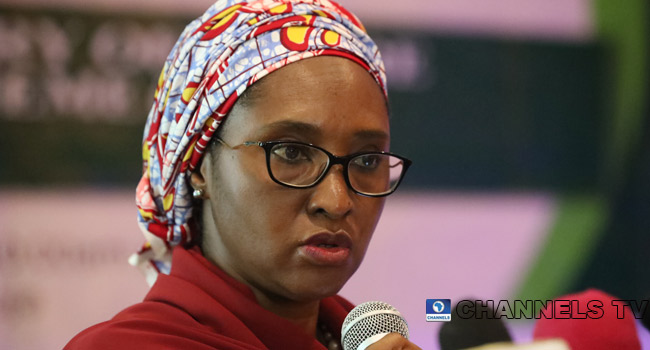
Finance minister hints at gradual removal of petrol subsidy from April 2023

Published

on


The minister of finance, budget and national planning, Zainab Ahmed, says the Federal Government may begin the gradual removal petrol subsidy from April 2023.

Ahmed spoke during an interview with ARISE TV on the sidelines of the World Economic Forum in Davos, Switzerland.

After an 18-month extension, the federal government plans to spend N3.35 trillion on petrol subsidy from January till June, 2023.

Speaking during the interview, the minister noted that the petrol subsidy regime must be exited as it is revenue that would have gone into the government coffers.

“Where there is not enough revenue for government to buy the refined petroleum products, we have had to borrow to buy the petroleum products. So, if we take that out, that is about N3.25 trillion. That is a significant relief, that we do not incur any more than that number that we projected for in 2023,” she said.

See also  Banned: Stay away from partisan politics, Catholic orders Mbaka

Asked if she felt betrayed that the petrol subsidy had not been removed despite her best efforts to ensure removal, she stressed that it was a collective decision to retain the payments.

“Betrayed? No. It was a decision that was taken as a collective, recognising the fact that due to the lingering impact of the COVID-19 pandemic, and also heightened inflation, that removal of the fuel subsidy at that time, would have increased more burden on the citizen,” Ahmed said.

She added that President Muhammadu Buhari does not want to take measures that exacerbate economic hardship in the country.

“The president does not want to contemplate a situation where measures are taken that are further going to burden the citizens. So, the decision was to extend the period from June 2022 (sic) to 18 months, beginning from January 2022,” the minister said.

“So, in June 2023, we should be able to exit. The good thing is, we hear a consistent message that everybody is saying this thing needs to go. It is not serving the majority of Nigerians.

See also  Nigeria’s external reserves increase to $35bn — first time in over a year

“I listened to some of the new leaders that are campaigning for the next round of leadership in the country that are saying they will get rid of it very quickly.

“What will be safer is for the current administration to maybe at the beginning of the second quarter to start removing the fuel subsidy, because it’s more expedient if you remove it gradually, than to wait and move it all in one big swoop.

“So, the idea for us in the budget, is that the subsidy costs should not exceed that N3.23 trillion. So, whether it’s done completely 100 percent by June or by July, or whatever, it’s a process.”

Business

Banks to charge 7.5 VAT for mobile transfer, PoS transaction fees

Published

on

By

Banks are set to commence the deduction of 7.5 percent value-added tax (VAT) on banking services, including point of sale (POS) transaction fees, mobile banking transfer fees, from January 19. 

In an email to customers, Moniepoint Microfinance Bank said the charge stems from a government-endorsed regulatory change.

According to reports, the VAT is charged on the N50 stamp duty and does not affect the actual amount being transferred or withdrawn.

The proceeds of the charge will be remitted to the Nigerian Revenue Service (NRS).

“We would like to inform you of an upcoming government-endorsed regulatory change regarding Value Added Tax (VAT),” Moniepoint said.

“From Monday, 19 January 2026, we are required to collect a 7.5% VAT, to be remitted to the Nigerian Revenue Service (NRS) (formerly known as the Federal Inland Revenue Service).

“VAT will apply to certain banking services that include: electronic banking charges such as POS transaction fees, mobile banking fees (transfers), USSD transaction fees, POS activation fee, card issuance fee and Moniebook subscription.”

See also  Super Falcons begin World Cup campaign with draw

According to the bank, the charge also applies to other fees, such as loan processing and documentation fees.

“Services that DO NOT attract VAT include: interest on loans and advances, and interest on deposits and savings,” Moniepoint said.

“Please note: This is not a price increase by Moniepoint. Moniepoint is required to collect and remit VAT to the Nigerian Revenue Service (NRS).

“The NRS has communicated a deadline of 19th January for all financial institutions (commercial banks, microfinance banks and electronic money transfer operators) to start collecting and remitting VAT.”

The bank clarified that VAT applies only to banking or service fees and not to interest, adding that the charge will be listed separately on transaction reports and statements.

The new tax laws retain the VAT rate at 7.5 percent.

Continue Reading

Business

Wema Bank Launches Upgraded Version of ALAT Banking App

Published

on

By


…introduces Voice Banking, Tap and Pay and Uptime Prediction

Wema Bank, Nigeria’s most innovative bank and pioneer of Africa’s first fully digital bank, ALAT, has launched the upgraded version of its flagship digital banking platform, ALAT by Wema. Designed as the next phase in digital banking, the upgraded version of ALAT delivers a smarter, faster, and more intuitive experience, reinforcing Wema Bank’s leadership in technology-driven financial services.


Tagged ALAT: The Evolution, the upgraded version represents a significant advancement in how customers interact with their bank.


It enables seamless banking through intelligent features such as voice banking (called SAW), which allows customers to carry out banking activities using natural voice commands, reducing friction and improving accessibility. It also introduces Tap and Pay for quick, secure, and convenient contactless transactions, alongside uptime prediction that enhances transparency, reliability, and confidence around service availability.


Together, these innovations are designed to simplify everyday banking while anticipating customer needs in real time, reinforcing Wema Bank’s commitment to trust, efficiency, and customer-centric digital experiences.

See also  Twitter Ban: Govt’s action not a knee-jerk reaction to deletion of Buhari’s tweets – Presidency


Announcing the upgraded version, the Managing Director and Chief Executive Officer of Wema Bank, Mr. Moruf Oseni, said, “ALAT: The Evolution is more than an upgrade. It is a clear demonstration of our commitment to redefining digital banking in Africa.

” By understanding the future of banking and listening closely to our customers, we have upgraded ALAT by Wema to a digital banking platform that is smart, intelligent and dependable.

“This evolution reinforces our promise to deliver innovation that genuinely enhances how people live, work, and transact everyday.”


He added that migrating to the upgraded app is seamless. “Existing customers can simply visit the Google Play Store or Apple App Store to update their existing ALAT app and sign-in with their existing login details (All their account information and transaction history remain intact on their profile and they will also gain access to new features that make banking faster, more intuitive, and more reliable).

See also  Aborted dream: Mohbad's Canadian visa was approved same day he died – Show promoter


For new customers, all they have to do is visit the Google Play Store or Apple App Store to download ALAT by Wema app and click the Get Started icon to onboard seamlessly.


Speaking on the technology in the upgraded ALAT by Wema, Mr. Olusegun Adeniyi, Chief Digital Officer at Wema Bank, explained, “With ALAT: The Evolution, we set out to enhance not just functionality but the overall banking experience. By integrating voice banking, contactless payments, and predictive reliability, we are delivering a platform that is built on powerful technology and responds intelligently to customer needs. This upgrade reflects our long-term digital vision to create a digital bank that is adaptive, intuitive, and consistently available.”


Built on speed, intelligence, and user-centric design, ALAT: The Evolution redefines everyday banking through intuitive features such as voice-enabled transactions, contactless payments, and predictive service reliability. Designed to anticipate customer needs in real time, the platform delivers a smarter, more seamless, and dependable digital banking experience that reflects Wema Bank’s vision for the future of finance.

See also  FULANI EMASCULATION NOW COMPLETE Doubting Thomas's now Shamed.


With the upgraded version of ALAT, Wema Bank continues to strengthen its position as a digital-first institution, delivering innovative solutions that empower individuals and businesses to bank with confidence in an increasingly digital economy.

Continue Reading

Business

Energy Tycoon, Wale Tinubu hails Otedola, Elumelu on mega deals

Published

on

By


Billionaire energy tycoon, Jubril Adewle Tinubu has hailed two of Nigeria’s influential investors —Femi Otedola and Tony Elumelu —for wrapping up the year 2025 and ringed in 2026 with two landmark deals.


In a post Thursday on his various social handles, Tinubu spotlights Otedola’s ‘investor foresightedness’ and Elumelu’s deliberate ‘bet on African capability’ as inspiring moves in the energy sector that will spur others into a roaring start.


The Oando Plc Group Chief Executive wrote: “Reflecting on the first week of work in 2026, Femi Otedola and Tony O. Elumelu have given us a roaring start already. With the Geregu exit, Femi turned an investment in power into a landmark deal, while simultaneously deepening his position in banking. This speaks to deft positioning.


“Femi, you backed investor foresight with conviction and knew exactly when to act decisively. The mark of an exceptional investor is not simply in making an investment. The mastery lies in knowing when to exit. This, I must admit, was executed in spectacular fashion.

See also  Banned: Stay away from partisan politics, Catholic orders Mbaka


“For Tony, stepping into Seplat as a major shareholder is a long, deliberate bet on African capability; on ownership; on governance and on the belief that our energy future should increasingly be shaped by those who live and build at home. These are exceptional deals that set the tone not just for the year ahead, but for how value is truly created,” Tinubu concluded.


Industry stakeholders have equally described the two billionaires’ late 2025 megadeals as a fast changing pecking order in the volatile energy sector.


Otedola had reportedly cashed out when he ceded control of his high-yielding Geregu Power Plc through a change at the holding company level.


The billionaire businessman has divested his 77 per cent controlling stake in the company in a landmark $750m transaction.


In a notice filed with the Nigerian Exchange, NGX, Otedola exited Geregu as majority shareholder with MA’AM Energy Ltd acquired 95% of his Amperion Power Distribution Co., changing the ultimate beneficial ownership of 77% of Geregu’s issued share capital.

See also  Twitter Ban: Govt’s action not a knee-jerk reaction to deletion of Buhari’s tweets – Presidency


Geregu is among the NGX’s most watched electricity stocks, helped by steady earnings in a market hit by gas constraints and payment shortfalls.


Otedola, it is learnt, intends to redeploy the capital into financial sector investments. The Epe-born investor is the Chairman of First HoldCo Plc, a financial holding company he owns more than 18 percent of its stake.


Elumelu, the banking tycoon, also through his Heirs Group, created a sensation at the twilight of 2025 when he bought Maurel & Prom entire 20.07% stake —about 120.4 million shares— in Seplat Plc, in a deal valued at roughly $500 million.


Seplat’s rise has been fueled by a $1.28 billion purchase of ExxonMobil’s onshore business, completed last year, which added oil blocks, fields and export infrastructure.


On his part, Tinubu has also emerged one of the few titans who command a great deal of reverence in Nigeria’s vast and ever-evolving energy landscape. He has led his Oando Plc into a status of one of Nigeria’s best known indigenous energy names, listed in Lagos and Johannesburg, with upstream interests and trading and logistics operations.

See also  Police arrest two for defrauding Canada-based Nigerian N140m

Continue Reading

Trending News